
RKI Hygiene Room per KRINKO
 RKI 1: Legal Requirements & Overview
 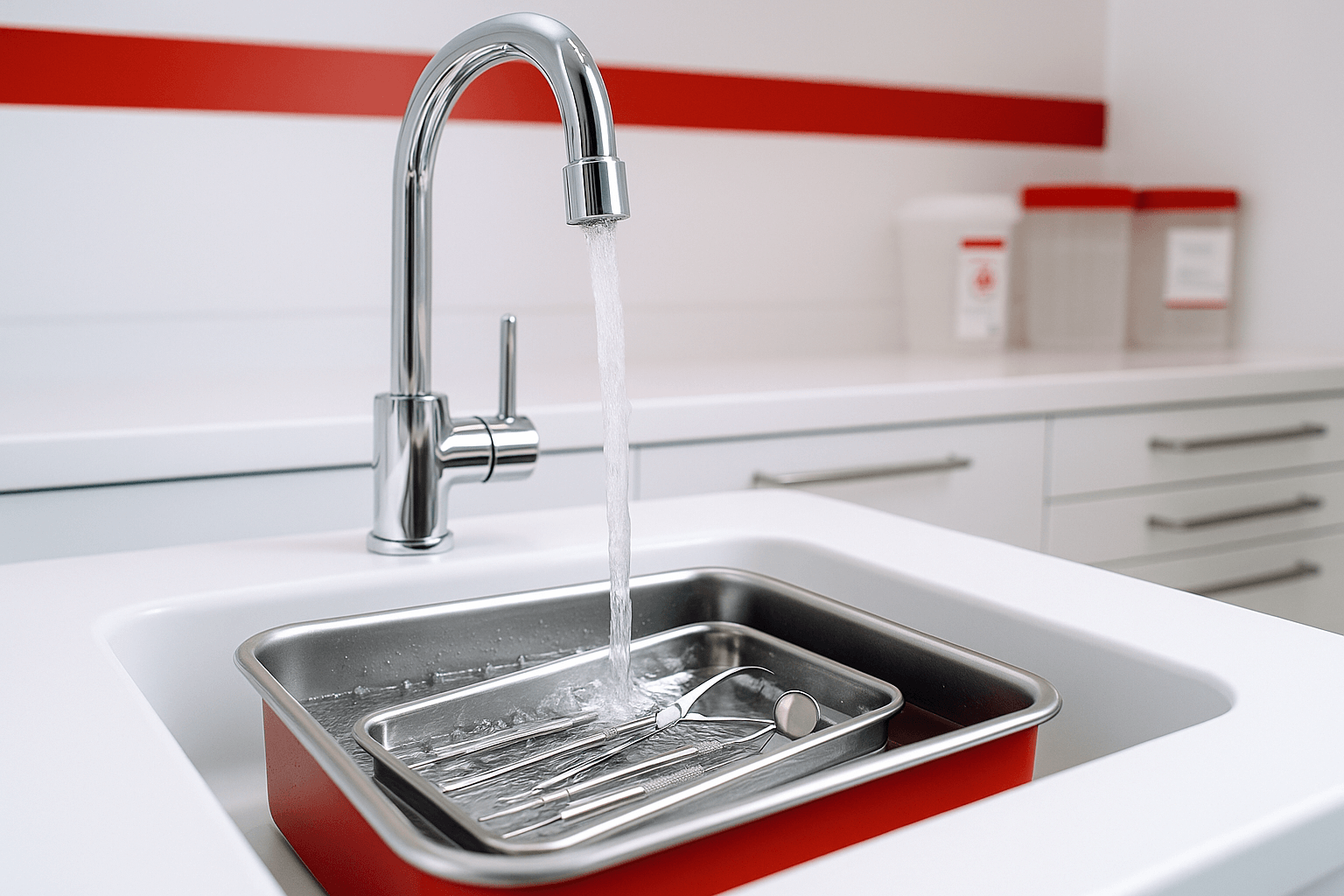 RKI 2: Proper Pre-Cleaning
 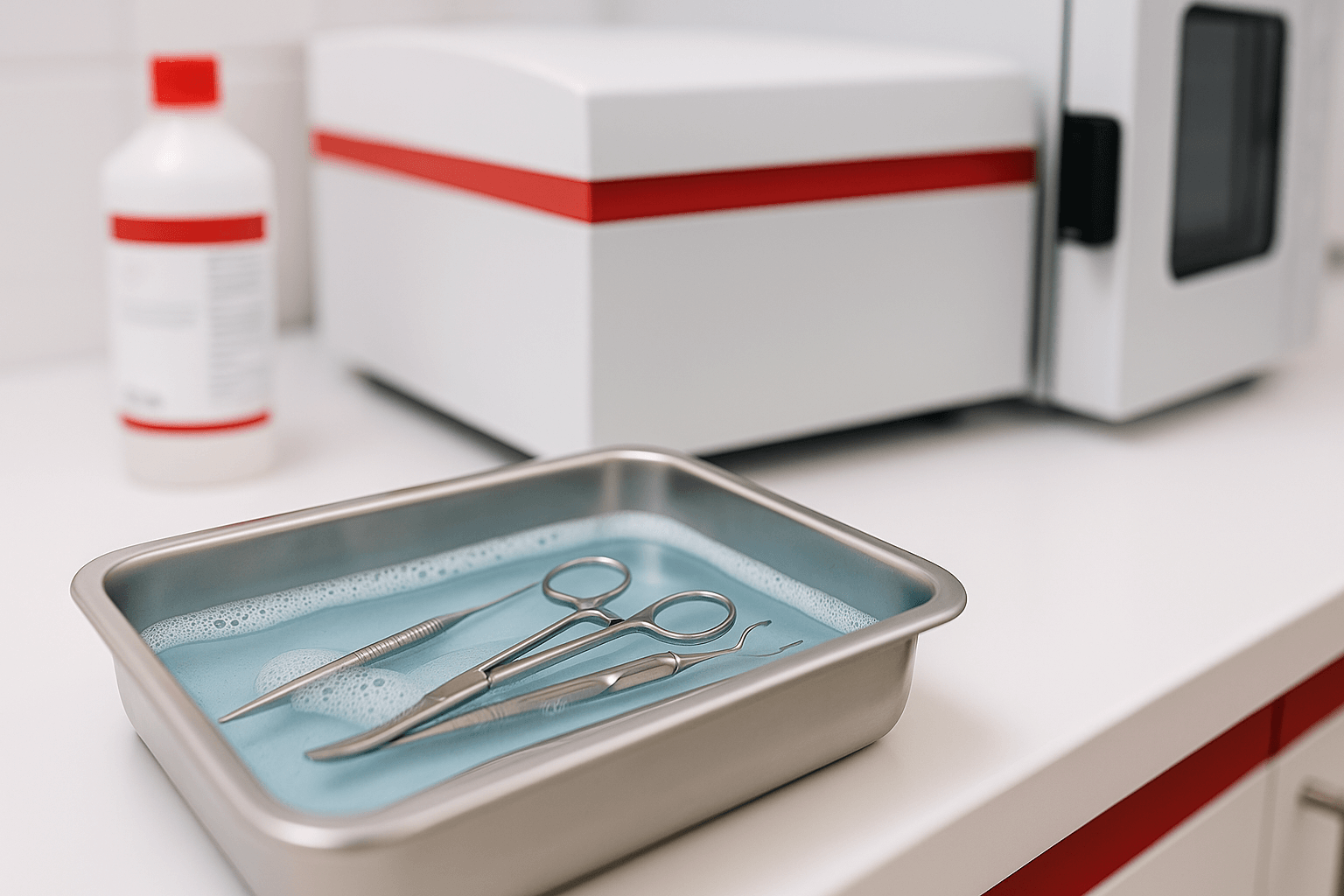 RKI 3: Cleaning & Disinfection
 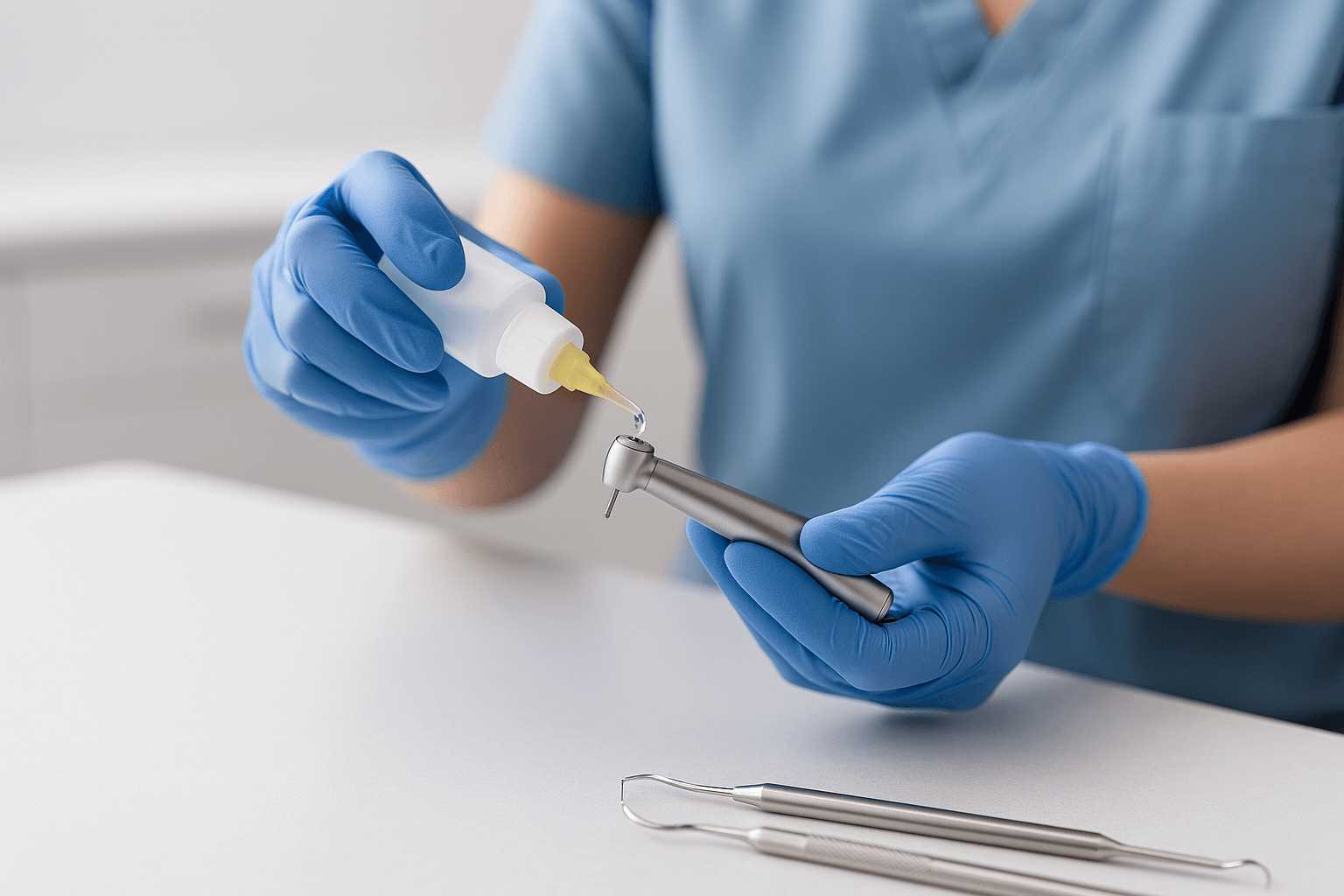 RKI 4: Instrument Care
 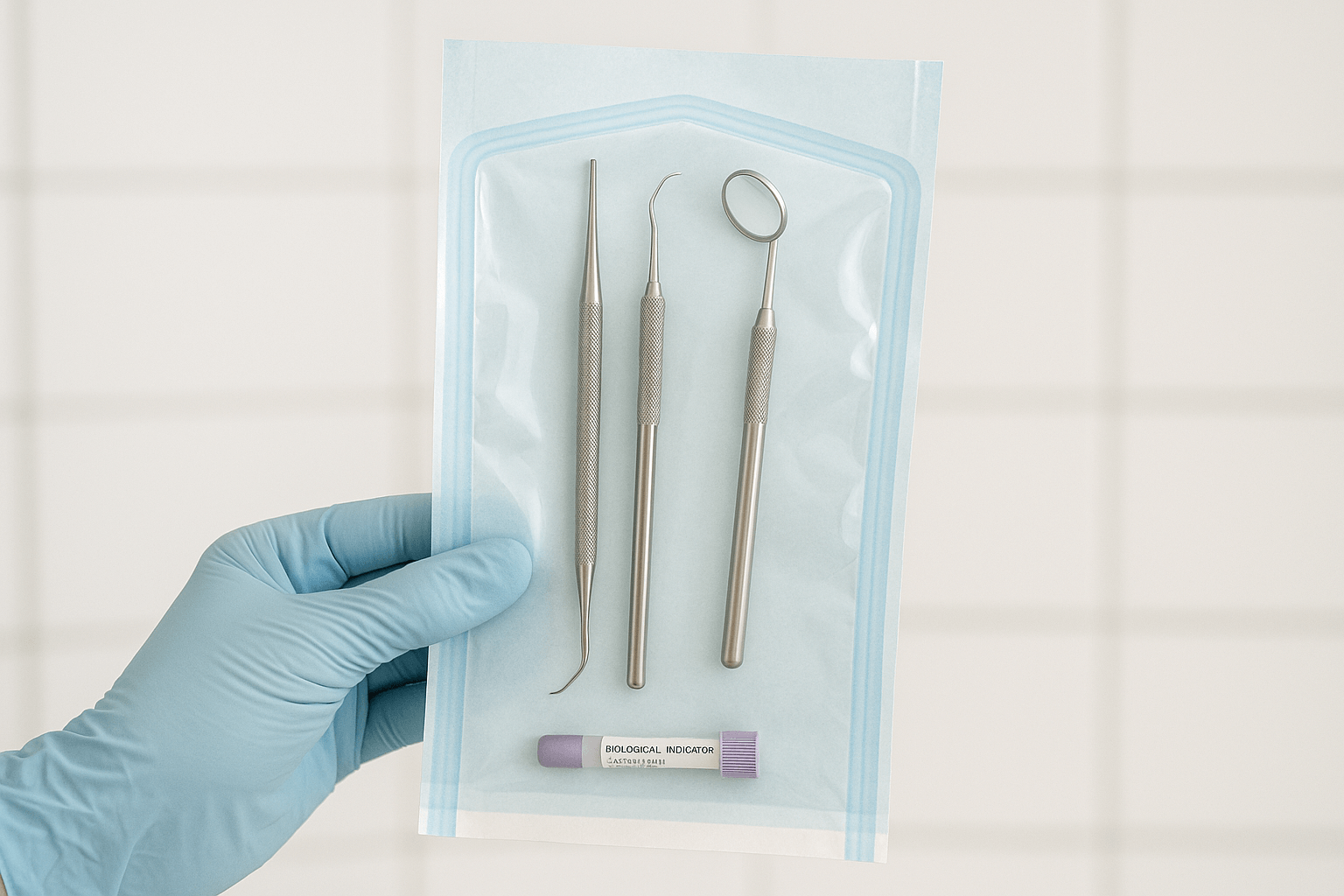 RKI 5: Instrument Packaging
 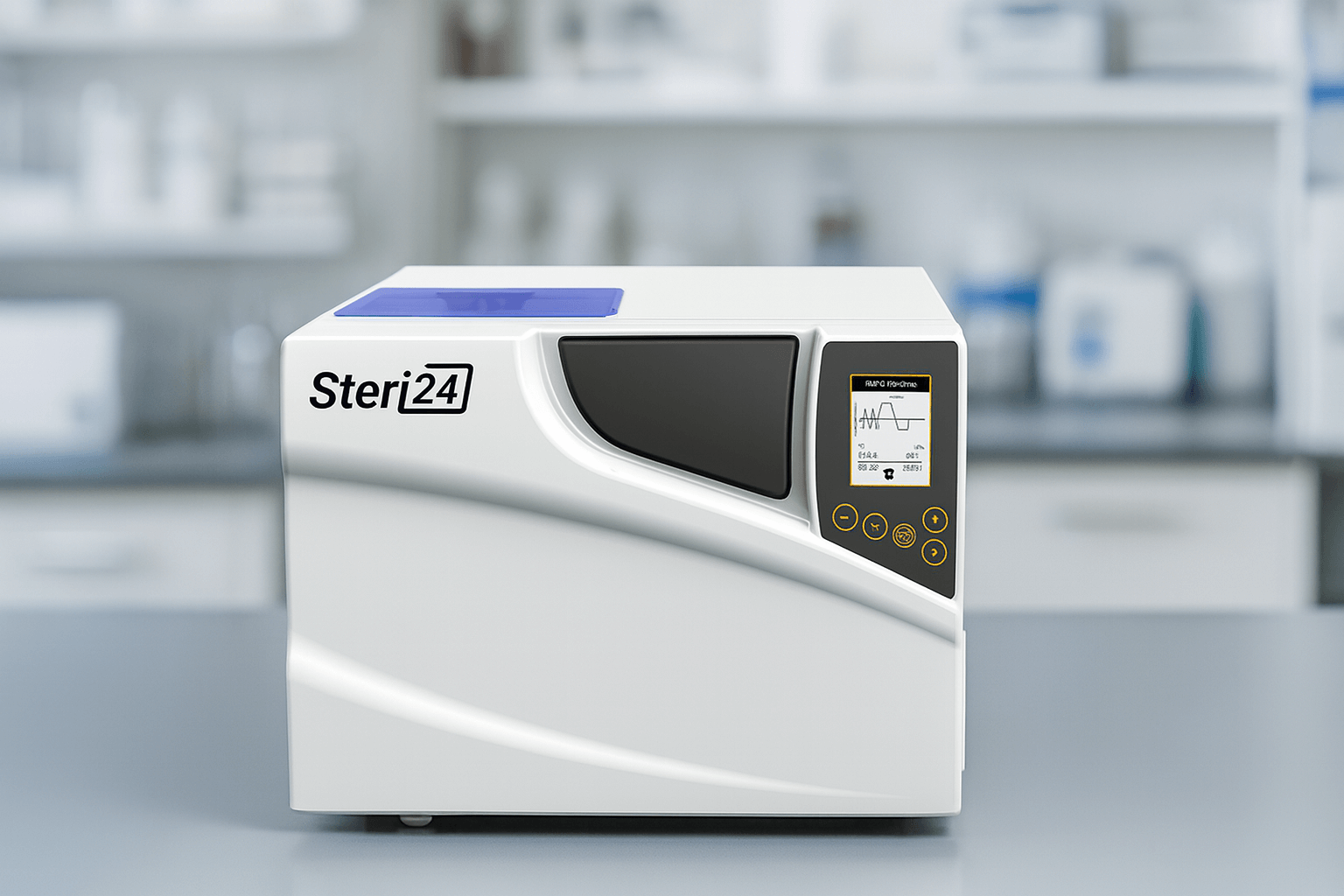 RKI 6: Sterilisation in the Autoclave
 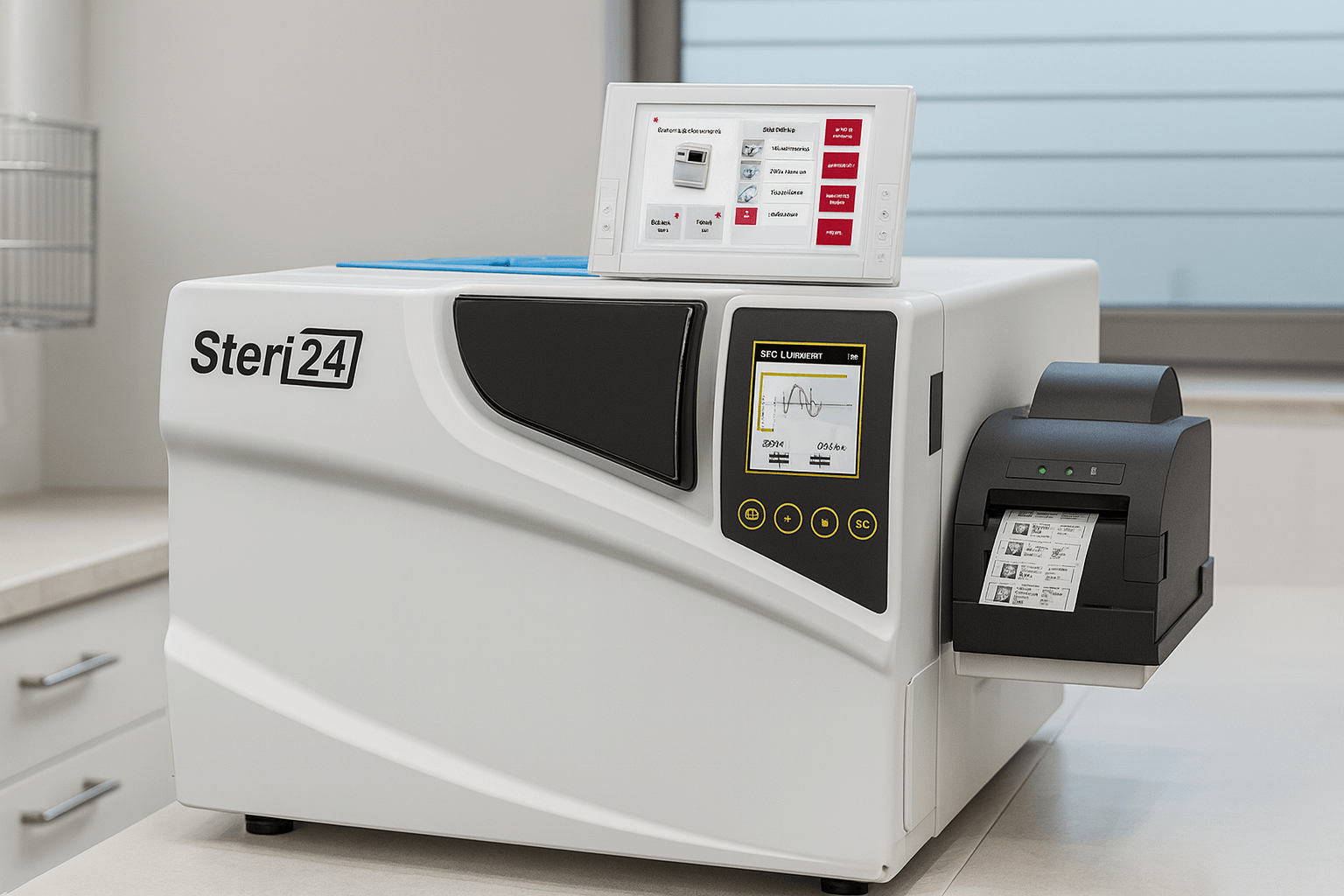 RKI 7: Release & Documentation
 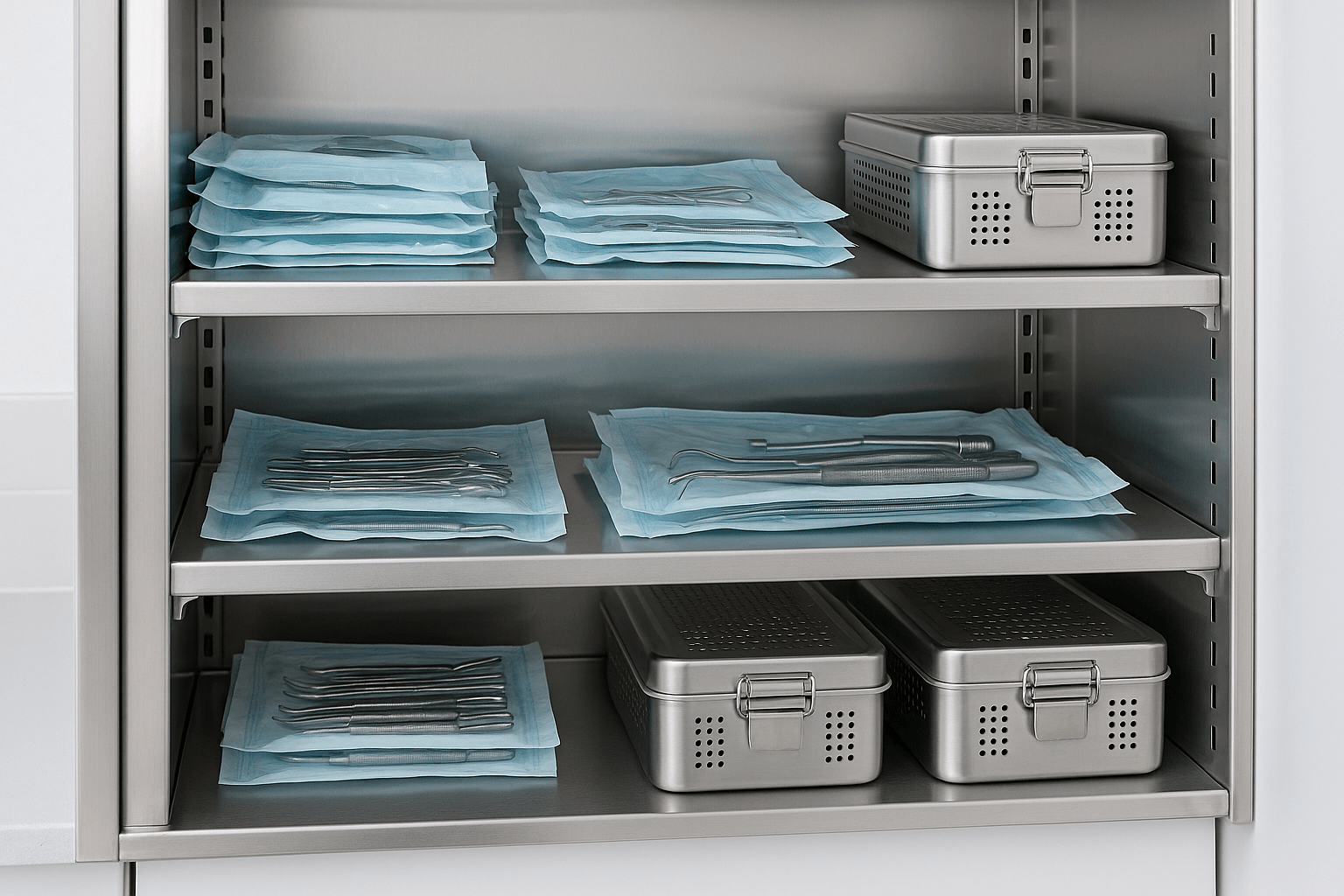 RKI 8: Storage of Sterile Instruments
 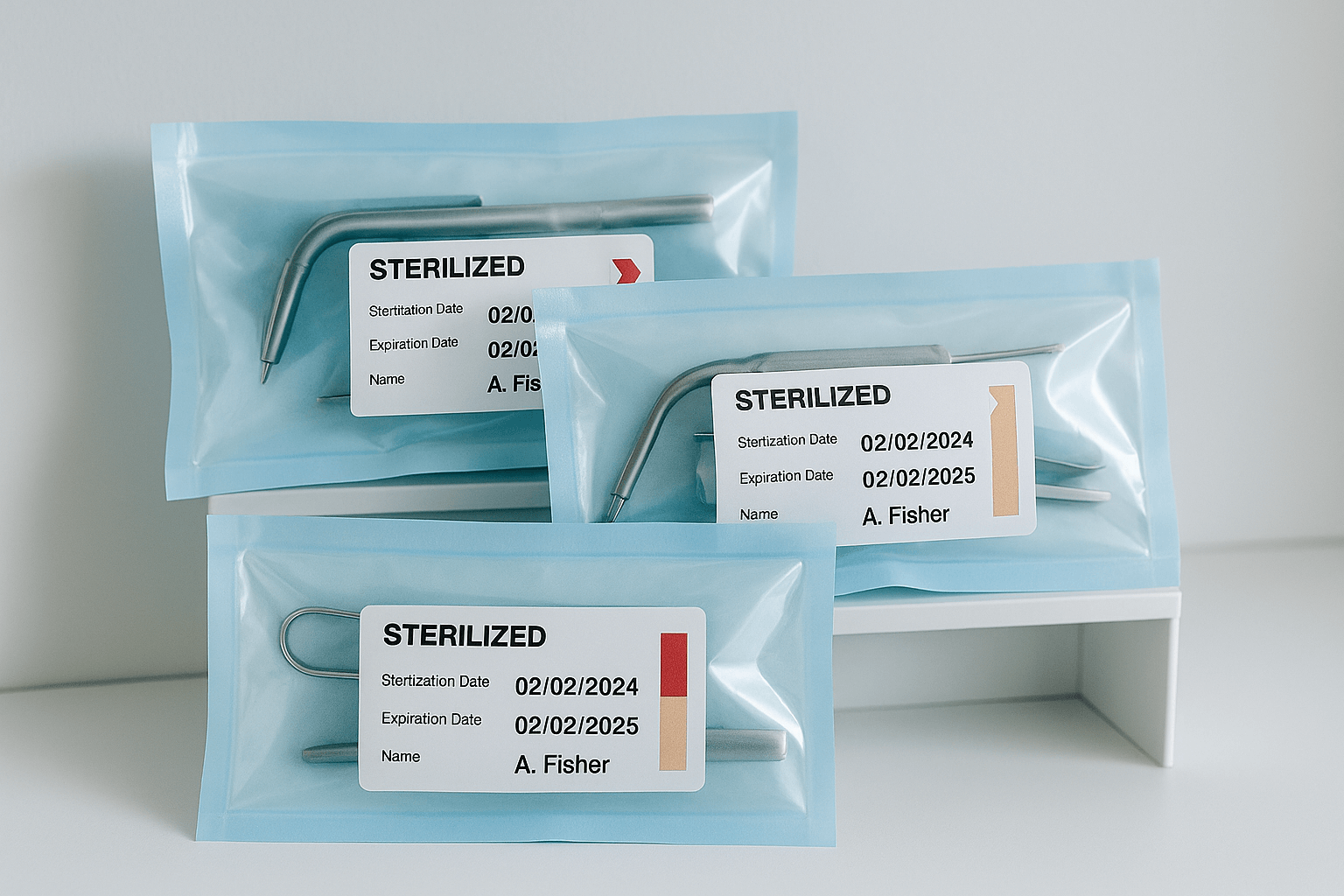 RKI 9: Labelling After Sterilisation
 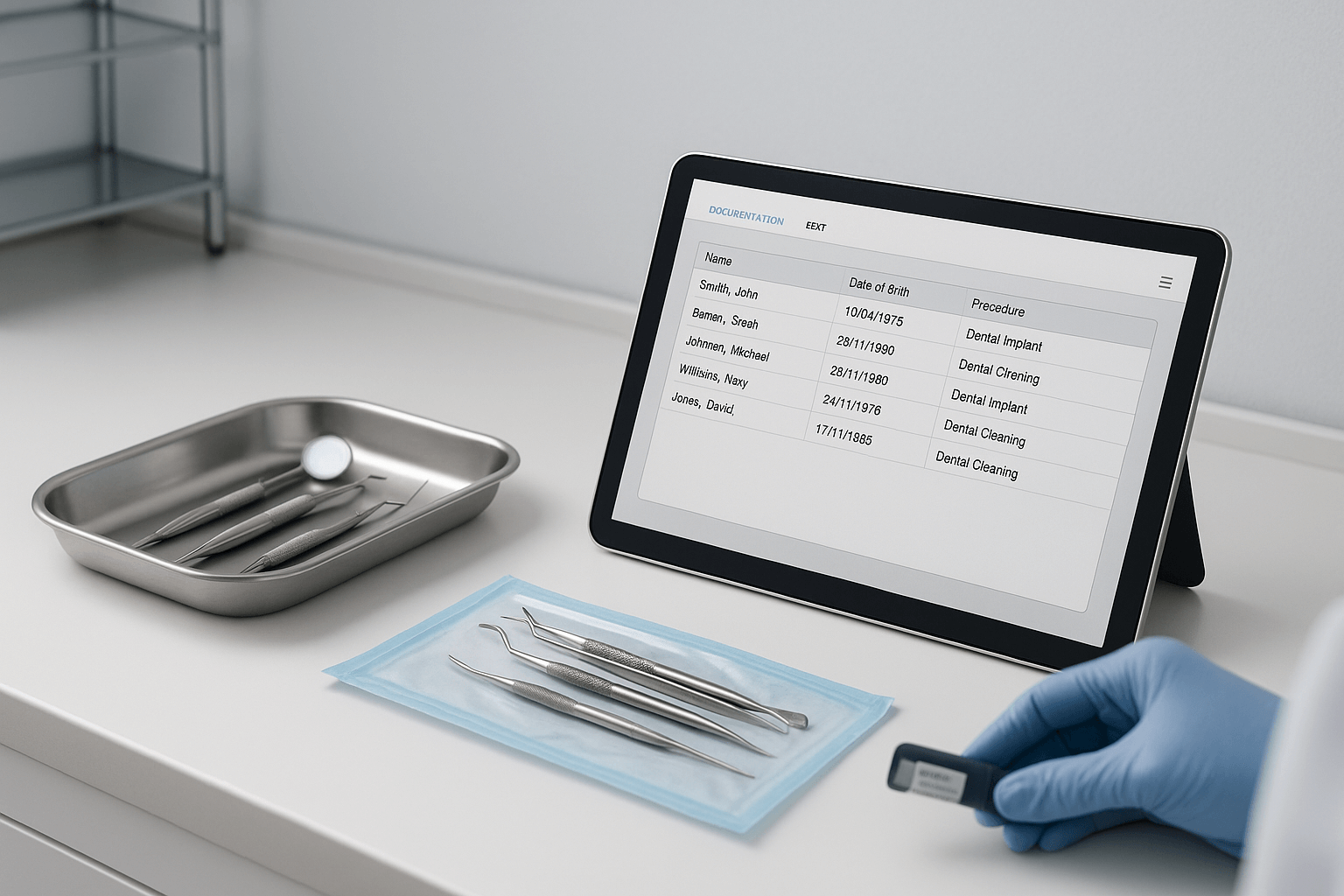 RKI 10: Documentation After Patient Use
 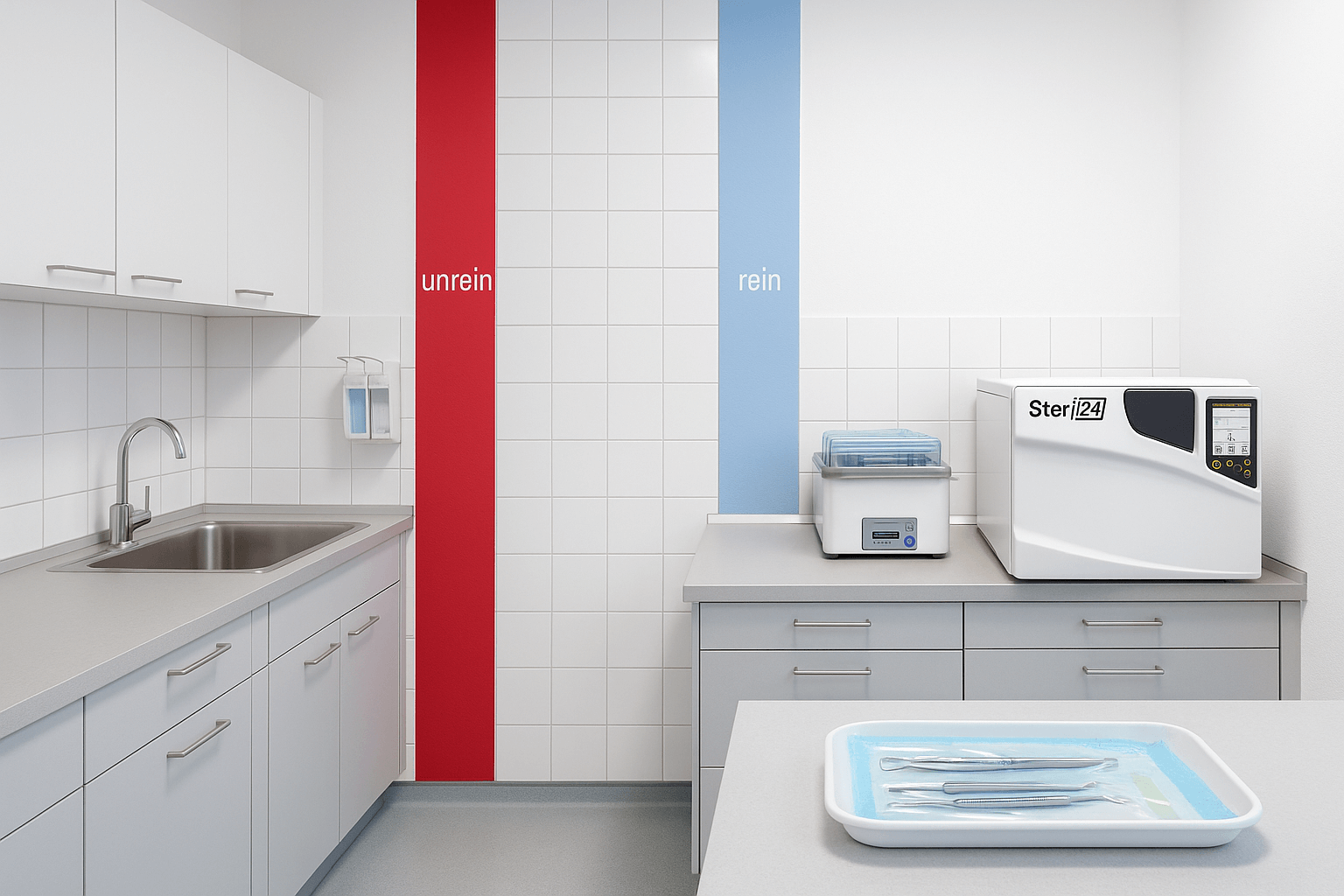 RKI 11: Hygiene Room per KRINKO
 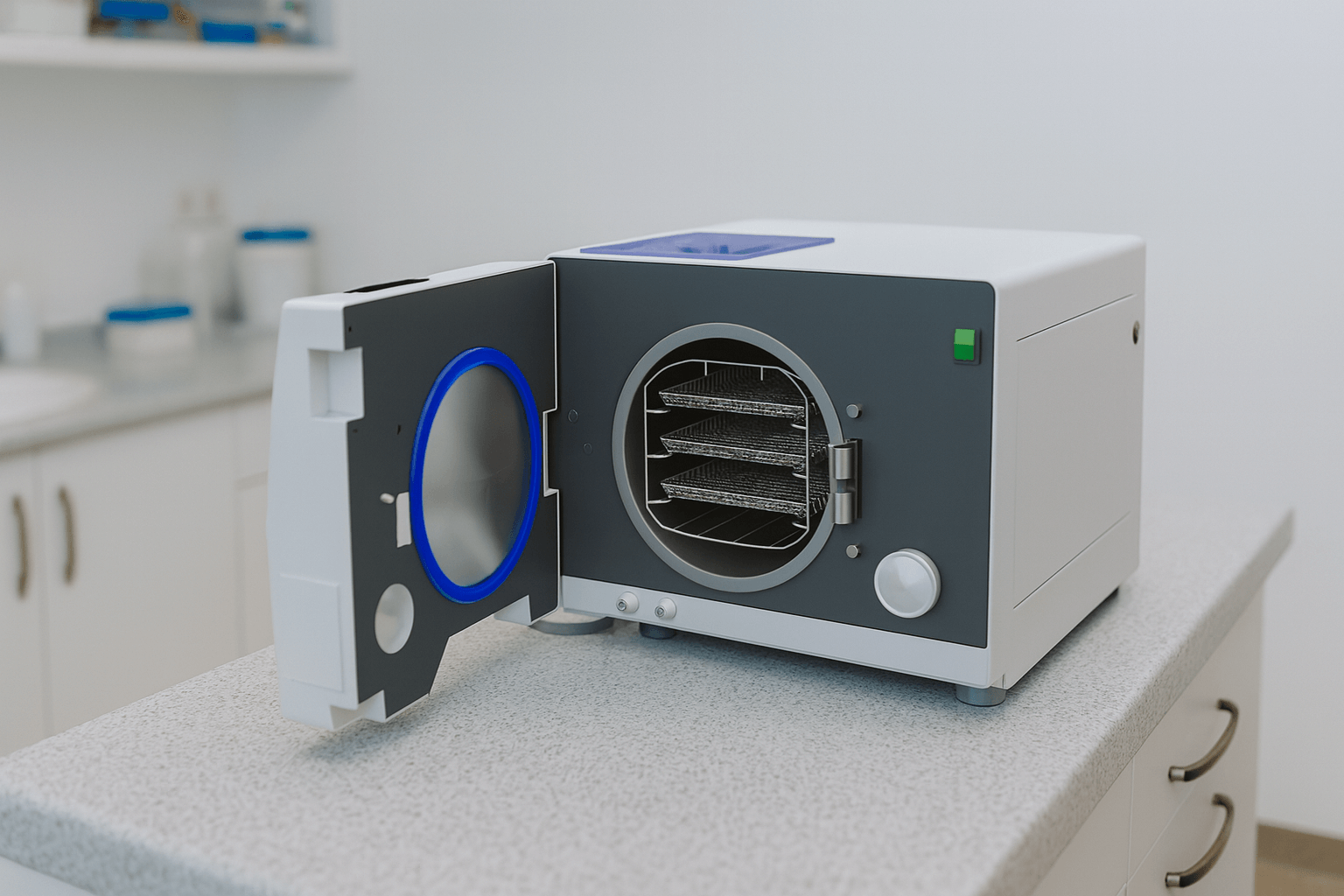 RKI 12: Initial Validation of a Klasse B Autoclave
Meet RKI requirements – free of charge
Use the free ClavioSoft to run an audit check of your practice in just a few minutes – the software automatically generates any missing documentation. This saves you up to 90 % of the work.

Setting Up a Hygiene Room per KRINKO
The reprocessing room is the centrepiece of instrument reprocessing. KRINKO requires a spatial-functional separation of reprocessing into the areas/zones unclean, clean and storage, with non-crossing material and personnel flow. The term black-and-white principle, commonly used in practice, does not appear in the KRINKO text itself.
1Unclean and Clean Area
Unclean area – for receiving, cleaning, disinfection and pre-treatment of contaminated instruments:
· Stations for manual cleaning/disinfection · Washer-disinfectors (WD) · Ultrasonic cleaners.
Clean area – for visual inspection, care, packaging and sterilisation:
· Autoclaves · Workstations for visual inspection and packaging. Only clean, disinfected instruments may be processed here.
Storage – a dedicated zone for recontamination-protected storage of packaged sterile goods:
· Cabinets for sterile goods. According to KRINKO (Annex 5), storage must be maintained as a separate zone and is not to be counted as part of the clean area.
Sources: KRINKO/BfArM 2012, Sect. 1.2/2.2 and Annex 5 (Requirements for Reprocessing Units, AEMP).2Spatial or Temporal Separation
The required degree of separation depends on the category of the reprocessing unit: Category A (semi-critical A / critical A) permits a zone separation of unclean – clean – storage, where temporal separation is possible; Category B (semi-critical B / critical B) requires a spatial area separation into unclean – clean – storage; Category C requires dedicated rooms for each. Temporal separation alone therefore only suffices for Category A. The decisive factor is always that contaminated and sterile instruments must not come into contact.
3Workflows & Hygiene Requirements
· Non-crossing paths: contaminated and sterile instruments must not cross; areas must be clearly marked.
· Surfaces: smooth, joint-sealed and designed so that they can be easily cleaned and wipe-disinfected and are resistant to the (listed) surface disinfectants used. The KRINKO recommendation does not specify particular materials; it refers to the recommendation on surface cleaning and disinfection.
· Hygiene plan: regular cleaning/disinfection of all work areas according to a defined plan.
Find the right Class B autoclave
Important Additional Points per RKI & Standards
These points are frequently overlooked in practice but are essential for correct, legally compliant implementation – and are precisely the aspects checked during a practice inspection:
- Recontamination-protected storage and sterile-goods labelling: Packaged sterile goods must be stored in the storage zone in a dust-protected, clean, dry environment at room temperature to prevent recontamination (e.g. in closed cabinets/drawers). The packaging must be labelled (including sterilisation date, batch identification and, where applicable, expiry date and sterile-goods shelf life if shorter than the expiry date). The storage period depends on packaging, seal integrity and storage conditions.Source: KRINKO/BfArM 2012, Sect. 2.2.6 (Labelling) and Sect. 3 (Transport and Storage)
- Qualified personnel: Reprocessing may only be carried out by personnel with documented specialist knowledge. This includes instrument science, knowledge of hygiene/microbiology including transmission routes, as well as risk assessment and classification of medical devices and the procedures used. Specialist knowledge requirements are described in Annex 6 of the KRINKO/BfArM recommendation (in conjunction with MPBetreibV).Source: KRINKO/BfArM 2012, Annex 6 (Specialist Knowledge of Personnel); MPBetreibV
- Validated processes and batch documentation: Validated processes must be used throughout reprocessing; the recorded process parameters and the release decision must be documented with reference to the releasing person and the batch (batch documentation). Records must be retained for at least 5 years and may also be kept on data carriers; digital documentation software facilitates traceable recording and release – for example the free ClavioSoft, which lets you complete batch and release documentation in just a few clicks and store it in an audit-proof manner.Source: KRINKO/BfArM 2012, Sect. 2.2.8 (Batch Documentation); MPBetreibV
- Non-crossing material flow and drying before transfer to the clean area: Material flow must be consistently unidirectional (unclean -> clean -> storage) without return paths. Reprocessing includes cleaning, optional intermediate rinsing, disinfection, rinsing and drying; complete drying is a prerequisite for packaging and sterilisation. The reprocessing instructions provided by the manufacturer (per DIN EN ISO 17664) must be followed. Contaminated instruments must be transported in safely enclosed (closed transport containers) to the reprocessing location.Source: KRINKO/BfArM 2012, Sect. 1.2 and Annex 5 (Spatial-Functional Separation) and Sect. 2.2.1/2.2.2 (Preparation, Cleaning/Drying)
- When a separate room is not mandatory (Category A): A dedicated reprocessing room is not mandatory in every case: for simple Category A reprocessing, the process may take place in a single room divided into the zones unclean - clean - storage, provided workflows (including temporal ones) are properly separated and paths are non-crossing. For Categories B and C, this is not sufficient.Source: KRINKO/BfArM 2012, Annex 5 (Category A: Zone Separation, Temporal Separation Possible; Footnote 5: A Room May Be Divided into Areas and Zones)
Required Equipment, Consumables & Accessories
Checklist for this step – items you should have on hand (shopping list):
Equipment
- Washer-disinfector (WD / thermal disinfector) for validated automated cleaning and disinfection (unclean area) Order here in the shop
- Ultrasonic cleaner for pre-cleaning hard-to-reach and hinged instruments (unclean area) Order here in the shop
- Class B autoclave (steam tabletop steriliser with fractionated vacuum) for sterilisation (clean area) Order here in the shop
- Sealing device for standards-compliant packaging of sterile goods (clean area) Order here in the shop
- Water treatment system for demineralised/distilled feed water for the autoclave Order here in the shop
- Suitable test instrumentation for routine testing (e.g. process challenge device / PCD) Order here in the shop
- Separate hand-wash station with soap dispenser, single-use towel dispenser and hand disinfectant dispenser (unclean area)
- Lockable cabinets/drawers for recontamination-protected sterile-goods storage (storage zone)
- Digital documentation software for batch and release documentation Order here in the shop Create digitally with ClavioSoft
Consumables
- Sterilisation packaging (see-through pouches and rolls) for standards-compliant packaging Order here in the shop
- Instrument cleaner and disinfectant (listed) for manual cleaning and WD process chemistry
- Surface disinfectant with proven efficacy (listed) for work surfaces and surrounding areas
- Hand disinfectant and liquid soap
- Fluid-resistant disposable gloves and single-use protective gowns/aprons as PPE (unclean area)
- Chemical indicators or process challenge devices for routine testing of sterilisation Order here in the shop
- Instrument care lubricant for hinged instruments before sterilisation Order here in the shop
- Demineralised/distilled water or filter cartridges for water treatment Order here in the shop
- Labelling material/labels (sterilisation date, batch, shelf life/expiry date where applicable) Order here in the shop
Accessories
- Closed, labelled transport containers for contaminated instruments (unclean area) Order here in the shop
- Joint-sealed, wipe-disinfectable work surfaces, separated for unclean and clean areas
- Hands-free waste container for contaminated waste
- Instrument trays, perforated cassettes and loading baskets for WD and autoclave Order here in the shop
- Visual inspection aid (magnifier/lighting) for inspecting cleaned instruments
- Lint-free cloths or compressed air for residual moisture removal (drying)
- Zone signage/labelling (unclean - clean - storage) and non-crossing routing
- Written hygiene plan and standard operating / reprocessing procedures Create digitally with ClavioSoft
References
- KRINKO/BfArM 2012, Bundesgesundheitsbl. 55:1244–1310 – Sect. 1.2/2.2; Annex 5 (AEMP).
- MPBetreibV § 8.
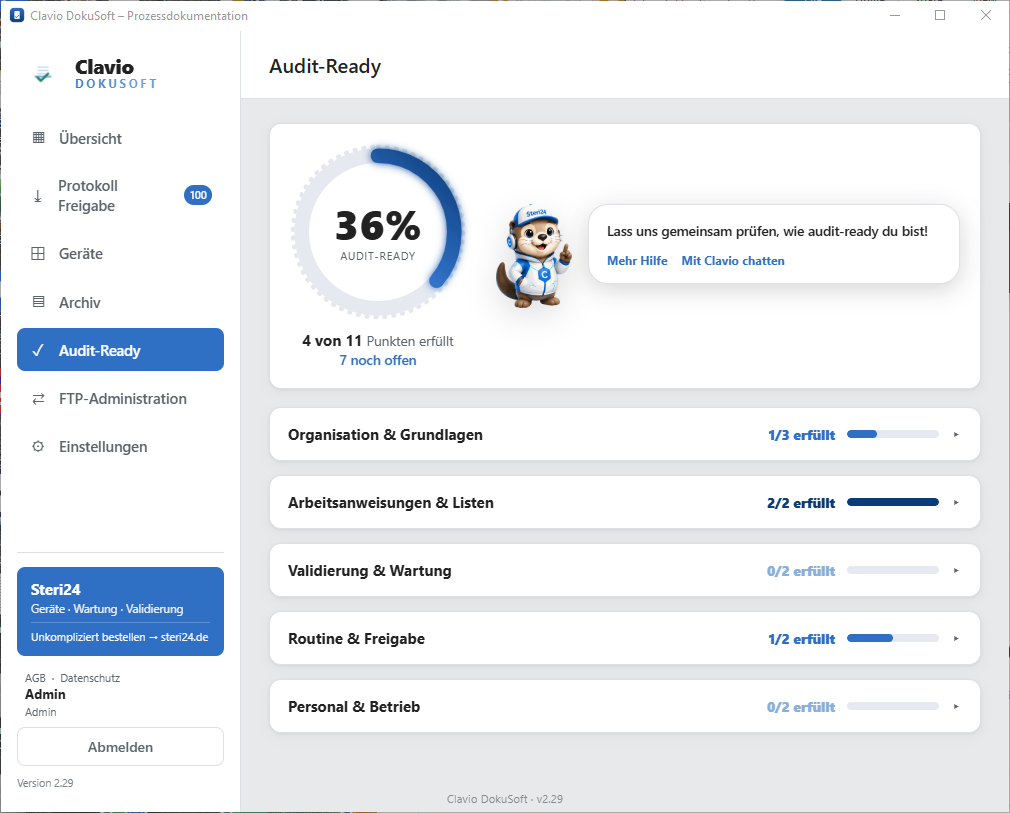
How audit-ready is your practice?
Find out in just a few minutes how well prepared you are for the next inspection — category by category, with clear progress tracking and specific open items. Completely free with ClavioSoft.
.png "Preview: Clavio DokuSoft")


Frequently Asked Questions
RKI Hygiene Room per KRINKO – key questions answered clearly.