RKI Correct Pre-Cleaning
 RKI 1: Legal Requirements & Overview
 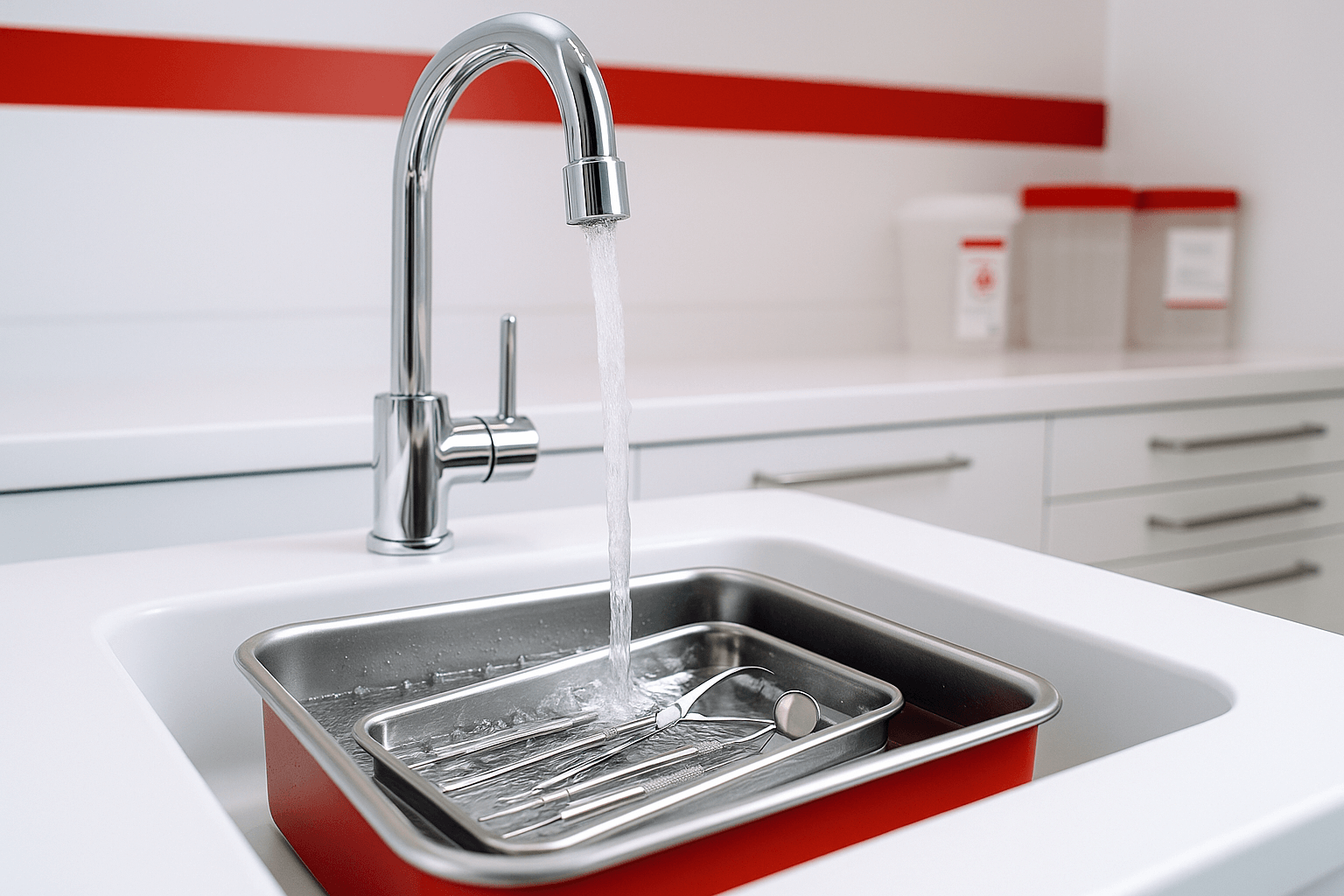 RKI 2: Correct Pre-Cleaning
 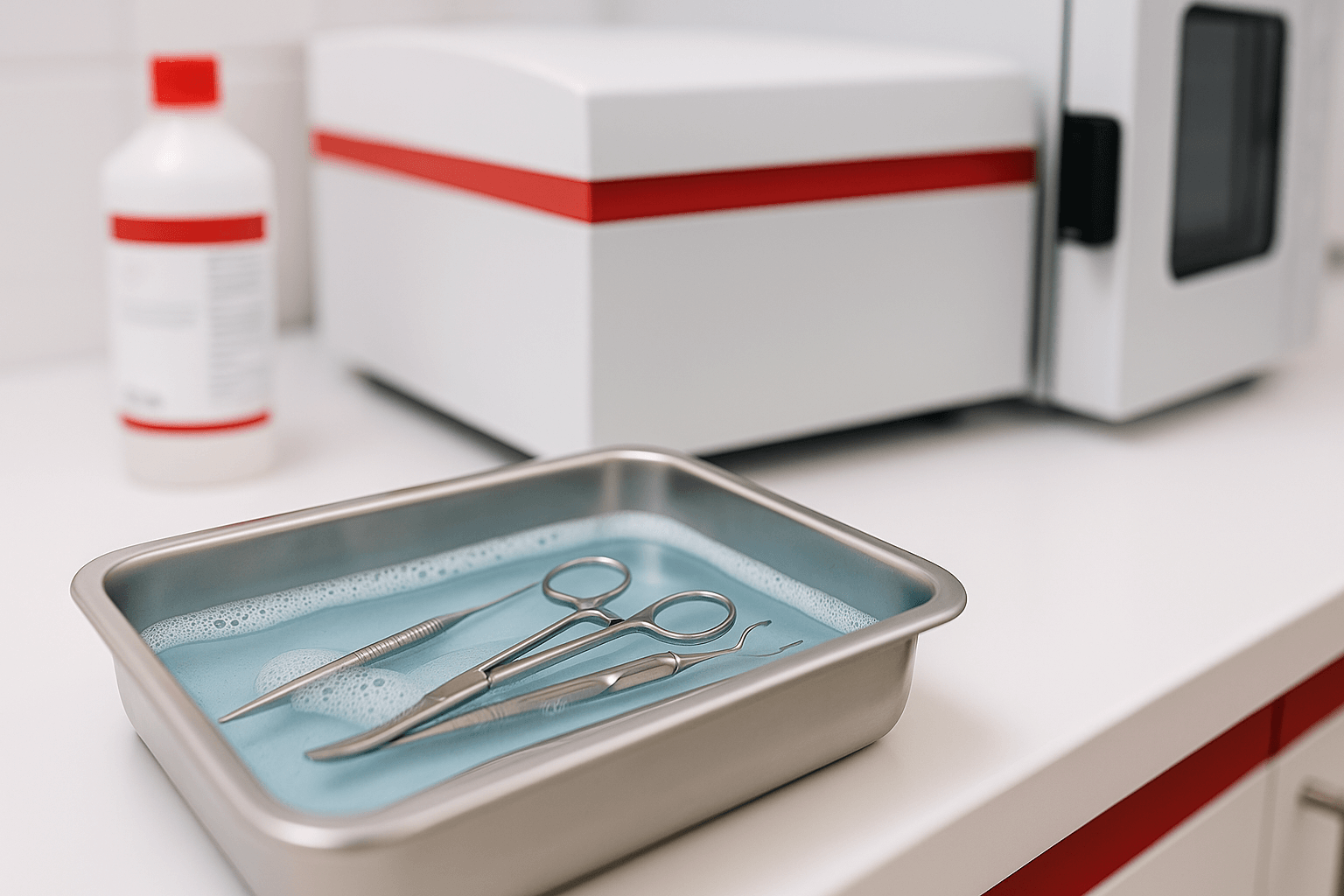 RKI 3: Cleaning & Disinfection
 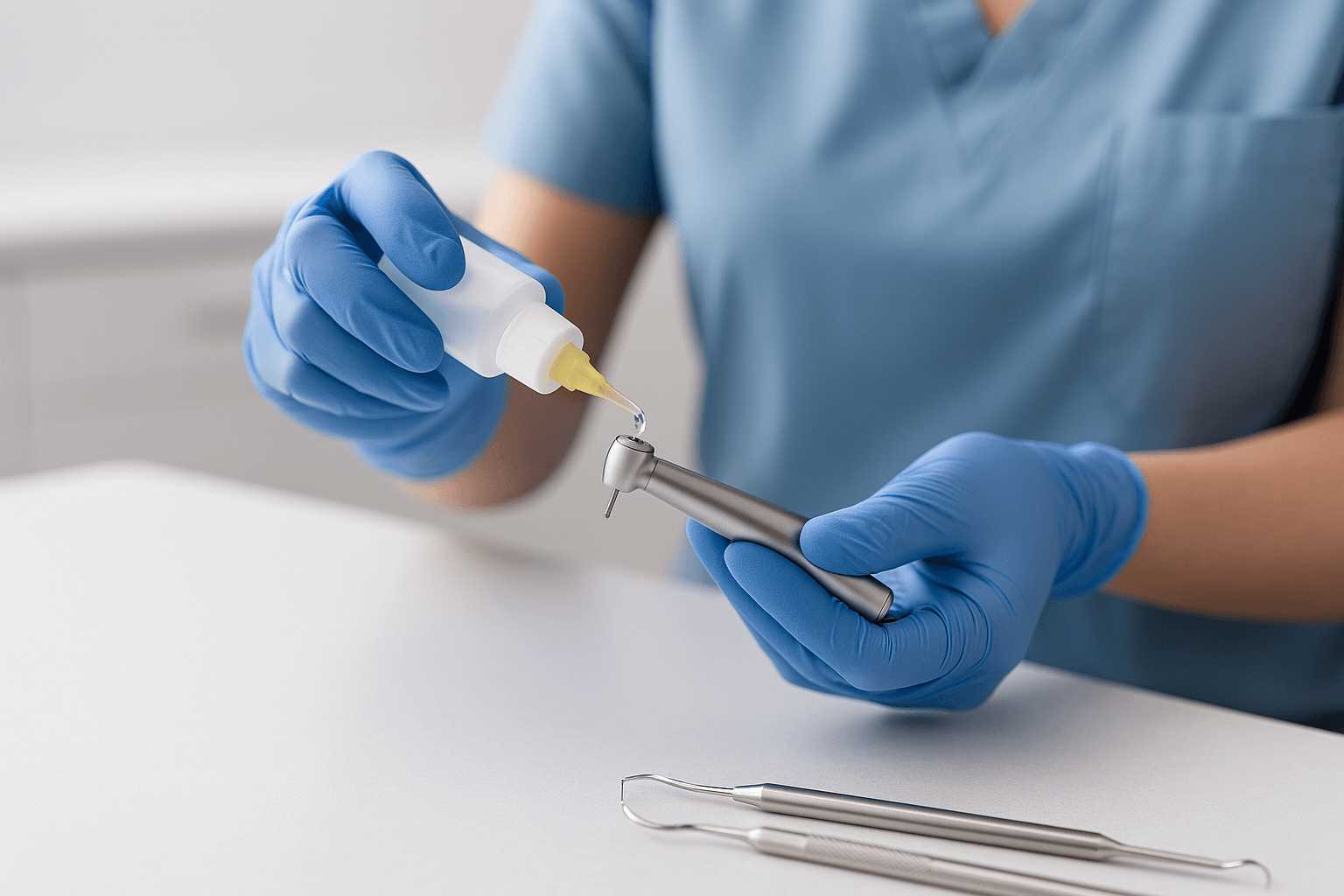 RKI 4: Instrument Care
 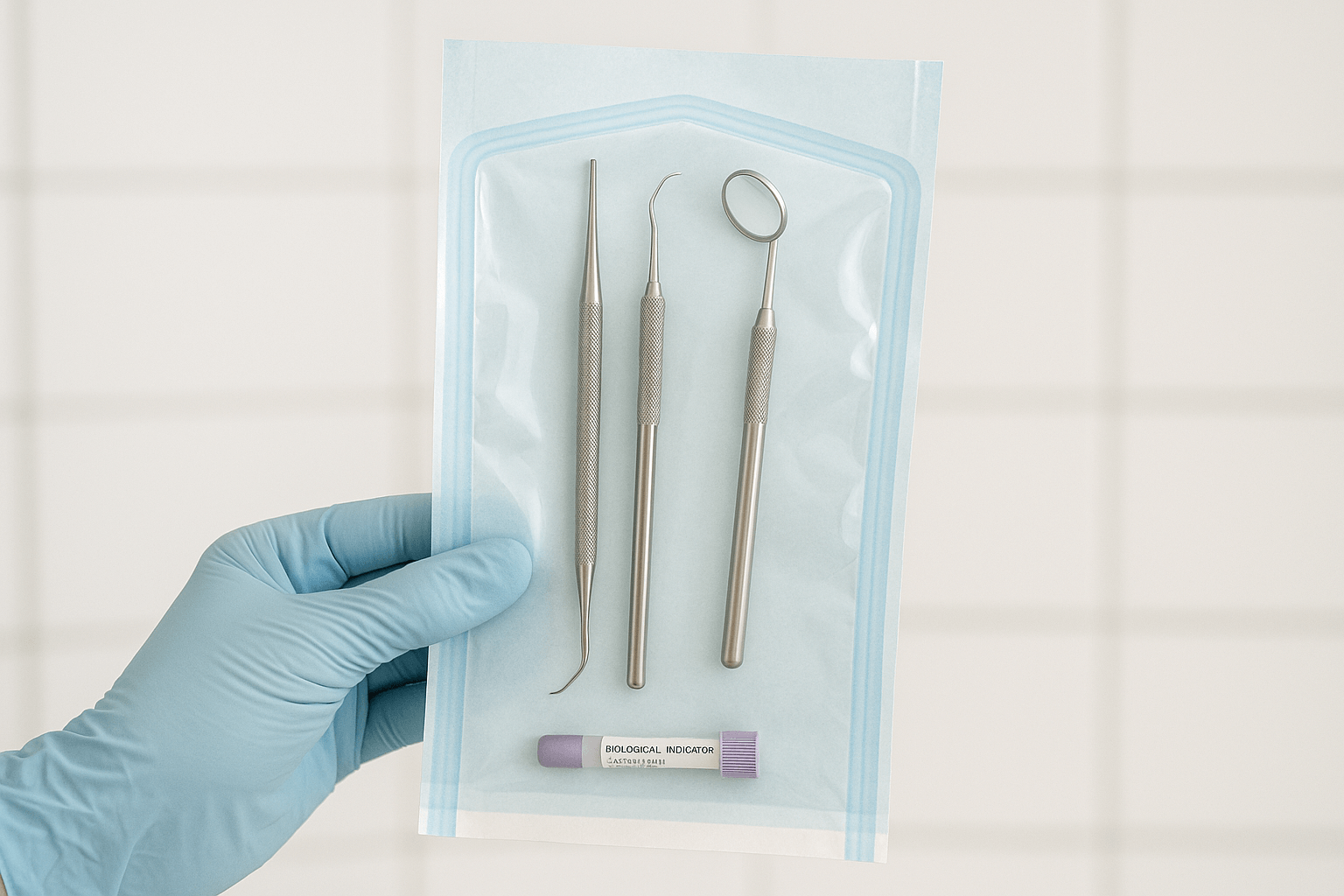 RKI 5: Instrument Packaging
 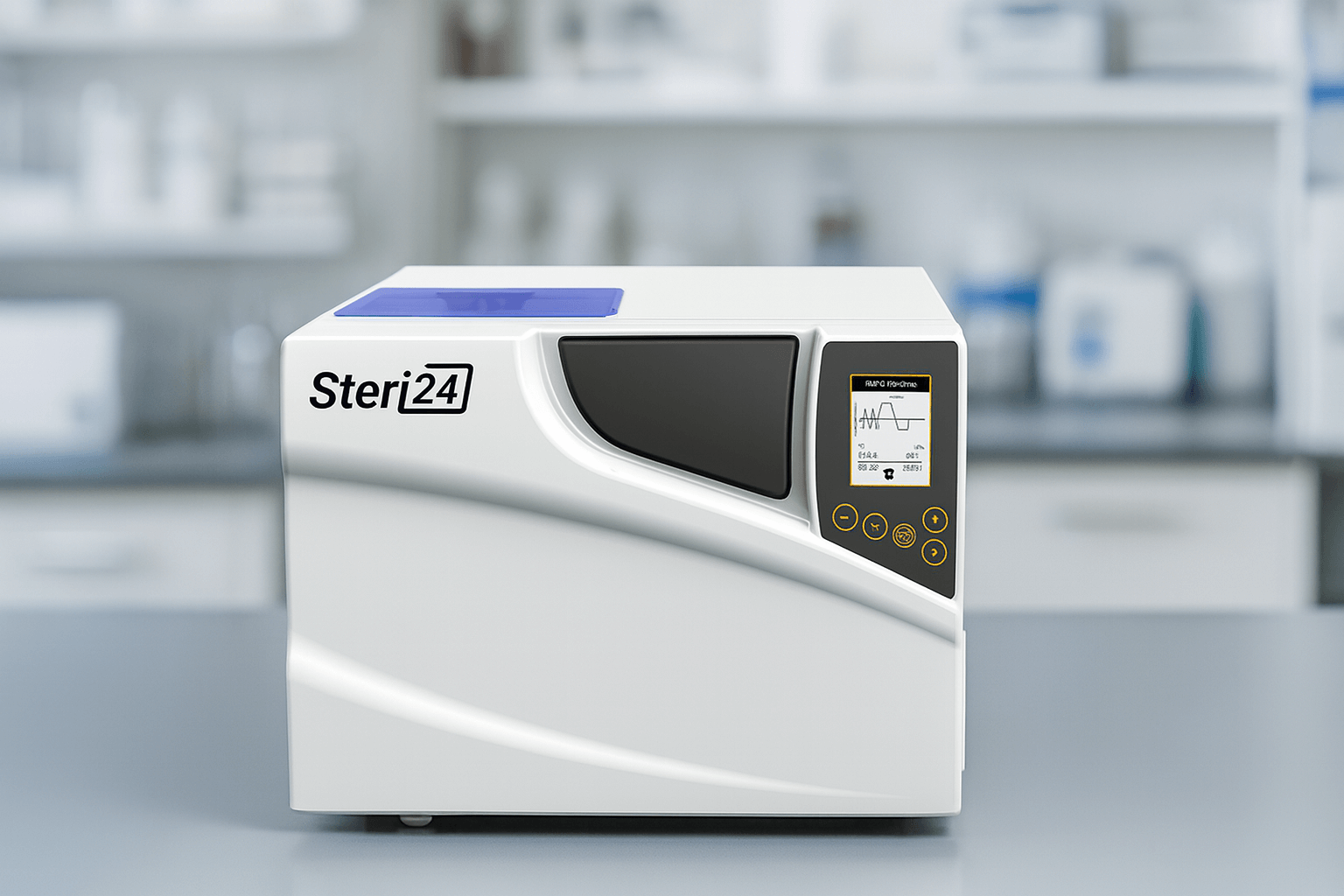 RKI 6: Sterilization in the Autoclave
 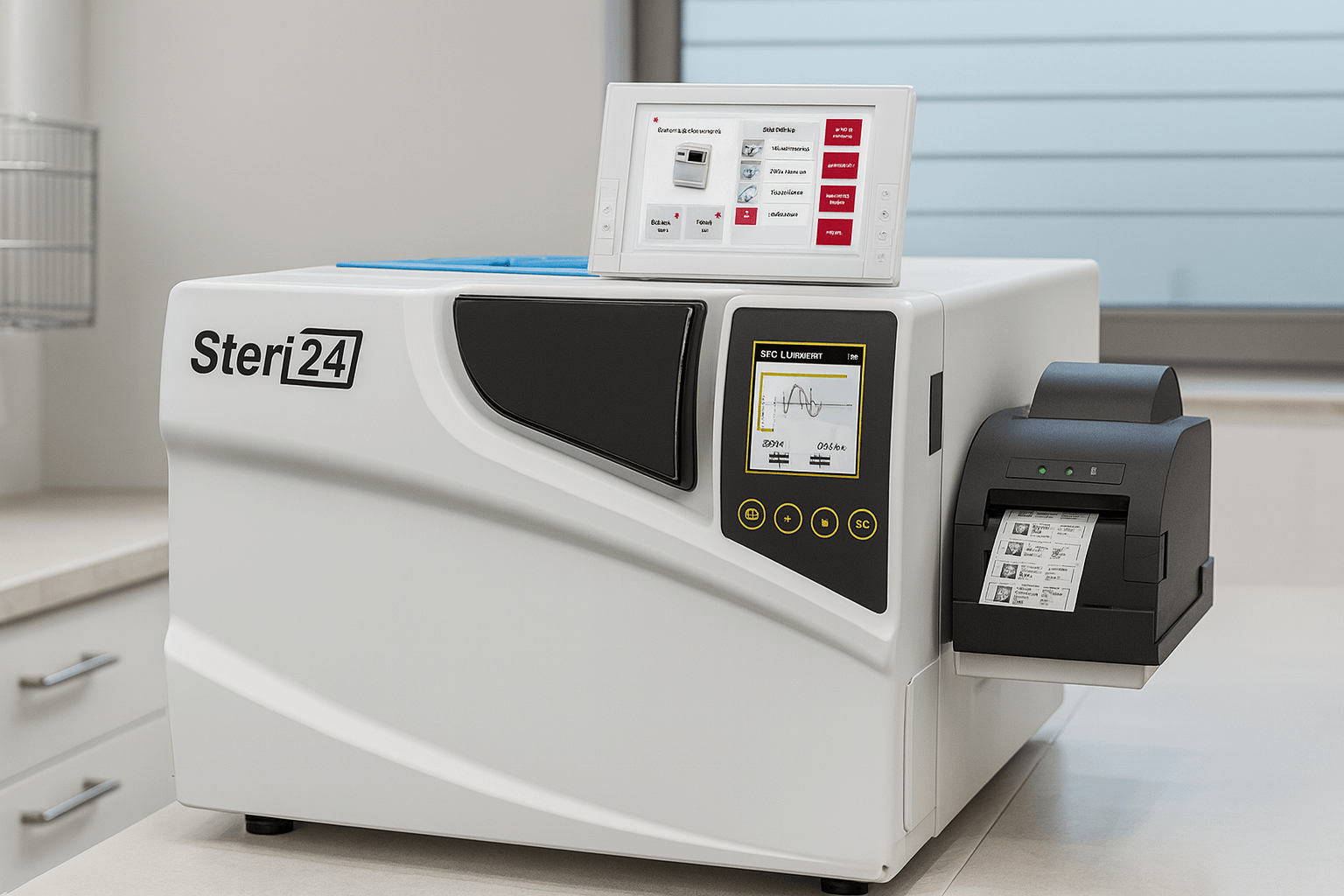 RKI 7: Release & Documentation
 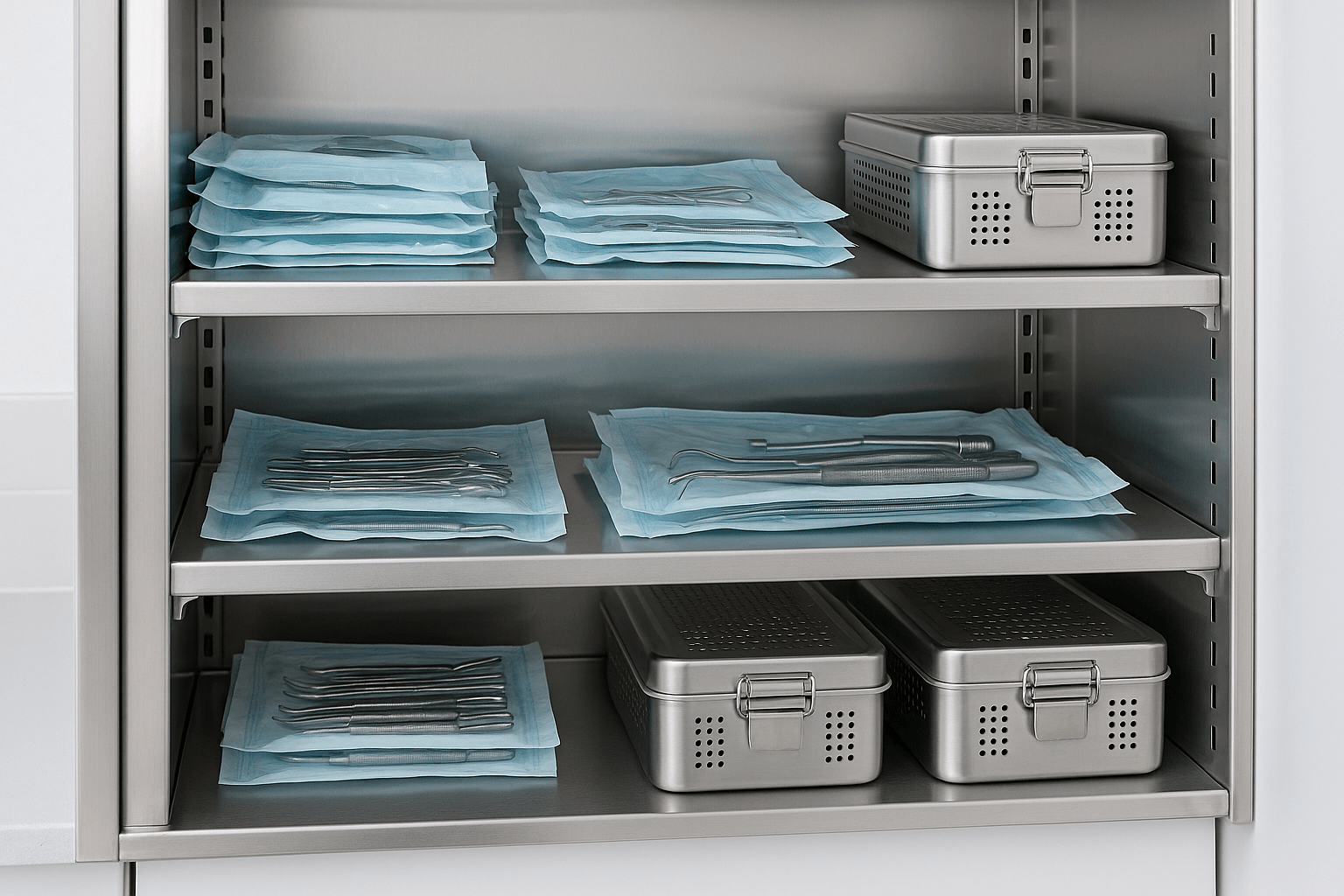 RKI 8: Storage of Sterile Instruments
 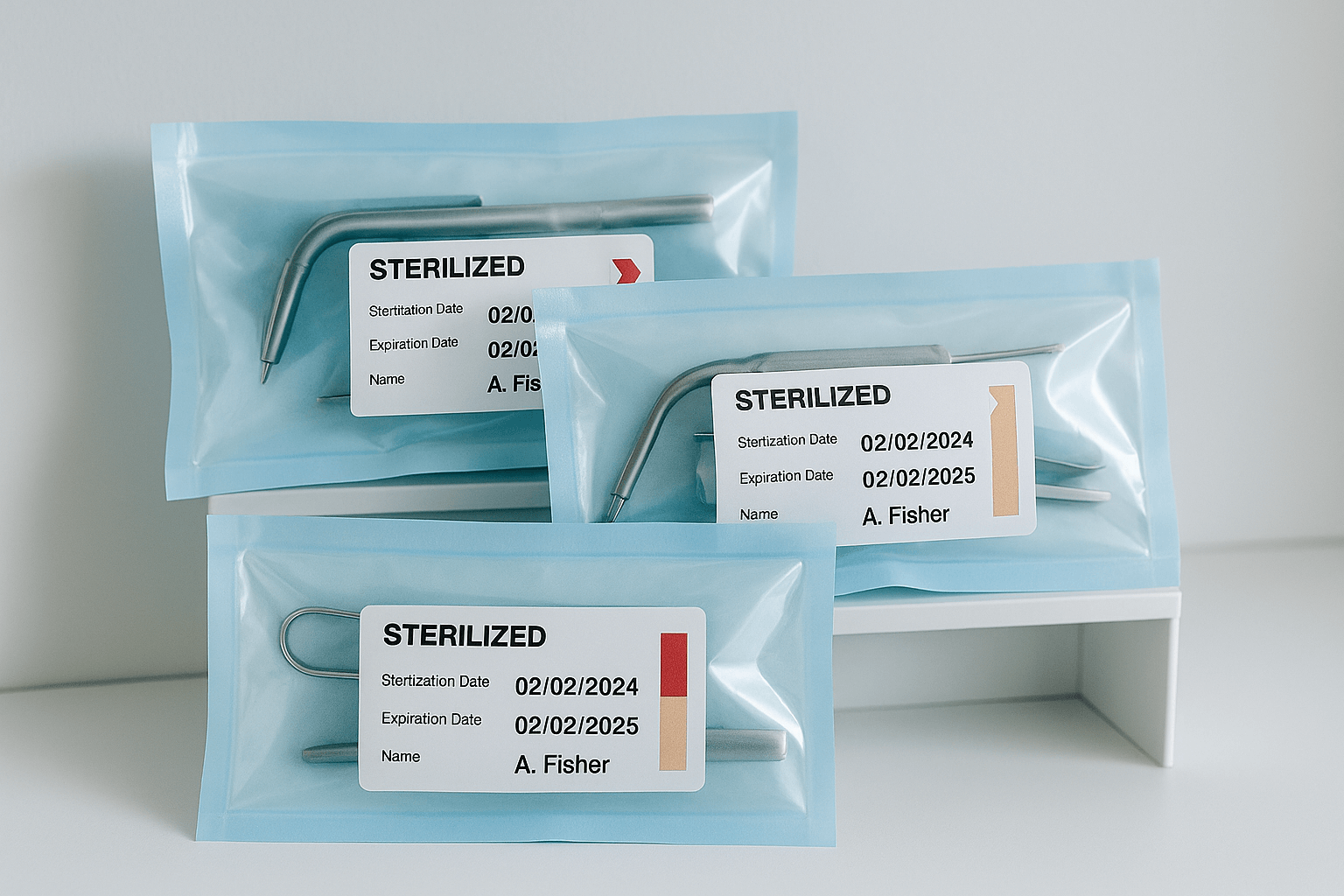 RKI 9: Labelling After Sterilization
 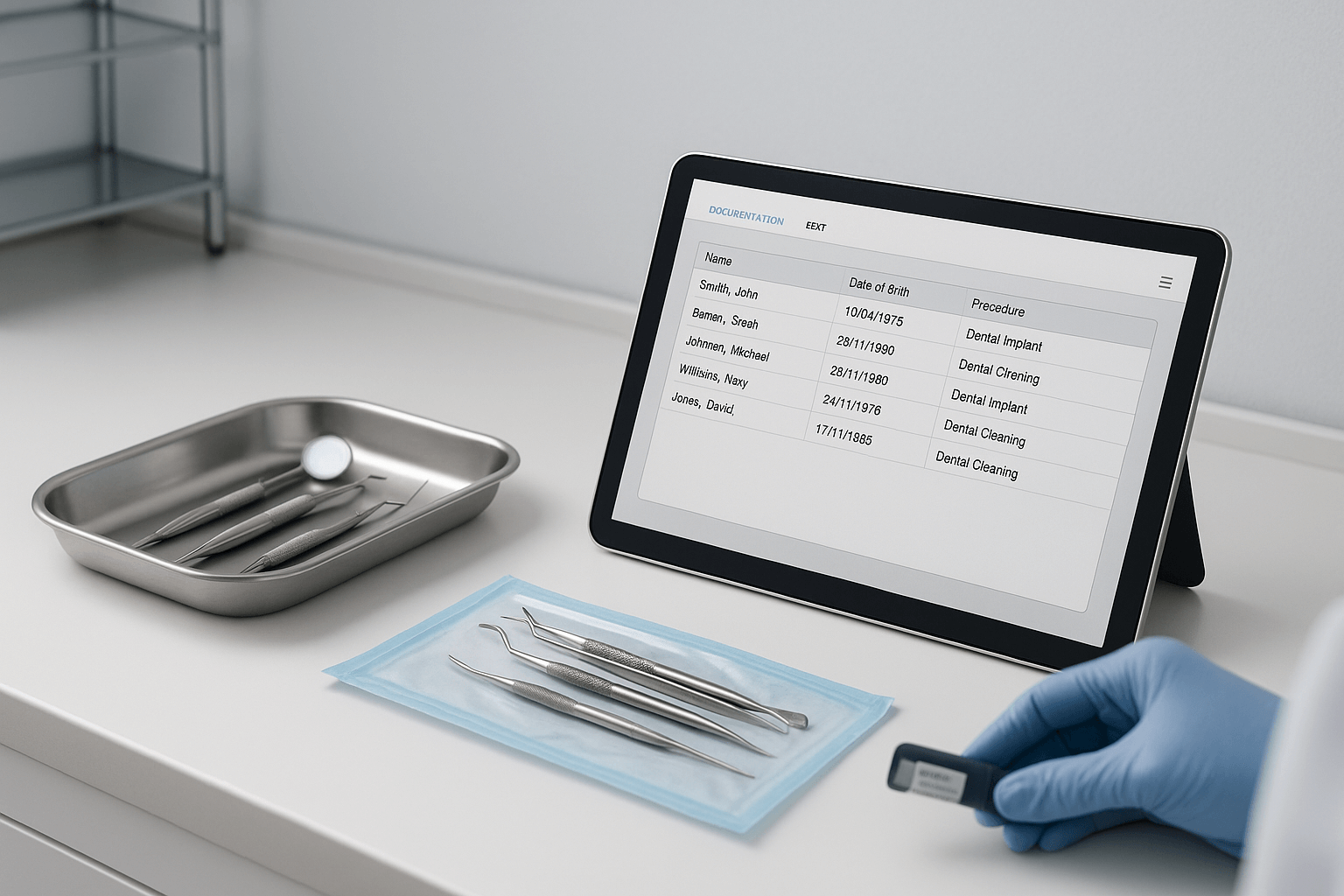 RKI 10: Documentation After Patient Use
 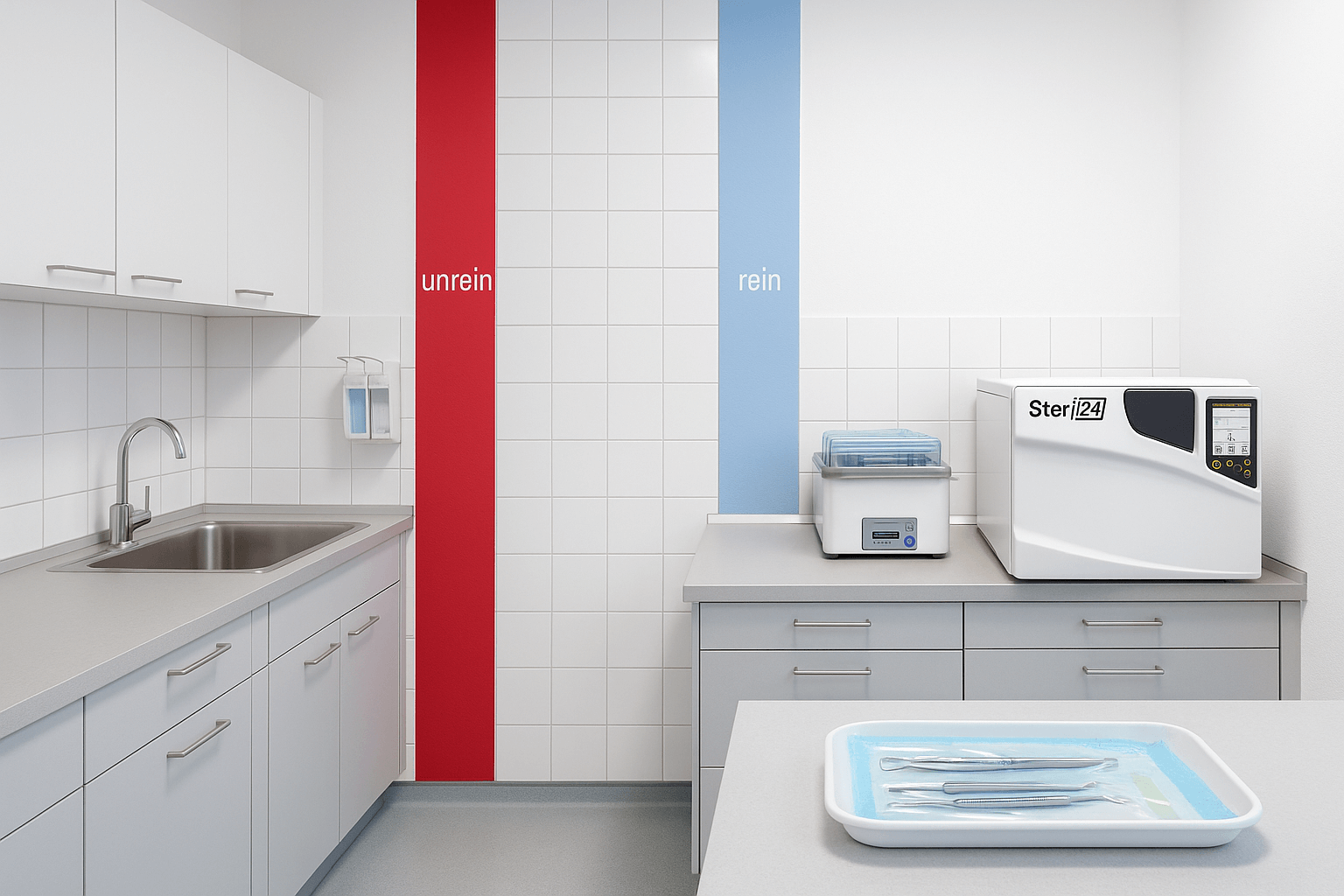 RKI 11: Hygiene Room per KRINKO
 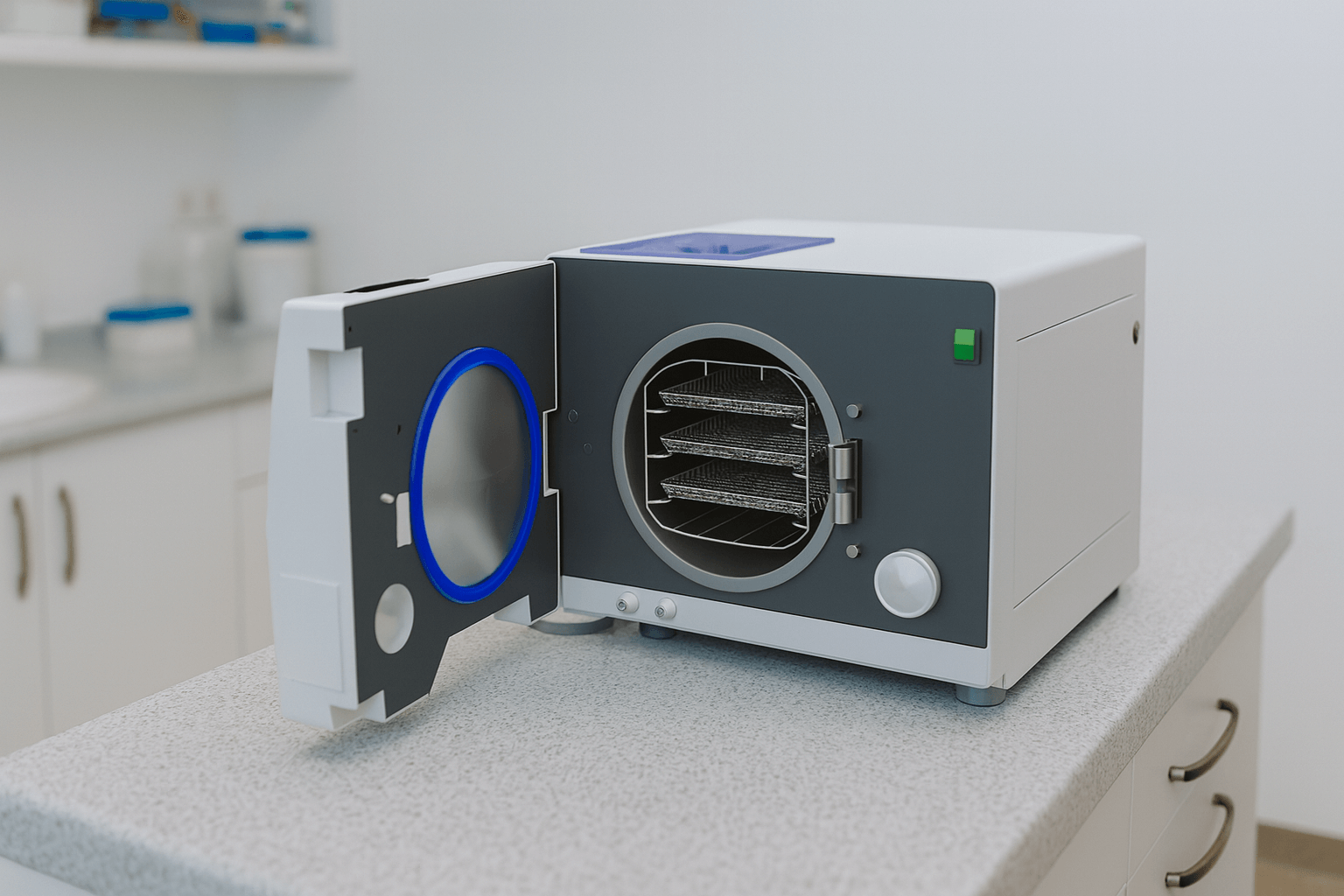 RKI 12: Initial Validation of Klasse B Autoclave
Meet RKI requirements – free of charge
Use the free ClavioSoft to run an audit check of your practice in just a few minutes – the software automatically generates any missing documentation. This saves you up to 90 % of the work.

Correct Pre-Cleaning of Instruments According to RKI
Pre-cleaning is the first step of actual reprocessing: it removes gross contamination such as blood and tissue immediately after use, before it can dry on. It is required whenever cleaning and disinfection cannot take place immediately or when drying-on is imminent – in practice, this applies to all instruments contaminated with blood, tissue or secretions. It is particularly important for instruments with increased requirements (Group B) and for critical instruments – and it decisively determines the success of all subsequent steps.
1Objective of pre-cleaning
The objective is to remove gross organic residues (blood, tissue, secretions) before they dry on. Dried-on contamination can hardly be fully removed later and may compromise the cleaning and sterilization outcome – and thus the entire sterile goods cycle. Important: Pre-cleaning must be non-fixating – i.e. without high, protein-fixating temperatures and without protein-coagulating agents. Therefore, do not use hot water (cold to lukewarm only) and do not use fixating disinfectants such as aldehydes before cleaning; according to KRINKO, temperatures above approximately 55 °C as well as active substances such as aldehyde and alcohol have a fixating effect.
Source: KRINKO/BfArM 2012, Section 2.2.1 (Preparation for reprocessing: pre-treatment, collection, pre-cleaning, disassembly if applicable, intermediate storage and transport).2For which instruments is pre-cleaning mandatory?
Pre-cleaning is required whenever cleaning and disinfection cannot take place immediately or when drying-on of blood/tissue is imminent – in practice, this applies to all instruments contaminated with blood, tissue or secretions. For critical instruments with increased requirements (Group B) – such as non-inspectable narrow or dead-end lumens, cavities with only one opening, or hard-to-reach complex surfaces – it is particularly important and must be carried out immediately after use, e.g. by immersing in a suitable solution. For non-critical and simple semi-critical A products, it is optional.
3Pre-cleaning procedure – step by step
1. Set down & prepare: Place instruments on a tray or in a suitable collection container after use. Open hinged joints so that no contamination remains in hard-to-reach areas. Sort out defective instruments.
2. Remove waste & disposables: Dispose of swabs, disposable gloves, etc. in accordance with the hygiene plan.
3. Contamination-proof transport: Bring the collection container covered/closed to the reprocessing room.
4. Gross cleaning: Rinse off gross contamination under running cold water; if necessary, scrub joints with a plastic brush. Flush cavities thoroughly.
5. Collect for main cleaning: Place the pre-cleaned instruments in a clean container – ready for cleaning & disinfection.
Example from daily practice
After a treatment, a surgical forceps, a scalpel and a curette lie on the tray – partially covered with blood and tissue residues. You place everything in a collection container, open the hinged joints and inspect each instrument for damage. Used swabs and disposables are discarded according to the hygiene plan, then you close the container and carry it to the reprocessing room. There you rinse each instrument under running cold water, loosen residues in the joints with a brush and flush the cavities of the curette thoroughly. The instruments are then placed in a clean container for main cleaning.
Find the right Klasse B autoclave
Important additional points per RKI & standards
These points are frequently overlooked in practice but are important for correct and legally compliant implementation:
- Automated cleaning/disinfection as the preferred next step: After pre-cleaning, instruments proceed to cleaning and disinfection – this is preferably carried out by machine in a washer-disinfector (thermal disinfector/WD), since according to KRINKO, automated processes are to be preferred due to their superior standardizability, reproducibility and occupational safety.Source: KRINKO/BfArM 2012, Section 2.2.2 ('automated processes ... are to be preferred')
- Timely reprocessing / defining disposal times: Reprocessing should begin as soon as possible after use to prevent drying-on. If this is not possible, suitable disposal times must be defined and drying-on must be bridged by non-fixating pre-treatment (dry or wet storage). Such provisions are most easily documented in your standard operating procedure – with the free ClavioSoft you can create and maintain these in just a few clicks. (A frequently cited internal guideline is to start automated reprocessing within approximately 2 hours – this specific time period comes from internal FAQ and is not stated verbatim in the KRINKO recommendation.)Source: KRINKO/BfArM 2012, Section 2.2.1 (defining disposal times, preventing drying-on); internal FAQ (approx. 2 h, WD)
- Active flushing of lumens/channels immediately after use: Lumens, channels and cavities must be actively flushed (e.g. with water via syringe/flushing adapter) and working channels should be flushed immediately after use, since cleaning cannot be assessed by inspection here and in sac-like cavities with only one opening, only dilution, not true flushing, is possible.Source: KRINKO/BfArM 2012, Section 1.2.1 (cavities with only one opening, 'only dilution possible') and 2.2.1 ('flushing of working channels immediately after use')
- Prevention of material damage/corrosion and crystallization: Chemical, mechanical and physical damage to instruments during pre-cleaning, transport or intermediate storage must be avoided – e.g. crystallization of fluid residues or corrosion. Limit exposure/standing times and use only materials and agents that are compatible with the instrument material and approved by the manufacturer.Source: KRINKO/BfArM 2012, Section 2.2.1 (prevention of chemical/mechanical/physical damage, crystallization of fluid residues); DIN EN ISO 17664 (manufacturer instructions)
- Manufacturer instructions for reprocessing as the binding basis: The validated reprocessing instructions provided by the instrument manufacturer regarding method, permissible agents, temperature and disassembly are authoritative and must be cross-checked with the chosen procedure before pre-cleaning.Source: DIN EN ISO 17664 (referenced multiple times in KRINKO 2012, including Section 1.4); MPBetreibV Section 8
- Safe handling of sharp/pointed instruments: Sharp and pointed instruments (e.g. scalpel, sharp spoon/curette) pose an increased risk of needlestick/cut injuries during manual pre-cleaning. Collect them safely and separately, brush below the water surface (to prevent aerosol/splashing) and do not handle with the blade facing the body.Source: KRINKO/BfArM 2012, Section 2.2.1 (occupational safety, TRBA 250); Biological Agents Ordinance in conjunction with TRBA 250
Required equipment, consumables & accessories
Checklist for this processing step – keep these items ready (shopping list):
Equipment
- Sink/rinsing station with cold and lukewarm water in the contaminated area
- Washer-disinfector (thermal disinfector/WD) as the preferred next step Order here in the shop
- Ultrasonic cleaner as a supplementary cleaning step Order here in the shop
- Water treatment system for decalcified/demineralized water (for the final rinse of corrosion-sensitive instruments) Order here in the shop
Consumables
- Non-fixating, material-compatible and manufacturer-approved pre-treatment/pre-cleaning agent (for any wet storage) Order here in the shop
- Suitable puncture-resistant and liquid-proof protective gloves
- Safety goggles and liquid-proof apron/protective gown (where there is a risk of splashing)
- Disposable wipes for wiping off gross external contamination
- Disposal containers for single-use items and puncture-proof containers for sharp/pointed waste (in accordance with the hygiene plan)
Accessories
- Soft plastic/nylon brushes (no metal brushes) for joints and surfaces
- Flushing pistol/syringe with suitable adapters for flushing lumens and channels
- Closed, contamination-proof collection/transport containers with lids (perforated trays/sieve baskets) Order here in the shop
- Clean container/sieve basket for holding pre-cleaned instruments for main cleaning Order here in the shop
- Pre-treatment basin with lid for defined wet storage
- Documented standard operating procedure (SOP) for pre-cleaning at the workstation Create digitally with ClavioSoft
Templates & sources
- KRINKO/BfArM: "Requirements for hygiene in the reprocessing of medical devices", Bundesgesundheitsbl. 2012; 55:1244–1310 – Section 2.2.1.
- Medical Devices Operator Ordinance (MPBetreibV), § 8.
- Work instructions of the Dental Chamber; Standard operating procedure "critical B" (Biological Agents Ordinance observed).
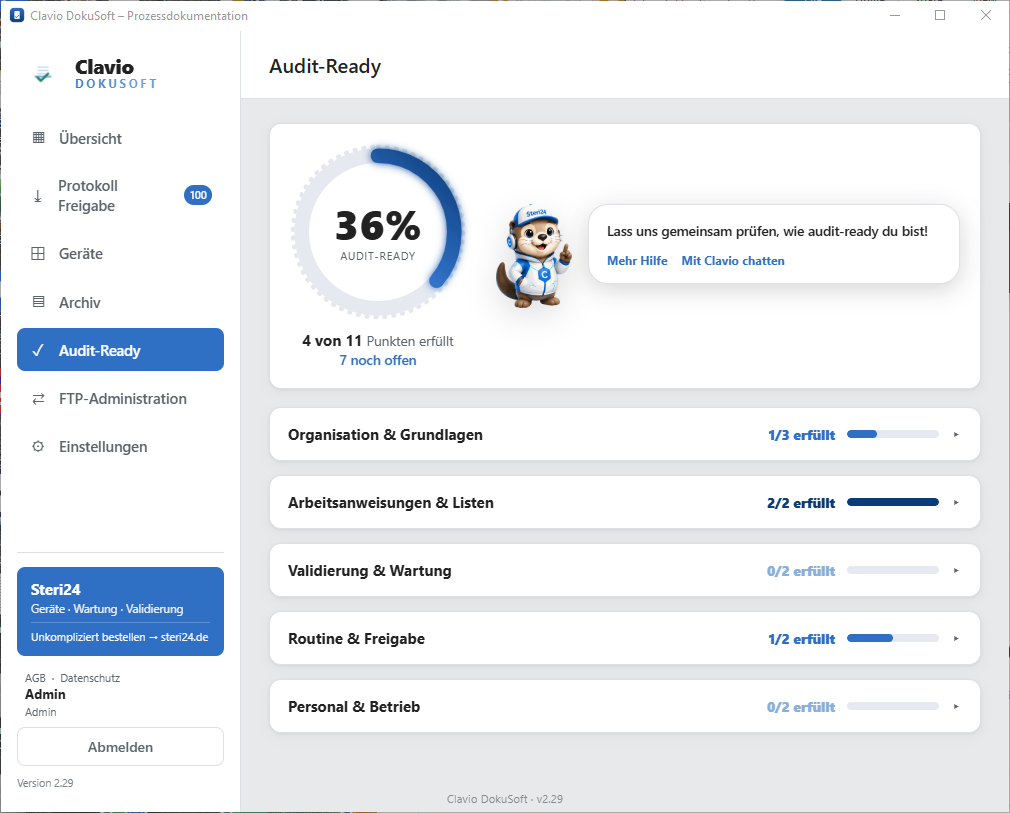
How audit-ready is your practice?
Find out in just a few minutes how well prepared you are for the next practice inspection — category by category, with clear progress tracking and specific open items. Completely free with ClavioSoft.
.png "Preview: Clavio DokuSoft")


Frequently Asked Questions
RKI Correct Pre-Cleaning – key questions answered clearly.