RKI Labelling After Sterilization

Meet RKI requirements – free of charge

Use the free ClavioSoft to run an audit check of your practice in just a few minutes – the software automatically generates any missing documentation. This saves you up to 90 % of the work.

ClavioSoft assists you with documentation and labelling of sterilized goods
 

Labelling of Sterilized Goods After Sterilization


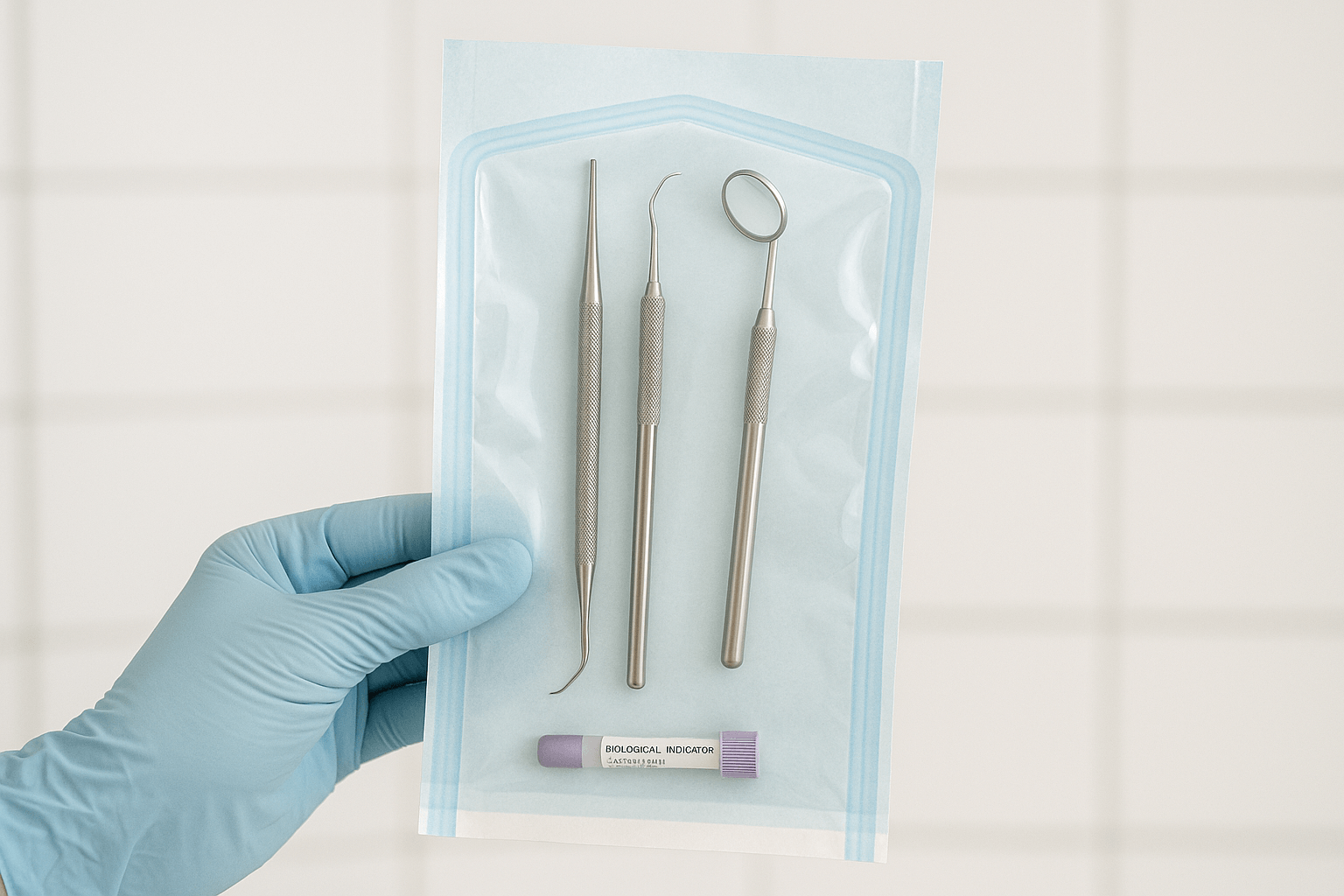
The labelling of sterilized instruments enables complete traceability of sterilized goods – from the batch to the patient. For critical instruments, it is required by law.

1Which instruments must be labelled?

Primarily critical instruments that come into contact with sterile body areas. Traceability is essential here to minimize the risk of infection and to meet legal requirements.

Source: The obligation for traceable labelling arises from the risk classification (critical A/B/C) in conjunction with KRINKO/BfArM 2012, Sections 2.2.6 (labelling content) and 2.2.8 (batch documentation/traceability) as well as MPBetreibV.

2Mandatory information on the packaging

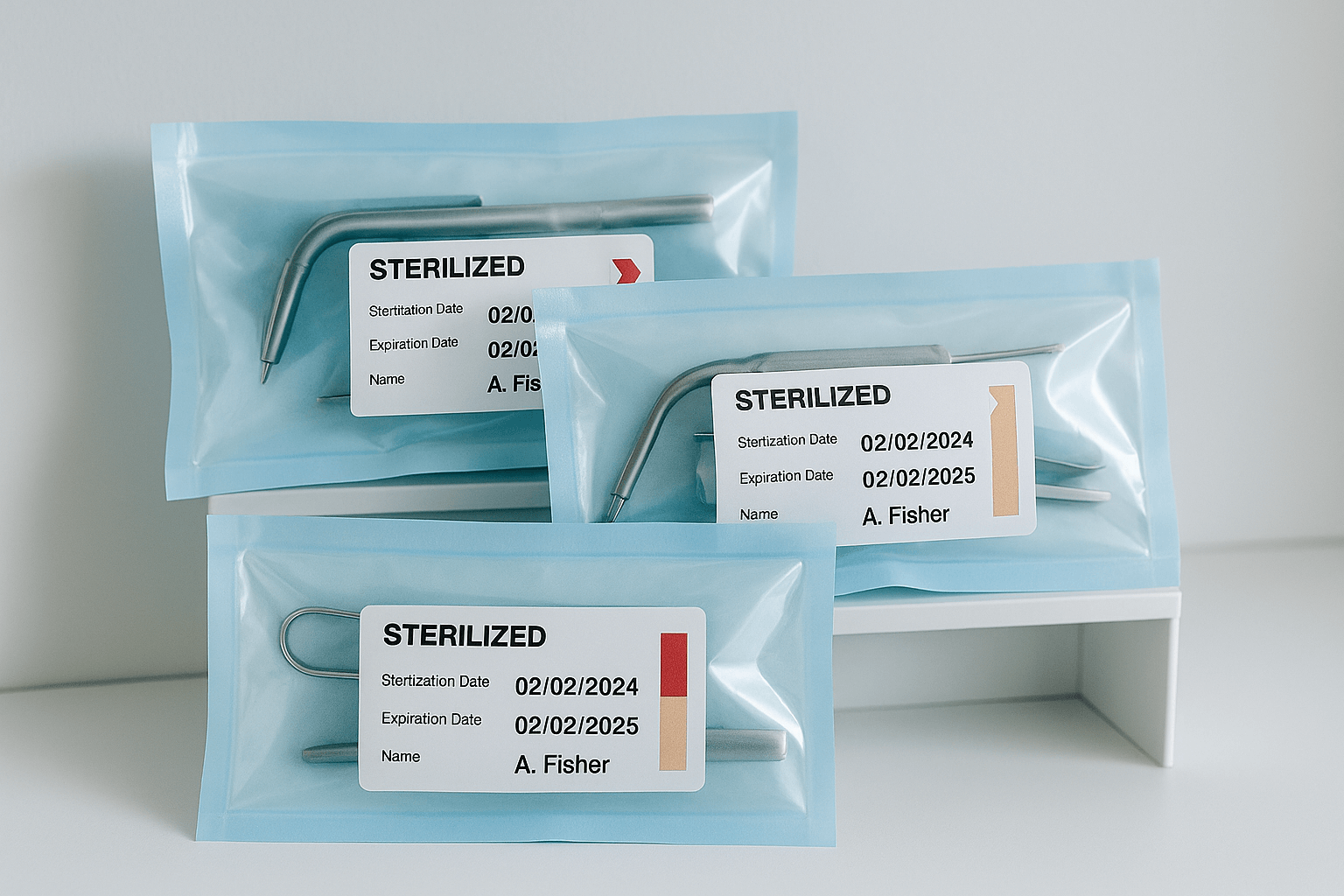
· Sterilization date
· Unique batch identification (sterilization batch / cycle number) for traceability to the batch
· if applicable, expiry date – as well as, if shorter, the sterile shelf life (depending on packaging, transport and storage conditions)
· documented release decision with assignment to the releasing person (batch documentation)

This ensures that the sterilization packaging can be used at any time to verify when and under what conditions the instrument was sterilized.

A barcode or serial number is not mandatory but rather a recommended convenience and digitalization option. Whether the initials of the releasing person are additionally printed on each label is a matter of practice policy; in practice, the earlier of the two dates (expiry date or sterile shelf life) is applied as the use-by date.

3Labelling methods

1. Label printer (e.g. SteriTrace). Such a label printer produces self-adhesive labels with all required information and a barcode – efficient and with minimal errors. SteriTrace covers the entire documentation cycle even without a connection to practice management software.

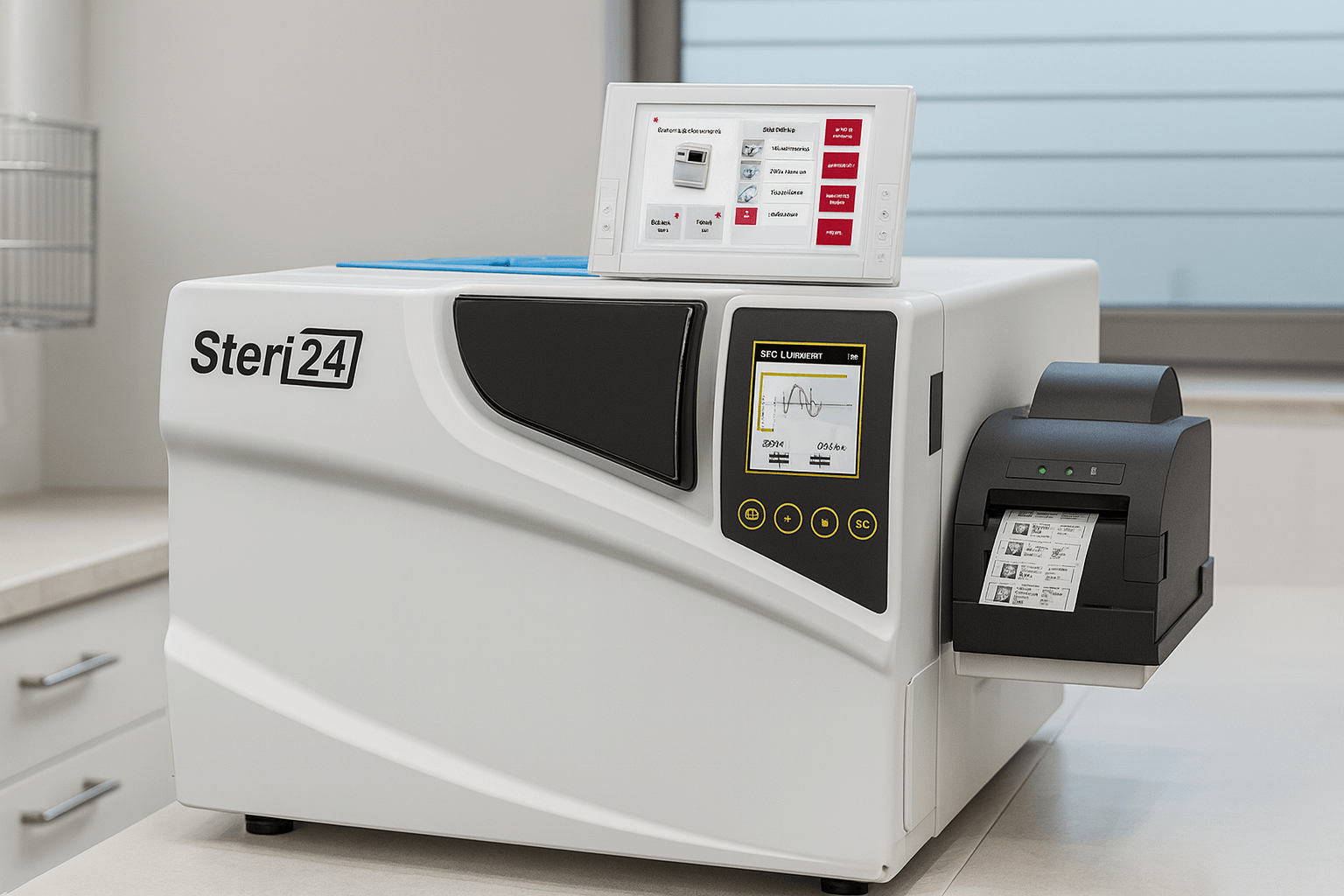
2. Via practice management software. Networked premium autoclaves from Steri24 can be connected via Wi-Fi/LAN to practice management software; labels are generated directly from the documentation. (Hygiene management modules in the practice software may incur additional costs.)

3. Manually by pen. Without a printer, writing is done exclusively on the film side (never on the permeable paper side) and outside the seal seam – using a suitable, solvent-free/low-migration sterilization marker.

Efficiency tip: Automatically printed labels with barcodes save time and prevent transcription errors – and they form the basis for later assignment to the patient (Step 10).
Print labels directly from the process – networked and audit-proof. Find the right autoclave with documentation connectivity for your practice.
Find the right Klasse B autoclave

Important additional points per RKI & standards

These points are frequently overlooked in practice but are essential for correct and legally compliant implementation:

  • Timing of labelling / batch assignment only after release: It should be clarified that the final batch identification is only applied after a successful, documented batch release (comparison of process parameters with the validation report, inspection of packaging and indicators). The batch number is uniquely assigned to the respective load.Source: KRINKO/BfArM 2012, Sections 2.2.7 (documented release) and 2.2.8 (batch documentation); Steri24 FAQ (labelling always after sterilization)
  • Product designation must be identifiable: For the user, the usage-relevant designation of the medical device must be identifiable where not immediately apparent (e.g. model/size, set/tray name, contents). For trays/sets, this is achieved via a unique set identifier in conjunction with an illustrated tray list/standard load configuration.Source: KRINKO/BfArM 2012, Section 2.2.6 ("designation of the medical device that permits usage-relevant identification")
  • Evidence of a completed process (process indicator): The packaging must show the user that the pack has actually undergone the sterilization process. This is typically achieved via a process indicator (indicator dot on the sterilization packaging or indicator tape) that distinguishes sterilized from unsterilized packs.Source: KRINKO/BfArM 2012, Section 2.2.6 (process indicators; "the completed process must be identifiable for the user")
  • Traceability level by risk class: For critical-A and critical-B medical devices, traceability must be ensured at least to the respective batch; for critical C, traceability to the individual reprocessed product is required (more rigorous labelling/documentation).Source: KRINKO/BfArM 2012, Section 2.2.6 (critical A/B = batch, critical C = reprocessed product)
  • Retention period for documentation: The batch/release documentation linked to the labelling must be retained for at least 5 years; further retention periods (e.g. patient documentation) remain unaffected. This tamper-proof archiving is handled by the free ClavioSoft entirely without paper folders.Source: KRINKO/BfArM 2012, Section 2.2.8 ("to be retained for at least 5 years"); MPBetreibV Section 8
  • Assignment of batch to patient (application documentation): Complete traceability "to the patient" should be described in concrete terms: When critical medical devices are used, the batch is assigned to the patient (e.g. via a second, removable label placed in the patient record or the surgical protocol) so that all affected applications can be identified in the event of damage or recall. This batch-to-patient assignment can be documented quickly and traceably with the free ClavioSoft.Source: KRINKO/BfArM 2012 (traceability); MPBetreibV Section 8 (documentation); Steri24 FAQ (removable tracing labels for the patient record)
  • Legibility/durability of labelling throughout the shelf life: The labelling must remain legible throughout the entire shelf life. Store thermal labels/thermal paper in a dry location, protected from heat and light, as legibility may otherwise deteriorate; for removable documentation labels, the second label is transferred to the patient record.Source: Steri24 FAQ (thermal paper/label durability, removable tracing labels); KRINKO/BfArM 2012, Section 2.2.6 (labelling must be identifiable/legible for the user)

Required equipment, consumables & accessories

Checklist for this step – items you should have ready (shopping list):

Equipment

  • Klasse B autoclave with batch-related process documentation (printout/USB/digital) as the basis for documented release Order here in the shop
  • Label printer (direct thermal) for automatically generated labelling/documentation labels (optional, for efficient traceability) Order here in the shop
  • Tablet/PC with digital documentation software for paperless batch release and label generation (optional) Order here in the shop
  • Barcode scanner for assigning the batch to the patient record (optional, for digital documentation) Order here in the shop

Consumables

  • Thermal label rolls compatible with the printer (ideally with a removable second label for the patient record) Order here in the shop
  • Thermal paper/documentation rolls for the autoclave printout (for non-digital documentation) Order here in the shop
  • Solvent-free, low-migration sterilization marker for manual labelling on the film side Order here in the shop
  • USB stick (backup/archive of batch protocols, for USB documentation)
  • Pre-printed forms/batch release forms (manual variant) or illustrated tray lists/standard load configurations for sets Create digitally with ClavioSoft

Accessories

  • Printer mount/stand and connecting cable for the label printer Order here in the shop
  • Labelling-friendly work surface and label/documentation storage at the sterile goods packing station
  • Folders/archive system for tamper-proof retention of batch/release documentation (at least 5 years) Create digitally with ClavioSoft
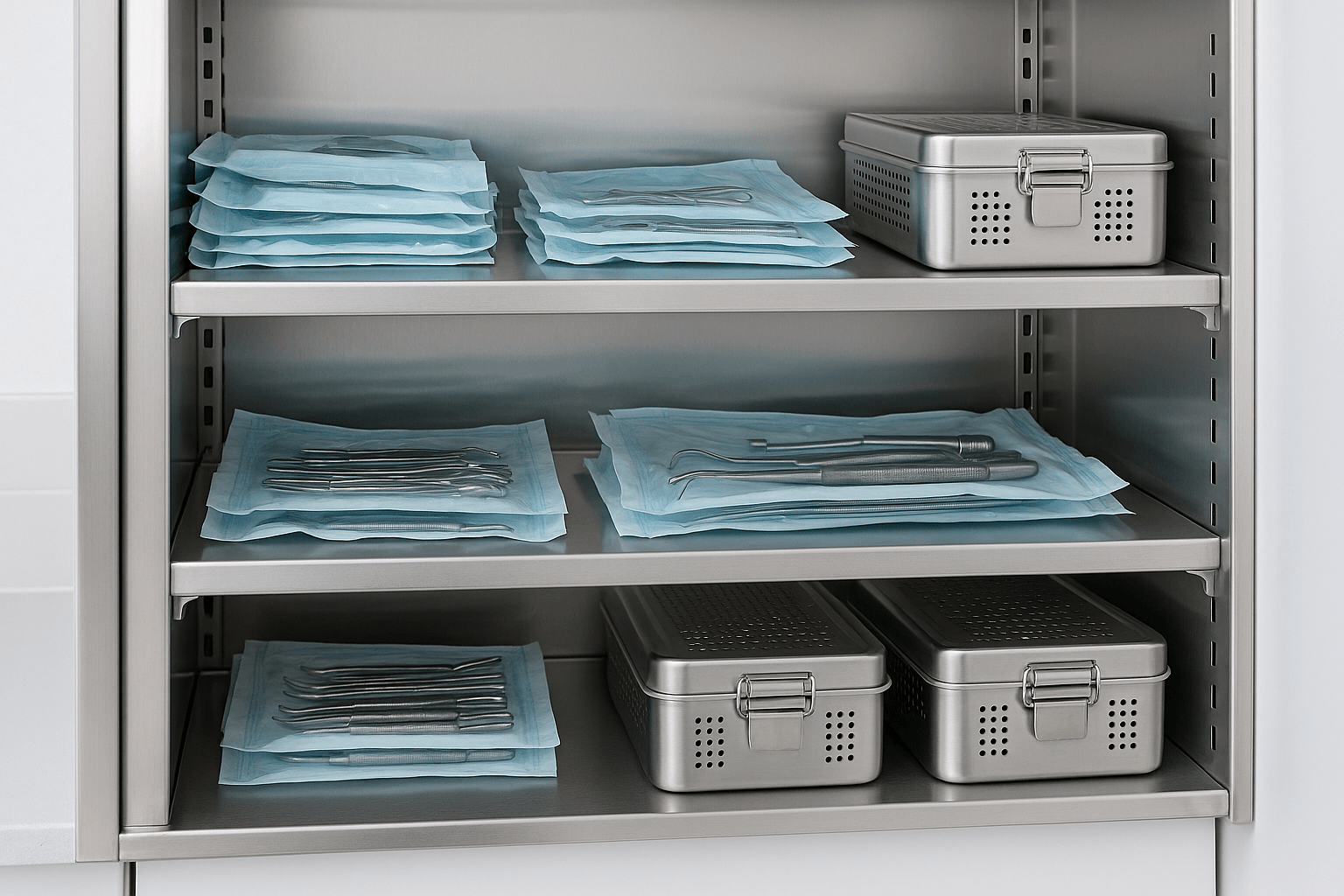
  • Sterile goods shelf with defined, dry storage conditions to ensure labelling and shelf life compliance

References

  1. KRINKO/BfArM 2012, Bundesgesundheitsbl. 55:1244–1310 – Section 2.2.6.
  2. MPBetreibV § 8 (traceability, documentation).

How audit-ready is your practice?

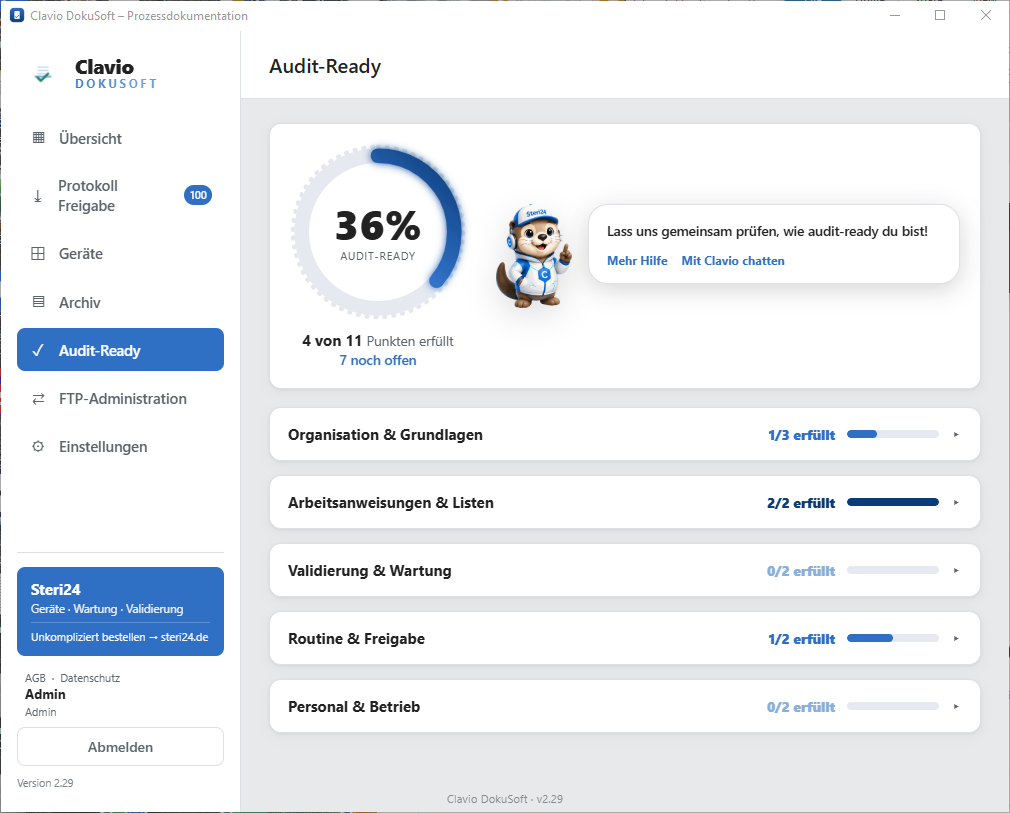
Find out in just a few minutes how well you are prepared for the next inspection — category by category, with clear progress tracking and specific open items. Completely free with ClavioSoft.

ClavioSoft Audit-Ready Check: progress display and categories
Download ClavioSoft for free
Free forever For autoclaves from all manufacturers RKI-compliant

1 to 1 (from a total of 1)

Frequently Asked Questions

RKI Labelling After Sterilization – key questions answered clearly.

Which instruments must be labelled after sterilization?
Primarily critical instruments that come into contact with sterile body areas must be traceably labelled. This arises from the risk classification (critical A/B/C) in conjunction with KRINKO/BfArM 2012, Sections 2.2.6 and 2.2.8, as well as the MPBetreibV.
Do I need to label individual instruments such as forceps directly?
No. The packaging is labelled, not the instrument itself. Packaged sterilized sets or individual instruments receive their information (date, batch, release) on the film side of the pouch or via an adhesive label.
What must appear on the packaging of sterilized instruments according to KRINKO?
Mandatory information includes the sterilization date, a unique batch identification (cycle number) for traceability, the expiry date or shorter sterile shelf life where applicable, and the documented release decision (KRINKO/BfArM 2012, 2.2.6).
When should I label the sterilization packaging, before or after autoclaving?
Always after sterilization. The final batch identification is only applied after a successful, documented batch release. Labelling beforehand would suggest a sterilization that has not yet taken place and would compromise traceability.
Why must the batch number only be applied after release?
The final batch identification requires a successful, documented release: comparison of process parameters with the validation report and inspection of packaging and indicators. Only then is the batch uniquely assigned to the load (KRINKO/BfArM 2012, 2.2.7 and 2.2.8).
On which side of the sterilization pouch may I write, paper or film?
Labelling is always done on the film side, never on the permeable paper side, and outside the seal seam. On the paper side, ink and solvents could compromise the sterile barrier or penetrate through the pores.
Is handwritten labelling of sterilized goods permissible?
Yes. Handwritten labelling is equally permissible as a label or PC-based solution, provided traceability is ensured. What matters is the content of the information, not the printing method (KRINKO/BfArM 2012, 2.2.6).
What methods are available for labelling sterilized goods?
Three methods are common: a label printer that produces self-adhesive labels with information and barcode; labels generated directly from connected practice management software; or manual labelling with a suitable sterilization marker on the film side. Printed labels with barcodes are the least error-prone.
Which pen should I use for labelling sterilization packaging?
Use a suitable, solvent-free or low-migration sterilization marker. Writing is done exclusively on the film side and outside the seal seam, so that neither the sterile barrier nor the package contents are compromised.
Can I use a regular ballpoint pen or permanent marker for labelling?
This is not recommended. Conventional pens may contain solvents or may indent or perforate the film, thereby compromising the sterile barrier. Use a designated, low-migration sterilization marker on the film side.
Is a barcode or serial number on the label mandatory?
No. A barcode or serial number is not mandatory but rather a recommended convenience and digitalization option. It facilitates traceability and patient assignment but is not a required element under KRINKO.
What does traceability mean in the context of sterilized goods labelling?
Traceability means that it is possible to verify at any time when and under what conditions an instrument was sterilized. The batch number on the packaging establishes the link to the documented batch and the sterilization protocol.
What level of traceability is required for critical-A and critical-B instruments?
For critical-A and critical-B medical devices, traceability must be ensured at least to the respective batch. The batch identification on the packaging is sufficient to assign the process to the load (KRINKO/BfArM 2012, 2.2.6).
Why do critical-C instruments require labelling at the individual product level?
For critical C, traceability to the individual reprocessed product is required, not just to the batch. This means more rigorous labelling and documentation because these products carry a higher risk (KRINKO/BfArM 2012, 2.2.6).
What is the difference between sterilization date and expiry date on the label?
The sterilization date records when sterilization took place. The expiry date or shorter sterile shelf life indicates until when safe use is guaranteed. The earlier of the two dates is applied as the use-by date.
When must an expiry date or sterile shelf life be indicated?
A sterile shelf life must be indicated if it is shorter than the expiry date; if safe use is time-limited, the earlier date must appear on the packaging. It depends on packaging, transport and storage conditions (KRINKO/BfArM 2012, 2.2.6).
What is the sterile shelf life and what does it depend on?
The sterile shelf life is the period during which the sterility of a packaged batch is guaranteed. It depends on the type of packaging, transport and storage conditions and is indicated if it is shorter than the expiry date (KRINKO/BfArM 2012, 2.2.6).
Must the releasing person be noted on the label?
The release decision with assignment to the releasing person is part of the batch documentation. Whether the initials are additionally printed on each label is a matter of practice policy; what is mandatory is traceable documentation of the release, not the imprint on every package.
Must the designation of the medical device be identifiable on the packaging?
Yes, where it is not immediately apparent. A usage-relevant identification must be possible for the user, such as model, size, set or tray name and contents (KRINKO/BfArM 2012, 2.2.6).
How do I correctly label complete trays or instrument sets?
For trays and sets, identification is achieved via a unique set identifier in conjunction with an illustrated tray list or standard load configuration. This ensures it is traceable which contents belong to the set and that the release can be carried out correctly.
How can the user tell that a pack has undergone the sterilization process?
The packaging must show that the pack has actually undergone the process. This is typically achieved via a process indicator, such as the indicator dot on the sterilization packaging or an indicator tape (KRINKO/BfArM 2012, 2.2.6).
Does the process indicator on the pouch replace the batch identification?
No. The process indicator only shows that the pack has undergone a process, not its successful completion or the batch. Batch identification and documented release are additionally required.
What is the difference between a process indicator and a batch indicator?
A process indicator only shows that the pack was exposed to the process. It replaces neither a batch indicator in the load nor the documented batch release and makes no statement about the achieved process parameters.
How is the batch number assigned?
The batch number is a sequential number that increments with each programme cycle of the autoclave. It is uniquely assigned to the respective load and establishes the link between the packaging labelling and the batch documentation.
Must a batch number also be documented for the washer-disinfector?
Yes. For the washer-disinfector (WD) as well, the batch number increments with each programme cycle, and batches must be traceably documented just as with the autoclave, so that the entire reprocessing chain remains traceable.
How long must I retain batch and release documentation?
The batch and release documentation linked to the labelling must be retained for at least 5 years (KRINKO/BfArM 2012, 2.2.8; MPBetreibV). Further retention periods, such as for patient documentation, remain unaffected.
Do indicator strips and Helix test strips need to be archived long-term?
The physical indicator and Helix test strips themselves do not need to be archived, provided their results form part of the documented batch release. What matters is that the release is traceably documented and linked to the labelling.
How are labels generated with a label printer for sterilized goods?
A label printer produces self-adhesive labels with all mandatory information and a barcode, efficiently and with minimal errors. Networked solutions cover the entire documentation cycle, in some cases even without a connection to practice management software.
Can I print labels directly from the sterilization process?
Yes. Networked premium Klasse B autoclaves can be connected via Wi-Fi/LAN so that labels are generated directly from the documentation. This saves time and prevents transcription errors during labelling.
What is the barcode on the sterilized goods label useful for during patient treatment?
The barcode is the basis for assigning the batch to the patient in the treatment documentation. Using a barcode reader connected to a PC, a seamless chain is established from the sterilization batch to the treated patient.
Does documentation software help with correct labelling?
Yes. Documentation software such as ClavioSoft generates labels with all mandatory information and barcode directly from the process, links them in a tamper-proof manner to the batch release, and handles retention without paper folders. This reduces errors and effort.
How much does a label printer for sterilized goods labelling cost?
With the premium Klasse B autoclave, the professional label printer is included; with the Pro model, it is not. A standalone label printer system is in the range of around 500 euros; the label roll is not included in the scope of delivery. We are happy to provide current prices on request.
How many labels are on a roll and what are they used for?
A standard roll contains approximately 1,000 labels. They are used for labelling packaged instruments and containers with the mandatory information and barcode. We are happy to provide the current price on request.
Must the sterilization marker comply with ISO 11140-1?
No, there is no reference to ISO 11140-1; this standard applies to chemical indicators, not labelling pens. The marker is simply recommended for labelling packaging on the film side after sterilization.
How long do printed labels on thermal paper last?
Thermal printing can fade when exposed to heat, light and moisture, so durability is limited. Store receipts in a cool, dry place protected from heat and additionally back up the batch digitally to ensure long-term tamper-proof legibility.
Do sterilization containers also need to be labelled?
Yes. Reusable sterilization containers must also be labelled so that contents, sterilization date, batch and release are identifiable and traceable. Adhesive labels or card holders on the container are suitable for this purpose.
Is purely digital documentation sufficient, or must the packaging still be labelled?
Digital documentation complements the labelling but does not replace it. The packaging itself must be labelled so that the user can identify the batch, date and release status directly on the sterilized goods.
What must I be able to demonstrate regarding labelling during a practice inspection?
You must demonstrate that packaged sterilized goods bear the sterilization date, batch identification, use-by date where applicable, and a documented release, and that the batch is traceable via the documentation (KRINKO/BfArM 2012, 2.2.6 and 2.2.8).
What are the legal bases for the labelling requirement?
The obligation for traceable labelling arises from the risk classification in conjunction with KRINKO/BfArM 2012, Sections 2.2.6 (labelling content) and 2.2.8 (batch documentation) as well as the MPBetreibV. It applies in particular to critical medical devices.
Is the labelling of sterilized goods mandatory in dental practices?
Yes. Dental practices regularly reprocess critical instruments for which traceability, and thus labelling of the packaging, is mandatory. The sterilization date, batch and release must be traceably documented.
Does the labelling requirement also apply to podiatry and foot care?
Yes. If critical instruments are reprocessed in podiatry or foot care, the same requirements apply: the packaging must bear the sterilization date, batch identification and release status so that every batch remains traceable.
What happens if the batch number is missing from the packaging?
Without a batch number, the link between the sterilized goods and the sterilization protocol cannot be established; traceability is not ensured. Such instruments are considered not properly released and should not be used.
May I label and use sterilized goods without documented release?
No. The final labelling is only applied after a successful, documented batch release. Without release, the sterilized goods must not be made available for use (KRINKO/BfArM 2012, 2.2.7).
Who is authorized to release a batch, and must this be formally regulated?
The persons authorized to release batches must be designated in writing for quality management purposes. The standard operating procedure must specify the form of release documentation and the procedure in case of deviations (KRINKO/BfArM 2012, 2.2.7).
What should I do if a label is illegible or damaged?
If the labelling is no longer clearly legible, traceability is not ensured. The affected sterilized goods should be reprocessed, repackaged and correctly labelled rather than used when in doubt.
Do I need to re-label when repacking into new packaging?
Yes. If sterilized goods are repacked and re-sterilized, they receive a new batch and thus new labelling with the current date. The old labelling must not be carried over, as it refers to the previous process.
How do I label expired sterilized goods that are re-sterilized?
Packaged instruments may be re-sterilized after the shelf life has expired, provided the packaging is undamaged and clean, but must then be repackaged. They are subsequently re-labelled with the current sterilization date and a new batch number.
What additional information is required when reprocessing is performed on behalf of another operator?
If reprocessing is carried out by a third party, the name and address of the reprocessing company must additionally be identifiable. This ensures it remains traceable who reprocessed and released the medical device (KRINKO/BfArM 2012, 2.2.6).
Which standard applies to symbols on sterilized goods labelling?
For the use of symbols in labelling, the KRINKO/BfArM recommendation refers to the relevant standards in the appendix (e.g. DIN EN 980 for symbols for the labelling of medical devices). Symbols must be unambiguous and universally understandable.
Must anything additional be labelled for instruments with a limited number of reprocessing cycles?
If the manufacturer has specified a maximum number of reprocessing cycles, the number and type of reprocessing cycles performed must be identifiable. Release is only permissible if the product-specific requirements have been met (KRINKO/BfArM 2012, 2.2.6).