Frequently Asked Questions
RKI Documentation After Patient Use – key questions answered clearly.
What does documentation after patient use mean in instrument reprocessing?
It links the released sterilisation batch to the treated patient in the patient record. This provides seamless proof of which reprocessed instrument was used on which patient. The legal basis is KRINKO/BfArM 2012 and MPBetreibV § 8.
Do I have to document which instrument was used on which patient?
For critical medical devices (critical A and B), batch traceability is required. In practice, the batch label or barcode is assigned to the patient so that it remains traceable which batch was used on which patient.
How do I assign the sterilisation batch to the patient in a paper-based record?
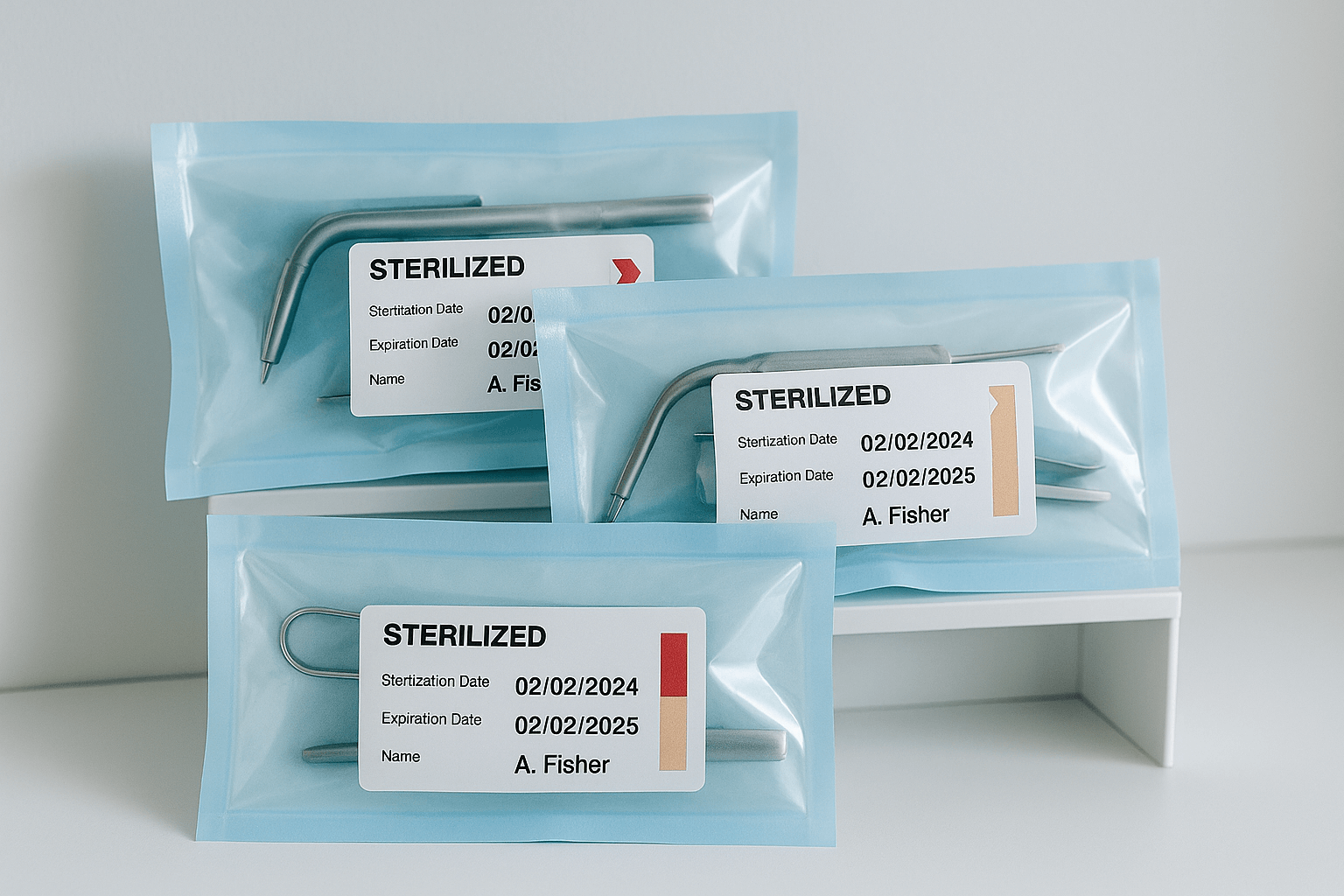
After use, you peel the batch label off the packaging and affix it in the patient record. The label carries at least the batch number and sterilisation date as well as the expiry date or sterile-goods shelf life, thereby establishing traceability.
How does patient assignment work with a digital patient record?
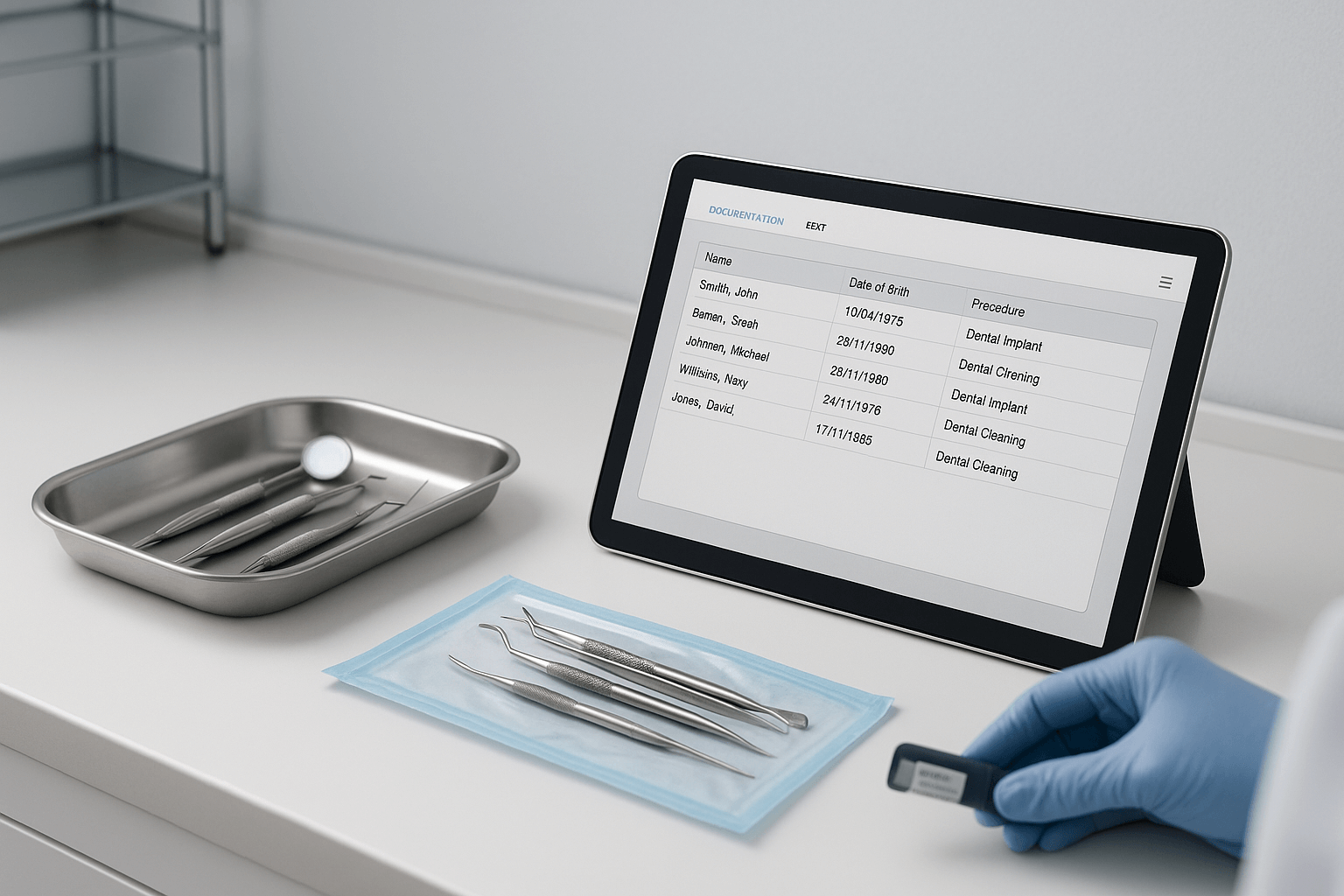
The packaging carries a barcode with the same batch information. After use, you scan the barcode with a reader that transfers the data directly into the software field of the digital record. This saves time and avoids data-entry errors.
What must appear on the traceability label?
At a minimum, the batch number and sterilisation date, plus the expiry date or sterile-goods shelf life. These details ensure batch traceability. It is the packaging that is labelled, not the individual instrument.
Do I need to label individual instruments such as forceps?
No. Packaged autoclaved sets or single instruments are labelled on the packaging only, not on the instrument itself. The labelling is applied to the film side and ensures batch traceability.
How long must I retain the reprocessing documentation?
According to KRINKO/BfArM 2012 (Sect. 2.2.8), reprocessing records must be retained for at least 5 years. Other legal provisions may stipulate longer retention periods for patient documentation; these remain unaffected.
May I store reprocessing documentation on image or data carriers?
Yes. According to KRINKO/BfArM 2012 (Sect. 2.2.8), records may also be stored electronically. It must be ensured that they remain accessible and legible throughout the entire retention period and that changes are logged in a traceable manner.
Do indicator and helix test strips need to be retained long-term?
The individual batch and steriliser indicator strips do not need to be retained long-term. However, the batch release itself must be documented and retained, including process parameters, release decision, and the person who authorised the release (KRINKO 2.2.8).
Must the documentation be tamper-proof and immutable?
Yes. According to KRINKO/BfArM 2012 (Sect. 2.2.8), the original content of an entry must not be rendered illegible, and any amendments must remain identifiable. Digital documentation software should therefore maintain an audit-proof change log.
How do I correct an erroneous entry in the digital batch documentation?
The original entry must not be rendered illegible. Audit-proof software logs the correction with a timestamp and the editor's identity, so that both the old and new entries remain visible. This fulfils the immutability requirement per KRINKO 2.2.8.
Why must the batch be documented as released before patient assignment?
Only a released batch is linked to the patient. Release involves comparing process parameters against the validation report and verifying packaging and labelling by a designated person (KRINKO 2.2.7). The label or barcode carries the released batch number.
Who is authorised to release a sterilisation batch?
Only formally designated, authorised release personnel. For quality management purposes, these persons must be designated in writing (KRINKO/BfArM 2012, Sect. 2.2.7). Release is only performed after comparing process parameters against the validation report.
What is the relationship between batch documentation and the standard operating procedure?
The documented measurements and the release decision must demonstrate that the process was carried out in accordance with the standard operating procedure and the validation protocol (KRINKO 2.2.8). Only this comparison justifies the release and the subsequent assignment of the batch to the patient.
Is handwritten labelling sufficient, or do I need printed labels?
Handwritten labelling on the film side is just as permissible as a label or barcode solution. The key requirement is that batch traceability is maintained. With a digital patient record, a barcode facilitates error-free data transfer.
On which side of the sterile packaging is the labelling applied?
Labelling is applied to the film side, not the paper side. The paper side is essential for steam penetration and must not be printed on or have labels affixed. This preserves the sterile barrier while ensuring traceability.
Does every practice need patient-level instrument assignment?
According to KRINKO, batch traceability is required in particular for critical medical devices (critical A and B). For non-critical instruments, patient-level assignment is not mandatory. A clear distinction helps avoid over-documentation.
Which instruments require patient-level documentation?
Primarily critical medical devices (critical A and B) that come into contact with blood, mucous membranes, or broken skin. For these, batch traceability is required per KRINKO/BfArM 2012 (Sect. 2.2.6).
When do I label the packaging – before or after autoclaving?
Always after sterilisation. At a minimum, the batch number is written on the packaged instruments, ideally with a suitable sterilisation marker. Tracing labels are also only applied after sterilisation.
How is the batch number assigned for documentation purposes?
The batch number is a sequential number that increments by one with each programme cycle of the device. It links the sterilisation protocol, packaging labelling, and patient assignment, making each batch uniquely traceable.
Can I handle patient assignment digitally with a barcode scanner?
Yes. The barcode scanner operates as an HID device like a keyboard and inserts the scanned batch data into any standard software field without special configuration. This lets you transfer the batch directly into the digital patient record.
What are the advantages of digital documentation over paper?
It saves time through automated data capture, reduces paper consumption, and avoids errors inherent in manual entries. Additionally, it integrates easily into existing practice software and provides audit-proof, always-accessible archiving.
Why does thermal paper fade, and how do I ensure legibility?
Print on thermal paper can fade over the years. Since documentation must remain legible throughout the entire retention period (KRINKO 2.2.8), cool, dry and light-protected storage or an additional digital backup via scanning is recommended.
How long does thermal paper last?
Thermal paper printouts typically last roughly 5 years in practice, and longer with cool and dry storage. This is an empirical value, not a standard. Since legibility must be guaranteed throughout the retention period, an additional digital scan is advisable.
What do I need to present regarding patient documentation during a hygiene audit?
You should be able to demonstrate seamlessly which released batch was used on which patient, including batch release records and reprocessing protocols. Consistent instrument-batch-patient assignment simplifies audits and fulfils MPBetreibV and RKI requirements.
What equipment do I need for digital documentation after patient use?
You need a practice computer with a digital patient record, a barcode scanner (USB/HID), and optionally a label printer for generating batch barcodes. Additionally, documentation software with an audit trail serves for audit-proof archiving.
How do I document a batch that is used on multiple patients?
Each package carries the batch number; for each patient, the respective label is affixed or the barcode is scanned. This creates a separate assignment to the shared released batch per patient, without losing traceability.
Does the autoclave generate the sterilisation protocols for documentation automatically?
Yes. Klasse B autoclaves automatically generate and store sterilisation protocols with date, programme, and process parameters. These can be backed up via USB, transferred via LAN/WLAN, or printed, and form the basis of batch documentation.
Where can I find templates for documentation and batch release?
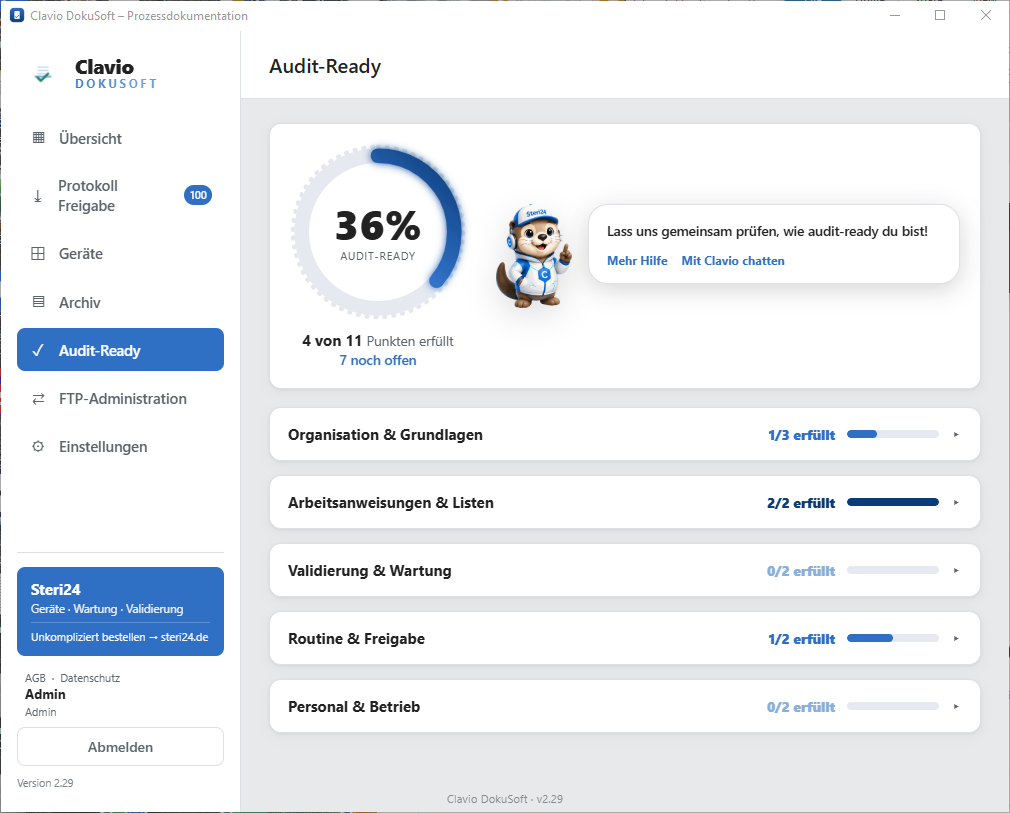
Steri24 provides free templates, such as a handwritten batch release form. Alternatively, you can handle batch documentation and release digitally with the free ClavioSoft, including audit-proof archiving.
What is the difference between batch documentation and patient assignment?
Batch documentation records the correct execution of the sterilisation process and the release of the batch (KRINKO 2.2.8). Patient assignment then links this released batch to the specific patient, thereby completing the traceability chain.
Is patient-level documentation mandatory for podiatry and foot care?
If you reprocess critical instruments used on people, the labelling and batch traceability requirements also apply in podiatry and foot care. Assignment to the patient record provides proof of which batch was used on which patient.
What documentation obligations does a dental practice have after patient use?
Dental practices must ensure batch traceability for critical instruments and assign the released batch to the patient record. In addition, batch release and retention of reprocessing protocols (at least 5 years per RKI) are required.
Is patient-level documentation required in tattoo and piercing studios?
If critical instruments that come into contact with blood are reprocessed, the KRINKO requirements for batch traceability apply. Assigning the released batch to the client record provides seamless documentation.
How do I take over legacy documentation when acquiring a practice?
Existing reprocessing records must be continued and kept accessible and legible for the remaining retention period (at least 5 years per KRINKO 2.2.8). Fading paper printouts should be additionally scanned digitally for safekeeping.
What does MPBetreibV § 8 require regarding reprocessing documentation?
MPBetreibV § 8 requires appropriate validated reprocessing with documented execution. Together with the KRINKO recommendations, this establishes the obligation for batch documentation, release, and traceability of reprocessed medical devices.
Does traceability refer to the instrument or the batch?
For critical A and B, traceability to the respective batch must be ensured; for critical C, traceability to the individual reprocessed product is required (KRINKO 2.2.6). In everyday practice, assignment is therefore usually based on the batch number on the packaging.
How do critical A, B, and C differ regarding documentation?
For critical A and B, traceability to the batch is sufficient; for critical C – products with elevated requirements – traceability to the individual reprocessed product is required (KRINKO/BfArM 2012, Sect. 2.2.6). The documentation effort is determined accordingly.
What constitutes complete batch documentation?
The recorded process parameter measurements and the release decision, each referencing the releasing person and the batch. They must demonstrate that the process was carried out in accordance with the standard operating procedure and the validation protocol (KRINKO 2.2.8).
How do I link batch and patient seamlessly?
By affixing the batch label in the patient record or scanning the barcode into the digital record. The prerequisite is a previously documented and released batch, whose batch number appears on the label or barcode.
Do I still need to maintain documentation even with devices that have touchscreen release?
Release may be performed digitally on the device, but the batch documentation with process parameters, release decision, and releasing person must be retained. Patient assignment is then carried out via label or barcode in the record.
What does digital documentation after patient use cost?
The ClavioSoft software for batch release, documentation, and audit-proof archiving is free of charge. Additional costs arise only for hardware such as a barcode scanner or label printer, if you choose the digital variant.
How do I prove which instrument a patient received in a damage or dispute case?
Via the batch number recorded in the patient record, the associated released batch and its reprocessing protocol can be traced. This seamless instrument-batch-patient chain is the central proof and safeguards patient safety.
Do I also need to document the expiry date or sterile-goods shelf life?
Yes, these are among the required details on the packaging. When determining the sterile-goods shelf life, the type of packaging, transport, and storage conditions must be considered (KRINKO 2.2.6). This ensures that the period of safe use remains clearly documented.
How do I correctly determine the sterile-goods shelf life?
The decisive factors are the type of packaging, transport, and storage conditions (KRINKO/BfArM 2012, Sect. 2.2.6). The determined shelf life belongs on the packaging together with the batch number and sterilisation date, and forms part of the traceability chain.
Who is responsible for correct documentation after patient use?
The operator or the formally designated authorised release person is responsible. They ensure that batches are released with full documentation and correctly assigned to the patient record (MPBetreibV § 8, KRINKO 2.2.7/2.2.8).
Which software helps with audit-proof batch documentation?
Documentation software such as the free ClavioSoft handles batch documentation and release in just a few clicks and archives everything in an audit-proof manner. It logs changes traceably, thereby meeting the immutability requirement.
Is the steriliser's internal storage alone sufficient as patient documentation?
No. The device stores sterilisation protocols and process parameters, but assigning the released batch to the specific patient is done additionally via label or barcode in the patient record. Only both together complete the traceability chain.
How do I identify affected patients if a batch is contested after the fact?
Via the batch number recorded in the patient records, all patients on whom that batch was used can be identified. The seamless batch-to-patient assignment is precisely the basis for this and enables targeted action.
Does patient-level documentation need to be handled differently in Austria or Switzerland?
The fundamental principle of batch traceability and patient assignment applies across borders. However, in Austria and Switzerland, national requirements (e.g. OeNorm, cantonal regulations) may differ regarding retention periods and format; verify these additionally.
Does Steri24 offer support with instrument reprocessing documentation?
Yes. For ongoing documentation, the free ClavioSoft software for batch release and audit-proof archiving is available; as part of validation and maintenance, you also receive the corresponding reports. We are happy to advise you on selecting the right solutions.

 RKI 1: Legal Requirements & Overview
  RKI 2: Correct Pre-Cleaning
  RKI 3: Cleaning & Disinfection
  RKI 4: Instrument Care
 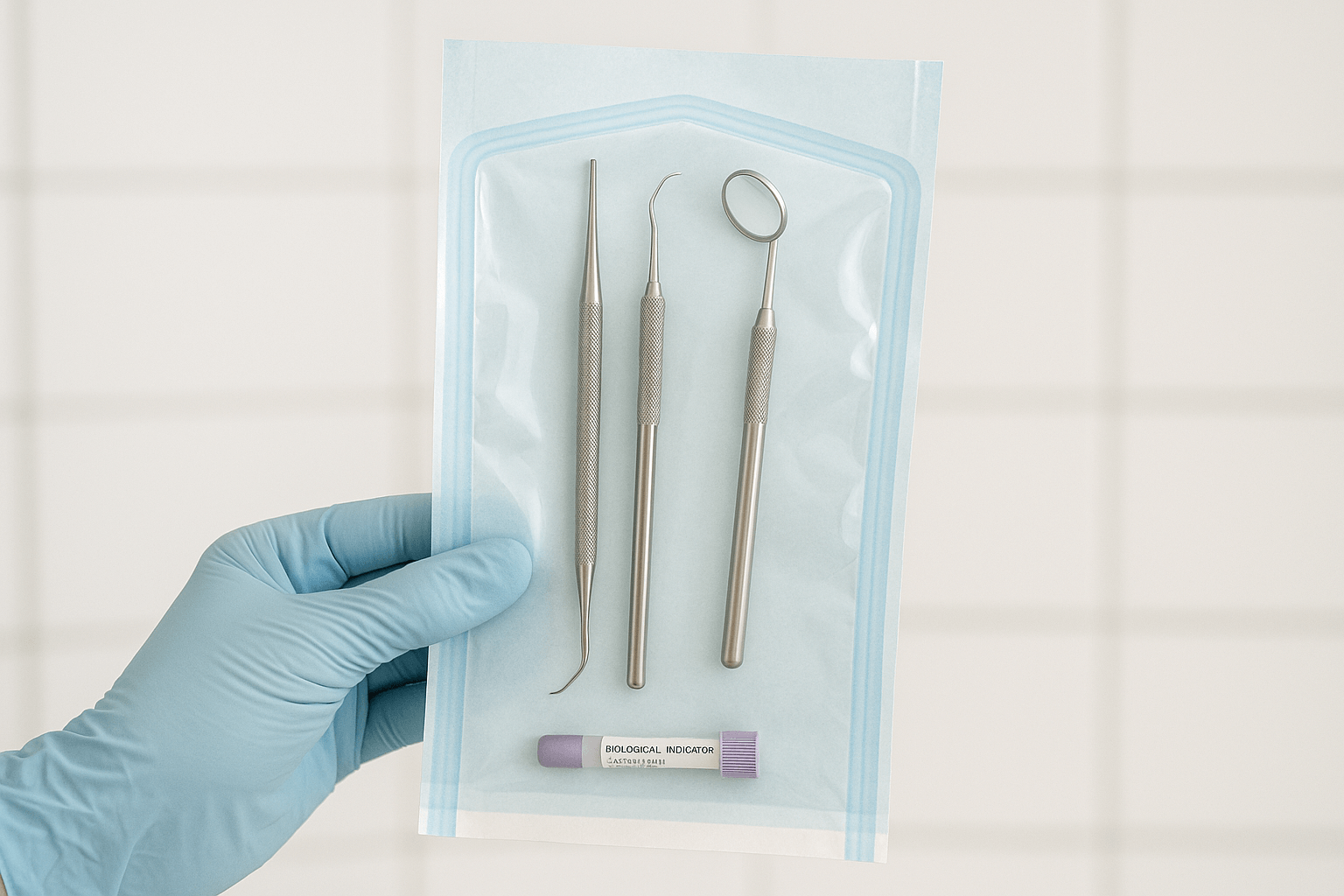 RKI 5: Instrument Packaging
 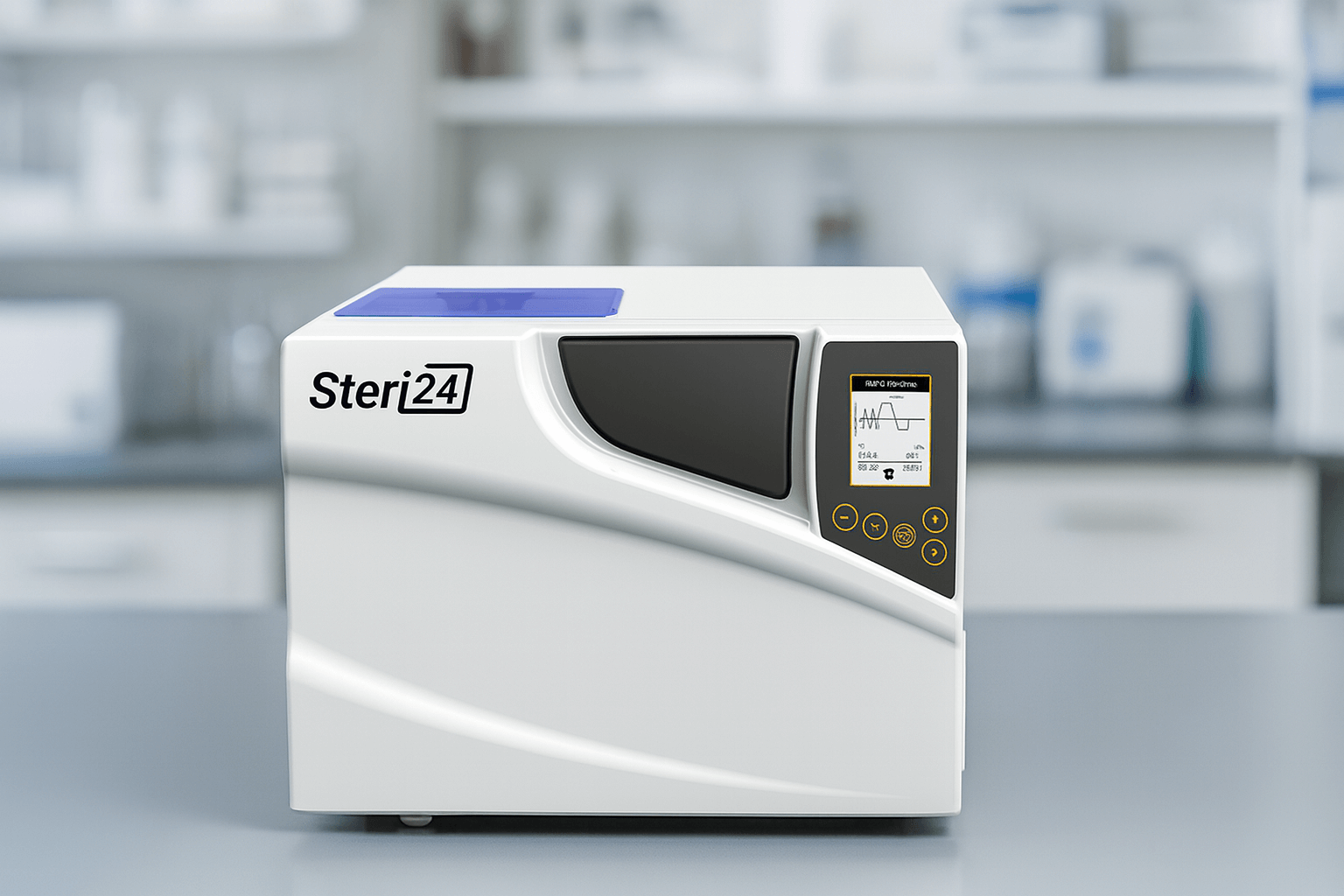 RKI 6: Sterilisation in the Autoclave
 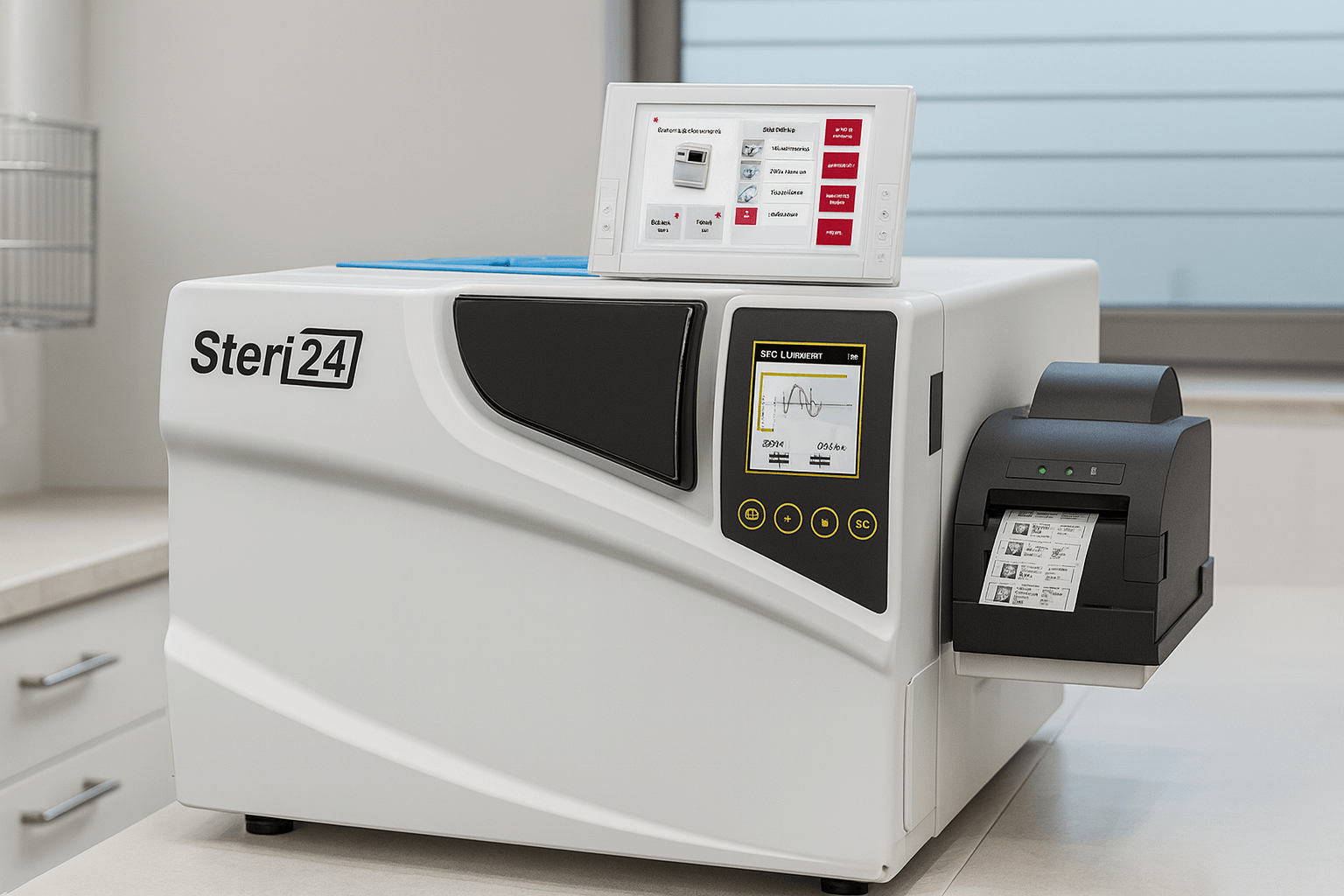 RKI 7: Release & Documentation
 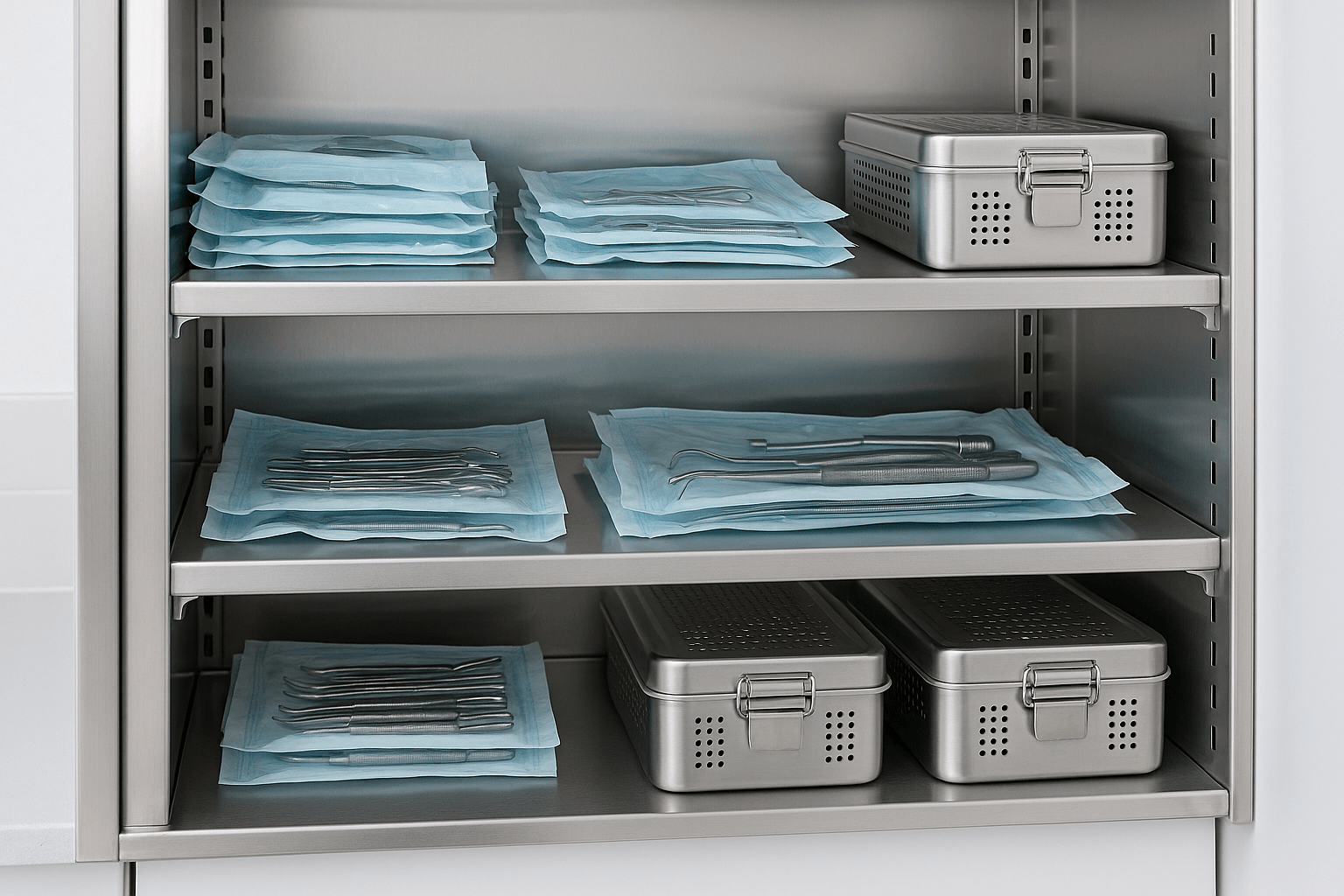 RKI 8: Storage of Sterile Instruments
  RKI 9: Labelling After Sterilisation
  RKI 10: Documentation After Patient Use
  RKI 11: Hygiene Room per KRINKO
  RKI 12: Initial Validation of a Klasse B Autoclave

.png "Preview: Clavio DokuSoft")


