RKI Release and Documentation

Meet RKI requirements – free of charge

Use the free ClavioSoft to run an audit check of your practice in just a few minutes – the software automatically generates any missing documentation. This saves you up to 90 % of the work.

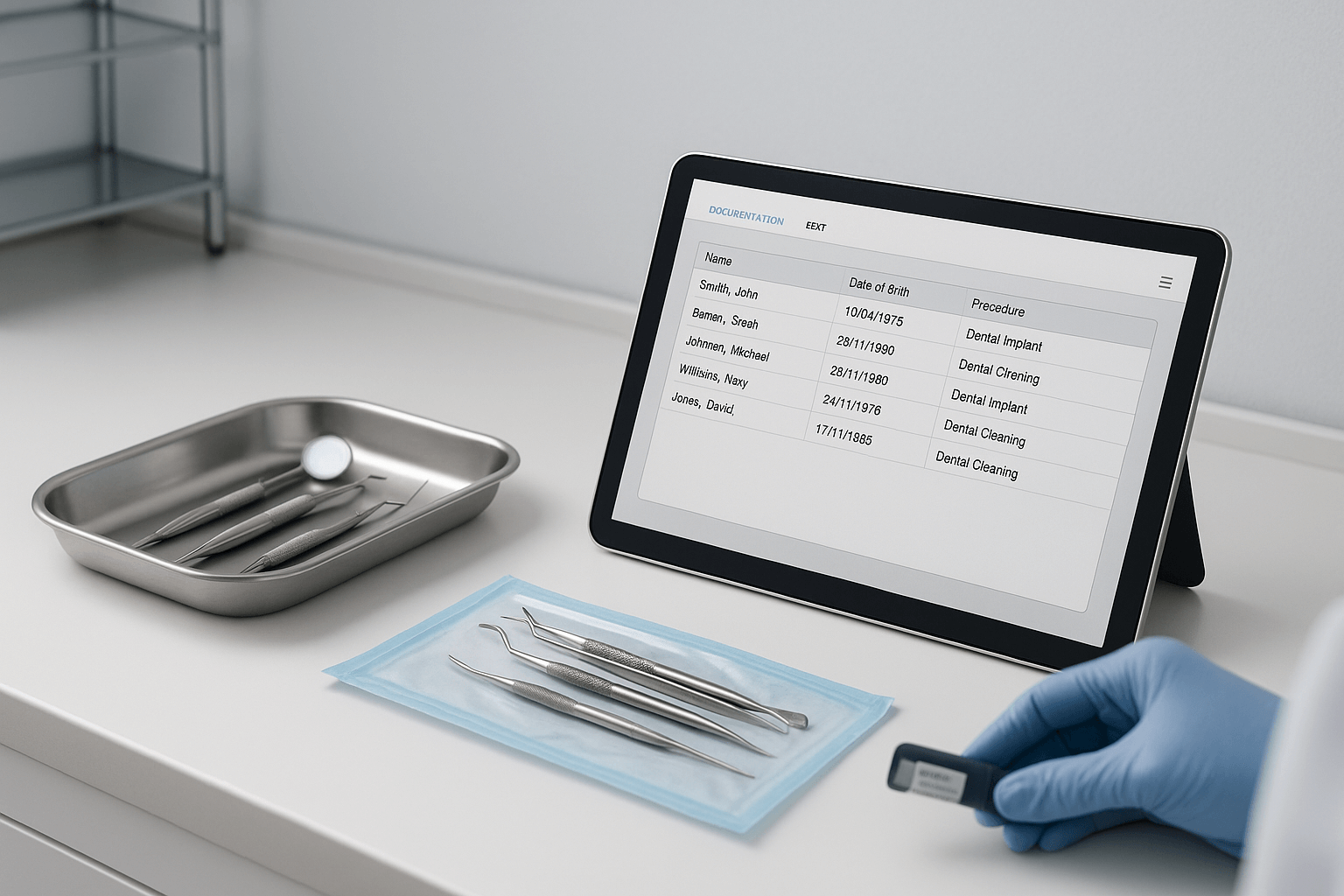
ClavioSoft: paperless batch release and instrument reprocessing documentation
 

Batch Release and Documentation per RKI


Only the release makes sterilised goods ready for use – and only complete documentation makes the release verifiable. Both are legally required (MPBetreibV § 8, KRINKO) and ensure the traceability of every batch.

1Legal Basis & Retention

The obligation to release and document batches arises from the KRINKO recommendation and the MPBetreibV. Retention periods:

· at least 5 years (RKI/MPBetreibV),
· often longer for liability reasons – civil limitation periods can extend up to 30 years (BGB).

Sources: KRINKO/BfArM 2012, Sect. 2.2.7 (Release) & 2.2.8 (Batch documentation); MPBetreibV § 8.

2Four Methods of Batch Documentation

1. Handwritten release form. After each cycle, fill in one line; label wrapped instruments by hand with batch number, sterilisation date, use-by date, steriliser number and signature of the releasing person. Cassettes without viewing windows must also be labelled with their contents.

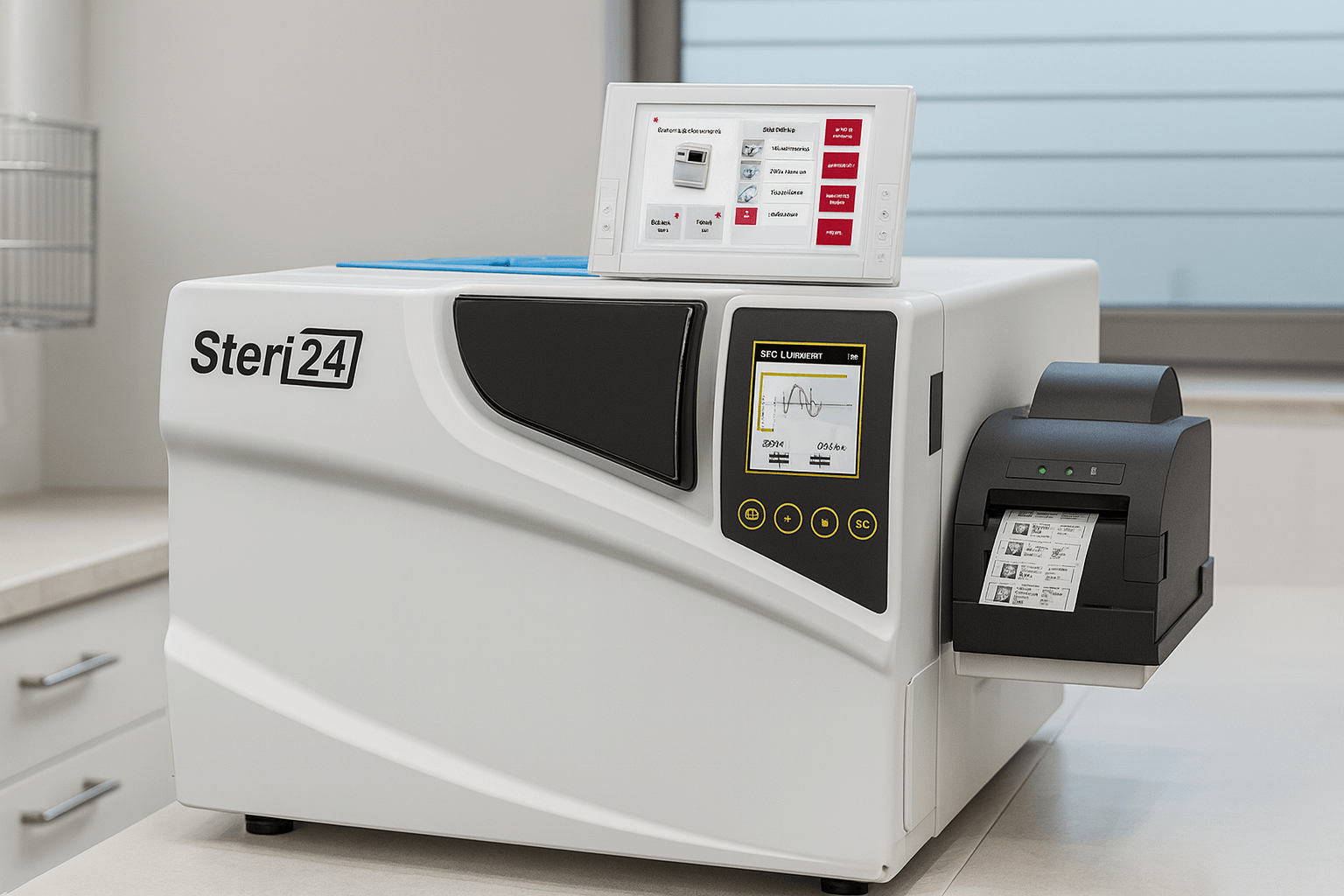
2. Release directly on the autoclave display. Higher-end devices allow entry and verification of batch data on the unit; a label printer labels the packaging automatically.

3. Digital release via practice software / SteriTrace. SteriTrace is the device-integrated documentation solution of the premium autoclaves: the sterilisation protocol is transmitted via WLAN/LAN; the release is software-assisted, and labels with personnel, steriliser and batch numbers as well as sterilisation/use-by dates are printed – centralised and paperless. (The ClavioSoft mentioned in point 4 is the freely available, manufacturer-independent software.)

4. Release & documentation with the free ClavioSoft. The free ClavioSoft software documents instrument reprocessing fully automatically and supports documentation in accordance with the KRINKO recommendation – manufacturer-independent and compatible with common Class B autoclaves. This lets you release every batch paperlessly, without being tied to a specific device brand. (Free download at the bottom of this page.)

Tip: Digital, paperless batch documentation reduces transcription errors and makes every practice inspection more relaxed, because all sterilised goods remain fully traceable. This is exactly where the free ClavioSoft solution at the bottom of this page comes in.

3Steps of the Batch Release

1. Process evaluation: The releasing person checks whether the process parameters recorded in the batch (temperature, pressure, holding time) match the values in the validation report. The autoclave displays the protocol; the evaluation and release decision are made by the authorised person.
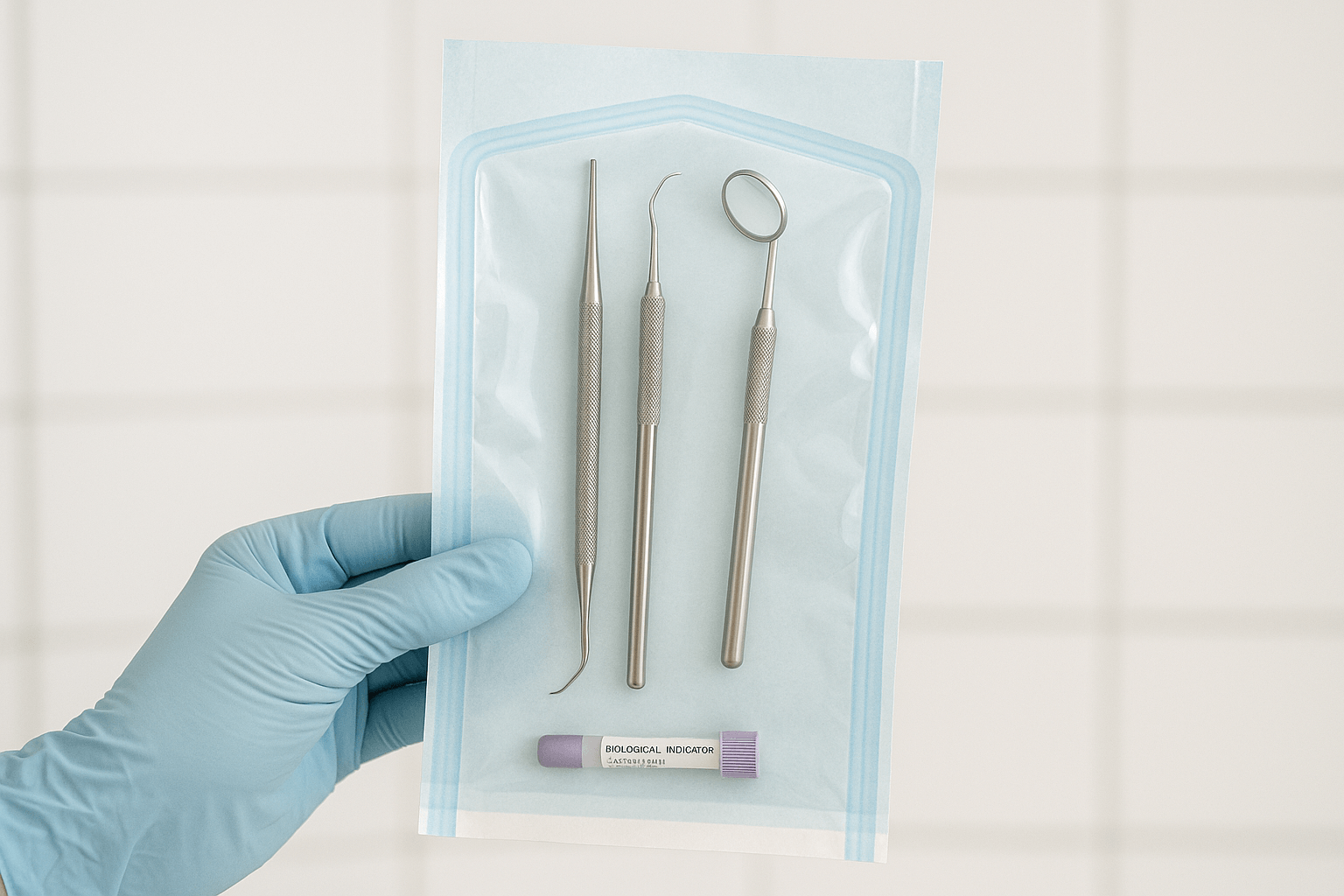
2. Visual inspection: Check packaging for tears, condensation and correct indicator colour change.
3. Release by trained personnel with documented expertise and entry in the batch documentation.
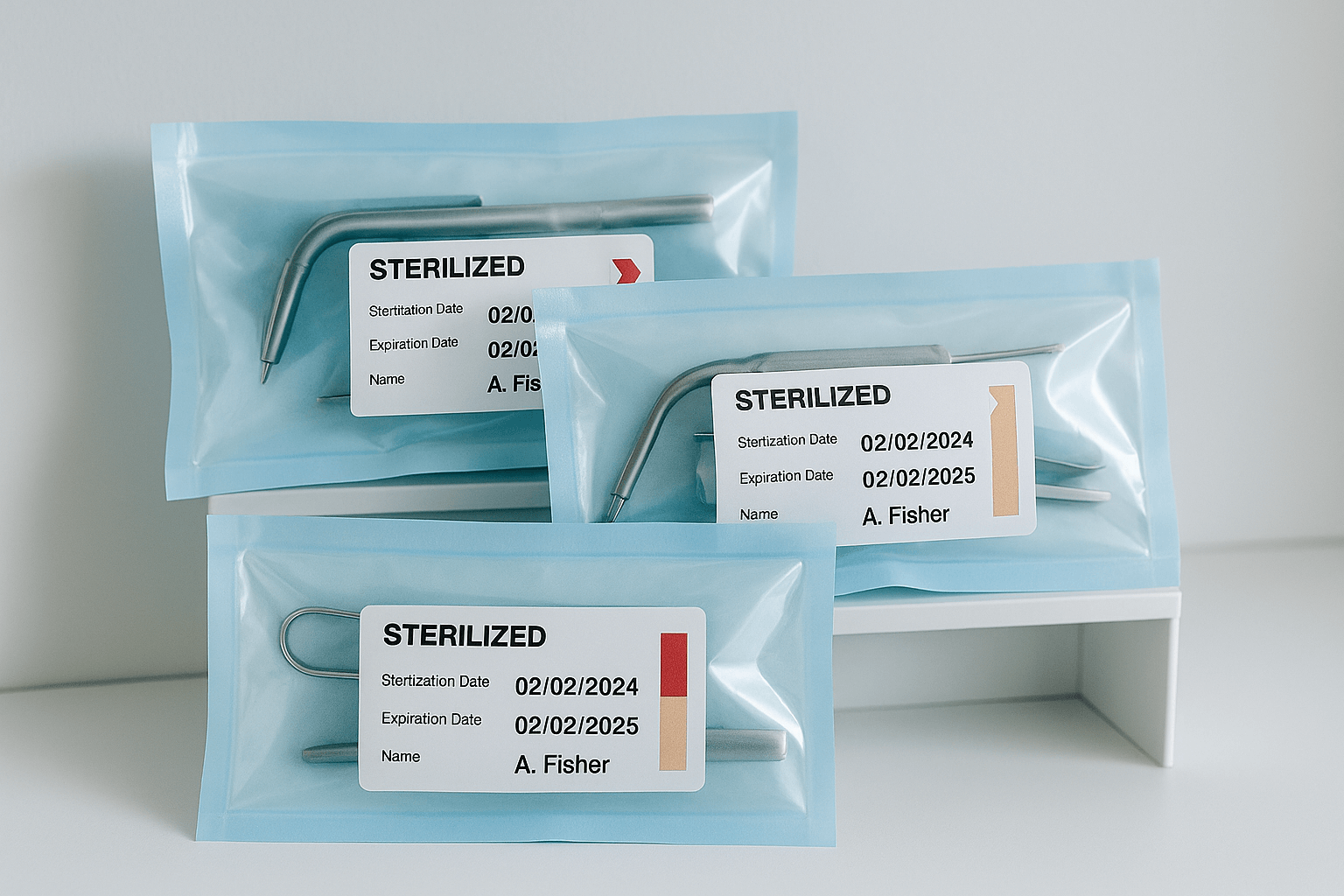
4. Labelling of the packaging (device number, batch number, sterilisation/use-by date).

Document paperlessly and release every batch with confidence – with networked devices and digital documentation. Find the right setup for your practice.
Find the right Class B autoclave

Important Additional Points per RKI & Standards

These points are frequently overlooked in practice but are essential for correct and legally compliant implementation:

  • Standard operating procedure (SOP) as the basis for release: The release must be based on a written standard operating procedure. This must specify the form of documenting the release decision and the procedure for handling deviations from the correct process sequence.Source: KRINKO/BfArM 2012, Sect. 2.2.7 ('The standard operating procedure must contain – the form of documenting the release decision and – the procedure for handling deviations from the correct process sequence (QM)')
  • Procedure in case of deviations / no release if parameters do not match: If the recorded process parameters do not match the validation report or the visual inspection is negative, the batch must not be released. The procedure for handling deviations specified in the standard operating procedure must be followed and the decision must be documented.Source: KRINKO/BfArM 2012, Sect. 2.2.7 (Procedure for handling deviations from the correct process sequence, QM)
  • Immutability of records (tamper-proof documentation): Records must not be altered in such a way that the original content becomes illegible or it is unclear whether a change was made during or after the initial entry. For digital documentation, this must be ensured in a tamper-proof manner; records must remain available and legible throughout the entire retention period. Such tamper-proof archiving can be achieved entirely without paper using the free ClavioSoft.Source: KRINKO/BfArM 2012, Sect. 2.2.8 (Immutability; storage on image/data carriers permissible, must remain available and legible)
  • Routine/batch tests as part of the release: The release includes the performance and documentation of batch-related routine tests. For wrapped instruments containing hollow bodies classified as Critical B, this includes a hollow-body test (e.g. Helix test) using a process challenge device (PCD); a passed chemical indicator alone does not replace this routine test.Source: KRINKO/BfArM 2012, Sect. 2.2.7 (Performance and documentation of routine tests) and appendix table ('Critical B: with PCD, e.g. Helix test')
  • Visual inspection of packaging: integrity and dryness: The visual inspection explicitly includes checking the packaging for integrity (including intact seal seams) and dryness. Damp or wet packaging (residual moisture/condensation) is considered non-sterile and must not be released.Source: KRINKO/BfArM 2012, Sect. 2.2.7 ('checking the packaging for integrity and dryness') and appendix table (dryness, integrity, intact seal seams)
  • Complete labelling information including release decision: The following must be identifiable on the packaging for the user: the release decision (where applicable, process indicator), time and type of sterilisation method (sterilisation date, batch identification), and where applicable, expiry date or sterile shelf life. Where reprocessing is performed by a third party, the name and address of the reprocessing company must also be included.Source: KRINKO/BfArM 2012, Sect. 2.2.5/2.2.6 (Labelling of released medical devices)

Required Equipment, Consumables & Accessories

Checklist for this processing step – items you should have ready (shopping list):

Equipment

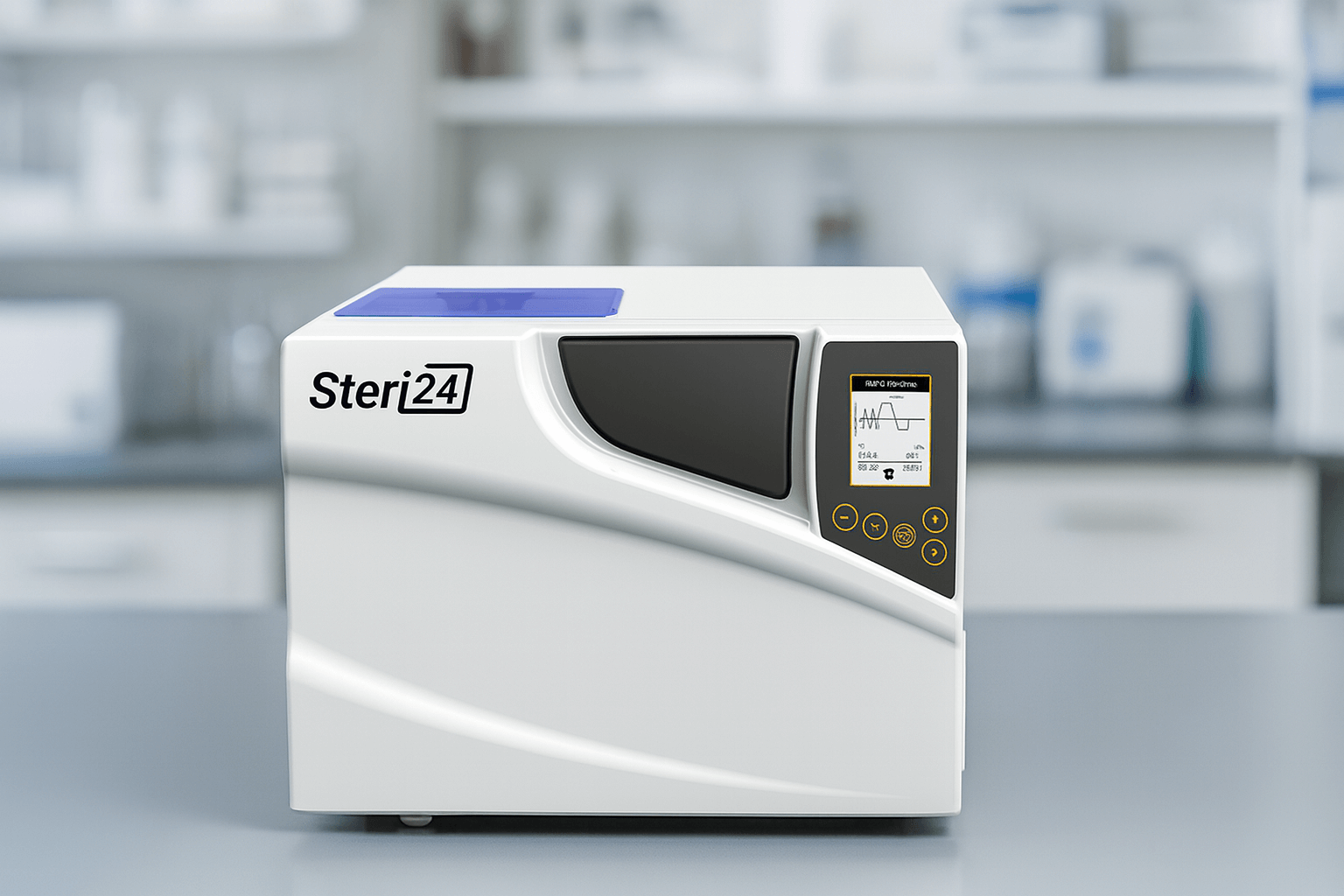
  • Class B autoclave with a readable batch protocol (display or printout) and a unique steriliser number Order in the shop
  • Optional: Autoclave with network connectivity (LAN/WLAN) for paperless batch release directly on the device Order in the shop
  • Optional: Label printer for labelling the packaging Order in the shop
  • PC or tablet with digital documentation software (tamper-proof) including secured data storage/backup Order in the shop

Consumables

Accessories

Templates & Sources

  1. KRINKO/BfArM 2012, Bundesgesundheitsbl. 55:1244–1310 – Sect. 2.2.7/2.2.8.
  2. MPBetreibV § 8; retention periods per RKI and civil limitation periods (BGB).

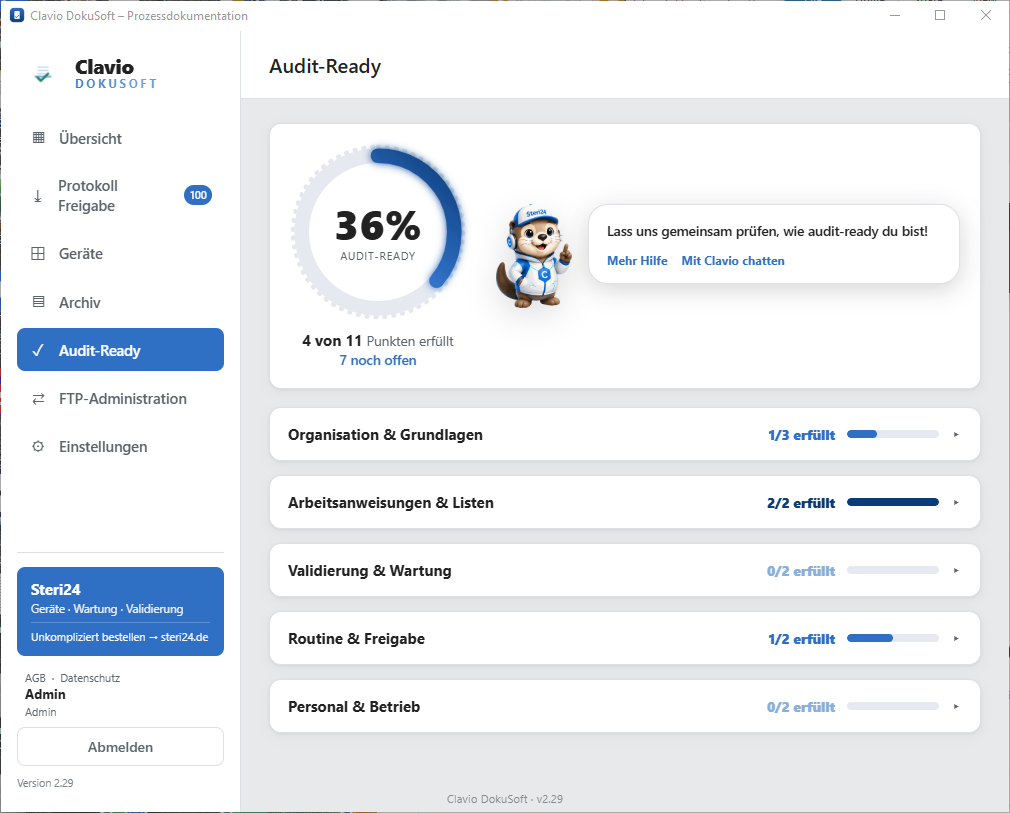
How audit-ready is your practice?

Find out in just a few minutes how well you are prepared for the next inspection — category by category, with clear progress tracking and specific open items. Completely free with ClavioSoft.

ClavioSoft Audit-Ready Check: progress display and categories
Download ClavioSoft for free
Free forever For autoclaves of all manufacturers RKI-compliant

1 to 1 (from a total of 1)

Frequently Asked Questions

RKI Release and Documentation – key questions answered clearly.

What does batch release mean in autoclave sterilisation?
Batch release is the documented decision that a sterilisation batch is approved for use. Only the release makes the sterilised goods ready for application. It is based on the agreement of the recorded process parameters with the validation report (KRINKO/BfArM 2012, Sect. 2.2.7).
Is batch documentation a legal requirement in medical practices?
Yes. The obligation to release and document batches arises from the KRINKO/BfArM recommendation 2012 (Sect. 2.2.7 and 2.2.8) and the MPBetreibV. It ensures the traceability of every individual batch and must be presented to authorities upon request.
What must a batch release document and which details are required?
The release must be documented with reference to the releasing person and the batch. Recorded data include batch number, sterilisation date, use-by date, steriliser number, test result and signature. This may be done by hand, on the device display or digitally (ClavioSoft, SteriTrace).
How long must sterilisation and release records be retained?
At least 5 years per KRINKO/BfArM 2012 (Sect. 2.2.8) and MPBetreibV. For liability reasons, records are often retained considerably longer, as civil limitation periods under the BGB can extend up to 30 years. Digital, tamper-proof archiving makes this easier.
What steps does the batch release process involve?
Four steps: process evaluation (comparison of temperature, pressure and holding time with the validation report), visual inspection of the packaging, release by trained personnel with a documentation entry, and labelling of the packaging with device number, batch number and dates.
Who is authorised to release a batch after sterilisation?
Only qualified, trained personnel may release a batch. For quality management purposes, the persons authorised to release batches must be designated in writing (KRINKO/BfArM 2012, Sect. 2.2.7). The authorised person performs the evaluation and makes the release decision.
Must the persons authorised to release batches be designated in writing?
Yes. For quality management purposes, the persons authorised to release batches must be designated in writing (KRINKO/BfArM 2012, Sect. 2.2.7). This ensures traceability of who is trained, qualified and permitted to release batches. Training records should be documented.
May loading and release of a batch be performed by different persons?
Yes, loading and release may be performed by different persons. The key requirement is that the release is carried out by a trained, qualified person who has been designated in writing (KRINKO/BfArM 2012, Sect. 2.2.7).
Which process parameters are checked during batch release?
The parameters recorded during the batch are checked: temperature, pressure and holding time. They must match the values specified in the validation report. The autoclave displays the protocol; the evaluation is performed by the releasing person.
What should be done if the process parameters do not match the validation report?
The batch must not be released. The procedure for handling deviations specified in the standard operating procedure must be followed and the decision must be documented (KRINKO/BfArM 2012, Sect. 2.2.7). The sterilised goods must not be used.
What is checked during the visual inspection before release?
The packaging is checked for integrity and dryness, i.e. for tears, damage and residual condensation. The correct colour change of the chemical indicator is also verified. If the visual inspection is negative, the batch must not be released.
Why must damp or wet sterilised goods not be released?
Residual moisture or condensation in the packaging can compromise the sterile barrier and allow microbial penetration. The release therefore includes checking the packaging for dryness (KRINKO/BfArM 2012, Sect. 2.2.7). Wet batches are not considered to be stored in a sterile state.
What methods of batch documentation are available in practice?
Four methods: handwritten release form, release directly on the display of higher-end autoclaves, digital release via the device-integrated SteriTrace solution, and the free, manufacturer-independent ClavioSoft. All meet the KRINKO requirements when used correctly.
What information must appear on the handwritten release form?
One line per cycle with batch number, sterilisation date, use-by date, steriliser number, test result and signature of the releasing person. The wrapped instruments must also be labelled accordingly to ensure traceability.
Where can I find templates and forms for batch release?
Free release templates are available for handwritten documentation. Alternatively, the release can be performed digitally and paperlessly with the free ClavioSoft or the device-integrated SteriTrace solution, which reduces transcription errors.
What does paperless batch documentation mean?
In paperless documentation, all relevant sterilisation and release data are captured and stored digitally, without paper printouts. This reduces transcription errors and facilitates inspections. The prerequisite is tamper-proof archiving that remains available and legible at all times.
What is tamper-proof documentation of batch release?
Tamper-proof means that records cannot be altered in such a way that the original content becomes illegible or it is unclear whether the change was made during or after the initial entry. The data must remain available and legible throughout the retention period (KRINKO/BfArM 2012, Sect. 2.2.8).
May I retrospectively amend entries in the batch documentation?
The original content of an entry must not be rendered illegible, and amendments must make it clear whether they were made during or after the original entry (KRINKO/BfArM 2012, Sect. 2.2.8). For digital documentation, this must be ensured in a tamper-proof manner.
How do I correct a batch release that was issued in error?
An issued release must not be overwritten in such a way that the original entry becomes illegible. Corrections are made traceably by means of a supplementary, dated note so that the amendment is clearly identifiable as having been made retrospectively (KRINKO/BfArM 2012, Sect. 2.2.8).
May batch records be retained digitally instead of on paper?
Yes. Records may be stored on image or data carriers, provided it is ensured that they remain available and legible throughout the entire retention period (KRINKO/BfArM 2012, Sect. 2.2.8). Thermal paper printouts should be digitised as a precaution.
How long do thermal paper sterilisation records last?
Thermal paper printouts fade over time and may become illegible before the retention period expires. Since records must remain permanently legible (Sect. 2.2.8), scanning or digital, tamper-proof archiving is recommended rather than relying solely on the printout.
Do I need a standard operating procedure (SOP) for batch release?
Yes. The release must be based on a written standard operating procedure. This must specify the form of documenting the release decision and the procedure for handling deviations from the correct process sequence (KRINKO/BfArM 2012, Sect. 2.2.7).
Are routine tests such as the Helix test part of the batch release?
Yes. The release includes the performance and documentation of batch-related routine tests. For wrapped instruments containing hollow bodies classified as Critical B, this includes a hollow-body test using a process challenge device, e.g. a Helix test (KRINKO/BfArM 2012, Sect. 2.2.7).
Does a passed chemical indicator replace the routine test during release?
No. A passed chemical indicator alone does not replace the batch-related routine test. For hollow-body-containing Critical B instruments, a hollow-body test using a process challenge device, such as a Helix test, must additionally be performed and documented.
What is a batch number and how is it assigned?
The batch number is a unique, sequential identifier that increments by one with each programme cycle of the autoclave, washer-disinfector and sealing device. It links the sterilised goods to the protocol and forms the basis for traceability.
Must the batch number also be documented for the washer-disinfector?
Yes. Batches must also be traceable for the washer-disinfector (WD). Automated cleaning and disinfection is part of the documented reprocessing process, so the batch number must be included in the documentation (DIN EN ISO 15883).
When should sterilisation packaging be labelled, before or after autoclaving?
Labelling takes place after sterilisation. At a minimum, the batch number is written on the wrapped instruments, ideally using a suitable sterilisation marker. Tracing labels are also applied only after the cycle.
How are wrapped instruments correctly labelled after sterilisation?
The labelling is applied to the film side, not the paper side. Each package must be labelled so that traceability is ensured. Handwritten labelling with a suitable marker is just as permissible as a label solution.
What information must appear on the label of sterilised packaging?
The following must be identifiable: the release decision, sterilisation date, expiry or use-by date, and batch identification (KRINKO/BfArM 2012, Sect. 2.2.6). For traceability, the device/steriliser number is added; cassettes without viewing windows must additionally be labelled with their contents.
Which marker is suitable for labelling sterilisation packaging?
Use a dedicated sterilisation marker with document-proof, low-migration ink free of toxic components. The labelling is applied to the film side and must withstand the process and remain permanently legible.
Which indicators or test strips must I retain?
What matters is the documented release decision with the process parameters, not the physical retention of every indicator strip. However, the result of the batch-related routine test must be documented. Clarify the exact handling with your SOP and the responsible authority.
How do I tell from the protocol whether the sterilisation was successful?
A successful run is shown in the protocol with a positive final result and the achieved values; for vacuum tests an OK notation appears. If the cycle was unsuccessful, the device displays an error message. This evaluation is part of the process assessment before release.
Does the autoclave generate sterilisation protocols automatically?
Yes, a Class B autoclave generates and stores a protocol for each cycle including date, programme and process parameters. This data can be saved to USB, transmitted via LAN/WLAN or printed. The evaluation and release of the batch, however, remains the responsibility of the authorised person.
How do I back up the sterilisation protocols via USB stick?
The protocols can be backed up via the USB port of the autoclave; use a preferably empty, FAT-formatted stick. The files are usually saved as text files and should be additionally archived for long-term legibility.
Can I perform batch release directly on a premium autoclave?
Yes. Higher-end premium autoclaves allow entry, verification and documented release of batch data directly on the touchscreen display. A connected label printer can then automatically label the packaging.
What is SteriTrace and how is it used for batch release?
SteriTrace is the device-integrated documentation solution of the premium autoclaves. The sterilisation protocol is transmitted via WLAN/LAN, the release is software-assisted, and labels with personnel, steriliser and batch numbers as well as dates are printed centrally and paperlessly.
What is ClavioSoft and is the software manufacturer-independent?
ClavioSoft is a free software that documents instrument reprocessing and supports release in accordance with KRINKO requirements. It is manufacturer-independent and compatible with common Class B autoclaves, allowing you to release every batch paperlessly without being tied to a specific device brand.
How do I set up user management and password-based batch release?
The software allows you to create multiple users with individual passwords, and you choose whether batches are released via password or signature. This ensures that every release decision is clearly attributable to the releasing person, as required by the documentation obligation.
What accessories do I need for batch documentation?
At a minimum, you need a USB stick for backing up protocols, a handwritten release form and a suitable sterilisation marker for labelling. For greater convenience, a label printer for labels and a digital solution such as ClavioSoft or SteriTrace are recommended.
Do I need a label printer for batch release?
No, a label printer is not mandatory. Handwritten labelling of the packaging is also permissible, provided traceability is ensured. However, a label printer reduces transcription errors and speeds up the labelling process.
How much does a digital solution for batch release cost?
The ClavioSoft software for paperless release and documentation is offered free of charge and is manufacturer-independent. Costs only arise optionally for additional hardware such as a label printer or the device-integrated premium solution.
What documentation is required for the sterilisation of critical instruments?
For critical instruments, the batch must be documented and the packaging labelled so that traceability is ensured (KRINKO/BfArM 2012, Sect. 2.2.6). For sets and sieves, additional set lists are advisable to provide verifiable evidence of the release.
What is the difference between a sterilisation protocol and a batch release?
The sterilisation protocol is the device-generated record of the process parameters of a cycle. The batch release is the subsequent evaluation and documented decision by a qualified person that the sterilised goods are fit for use based on this protocol and the visual inspection.
Must I release each batch individually?
Yes. The reprocessing of each batch ends with its own documented release for use (KRINKO/BfArM 2012, Sect. 2.2.7). For every sterilisation cycle, the process evaluation, visual inspection and release decision must be performed and documented individually.
Does the release obligation also apply to the washer-disinfector (WD)?
Yes. Automated cleaning and disinfection in the WD is also part of the validated reprocessing process and must be documented and released on a batch-by-batch basis. The process parameters must be compared with the validation report (DIN EN ISO 15883).
Why is batch documentation so important during a practice inspection?
During an inspection, the complete traceability of every batch is verified. Comprehensive, tamper-proof release documentation proves that the process was validated and carried out correctly. A paperless solution reduces gaps and makes the inspection considerably more relaxed.
What happens if the batch documentation is missing or incomplete?
Without documented release, the sterility of a batch cannot be proven and the sterilised goods are considered not properly released. This constitutes a violation of the MPBetreibV and the KRINKO recommendation and can have serious consequences during inspections and in liability cases.
Where is the use-by date determined and documented?
The use-by date is derived from the storage conditions and the specifications of the medical device and packaging manufacturers. It is noted on the packaging at the time of release and recorded in the release entry, so that the storage period remains clearly traceable.
What is the difference between sterile shelf life and expiry date?
The expiry date is the manufacturer-specified point in time until which safe use is possible. The sterile shelf life must be stated if it is shorter than the expiry date (KRINKO/BfArM 2012, Sect. 2.2.6). The earlier date always takes precedence.
Must the release records be presented to the authorities?
Yes. The records and evidence of reprocessing must be presented to the responsible authorities upon request (MPBetreibV; KRINKO/BfArM 2012, Sect. 2.2.8). They must therefore remain available and legible throughout the entire retention period.