
RKI Instrument Packaging
 RKI 1: Legal Requirements & Overview
  RKI 2: Correct Pre-Cleaning
 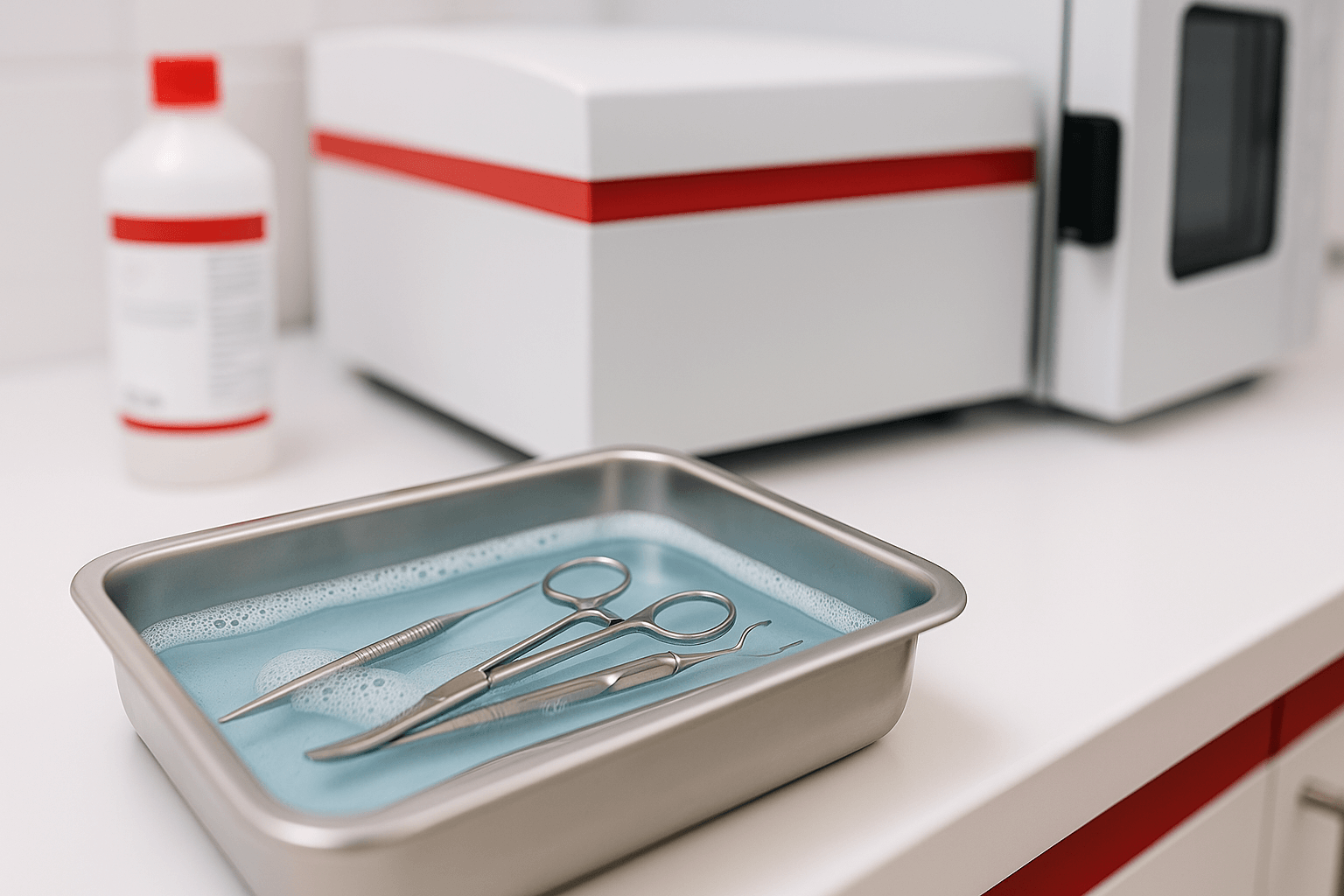 RKI 3: Cleaning & Disinfection
  RKI 4: Instrument Care
 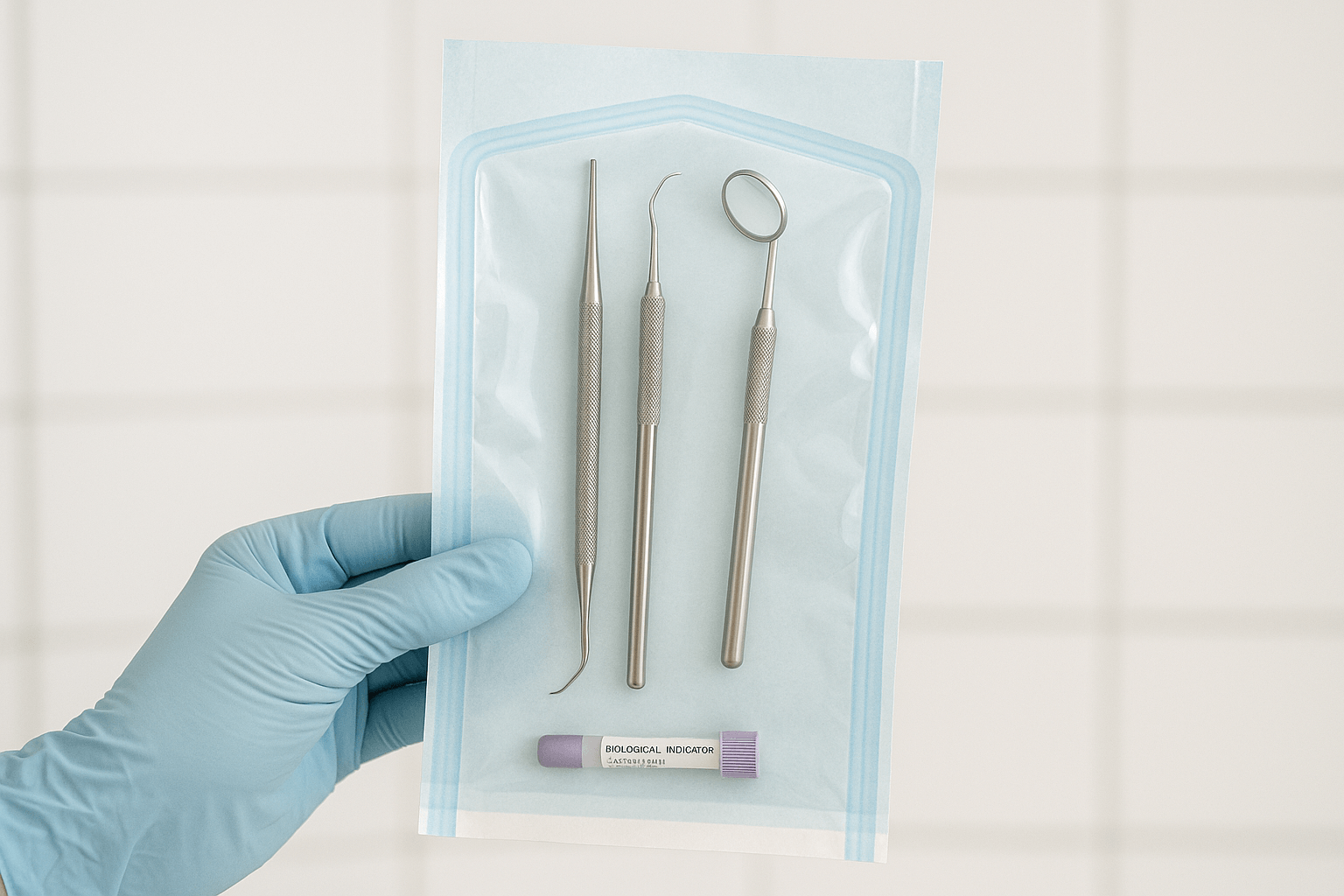 RKI 5: Instrument Packaging
 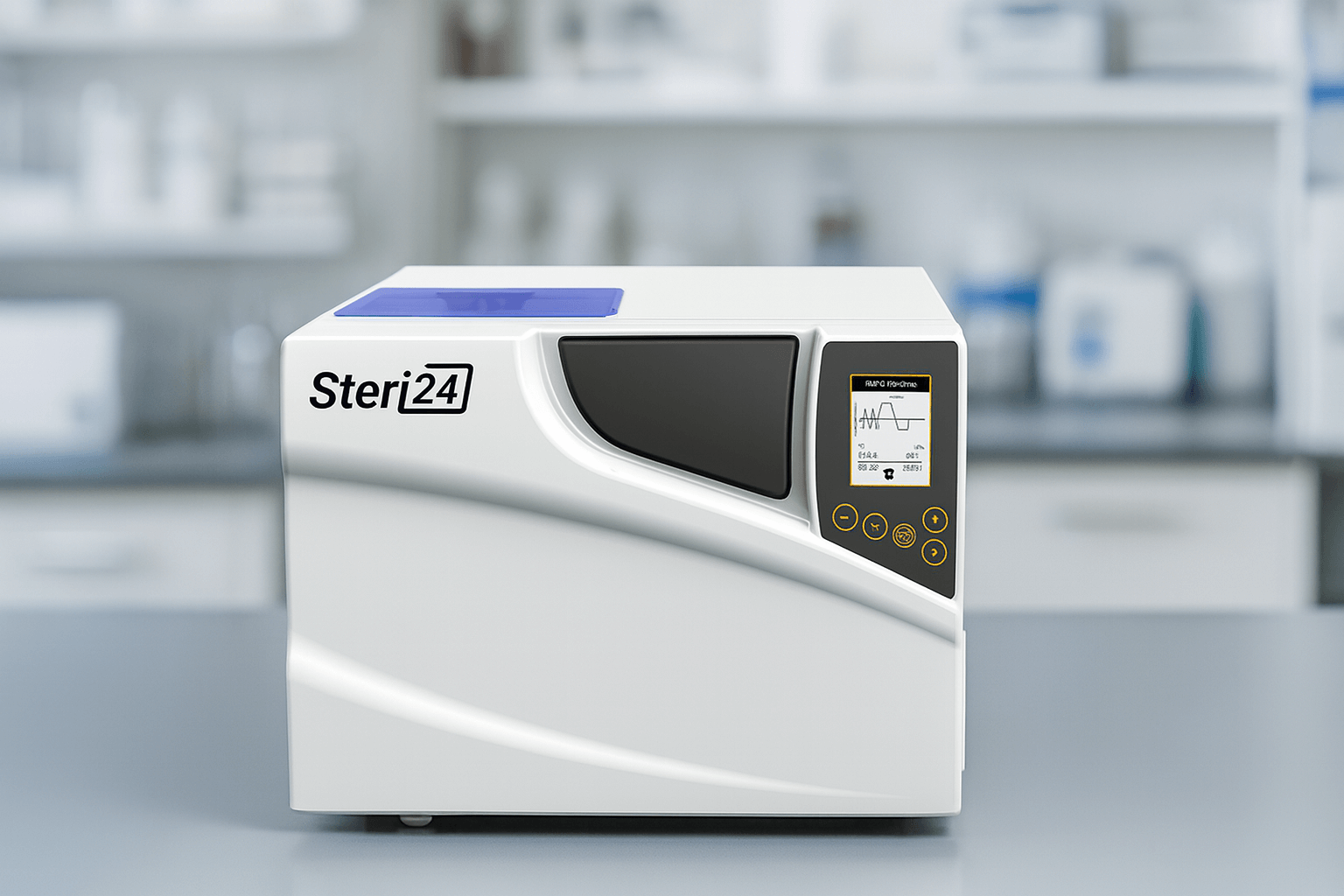 RKI 6: Sterilization in the Autoclave
 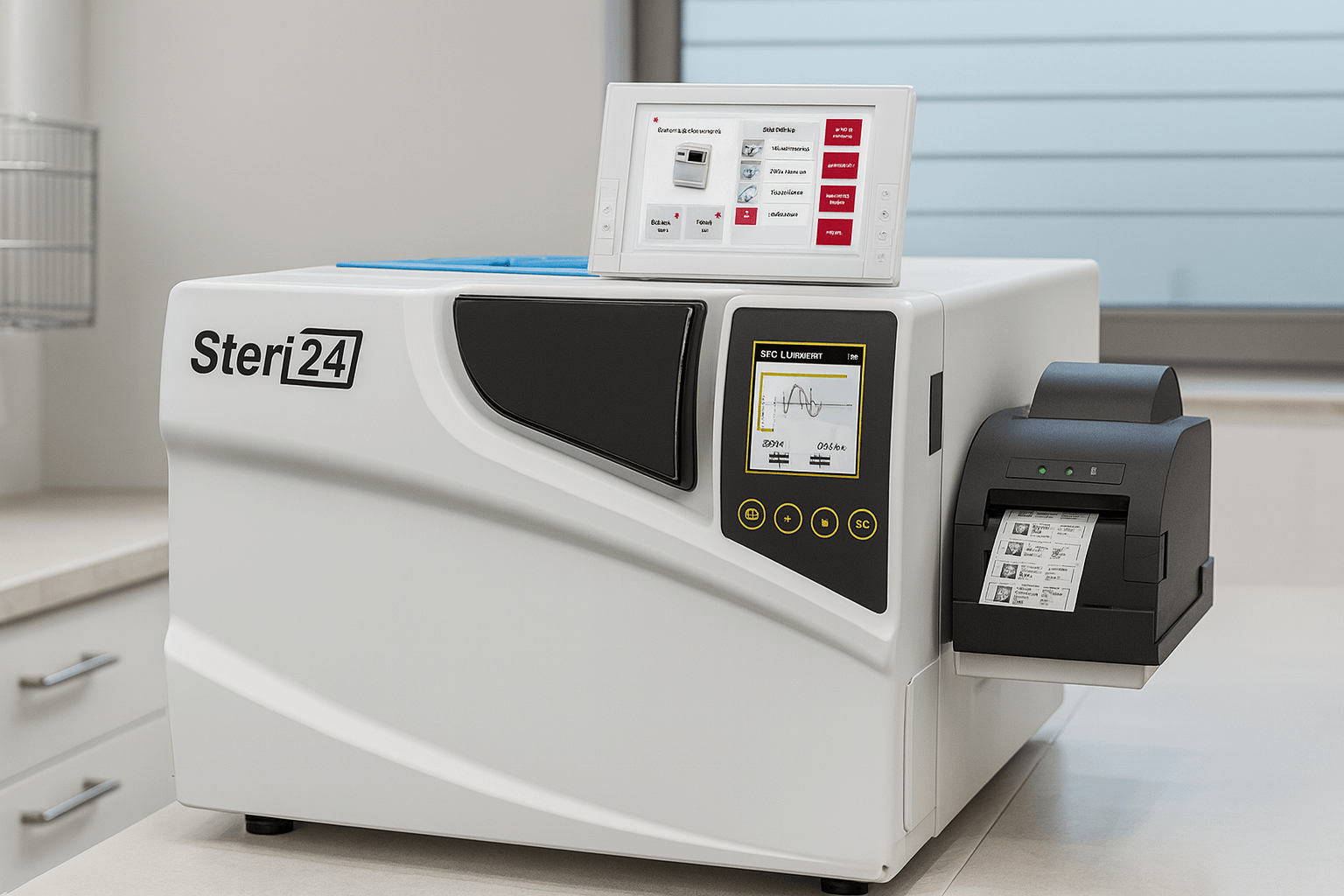 RKI 7: Release & Documentation
  RKI 8: Storage of Sterile Instruments
 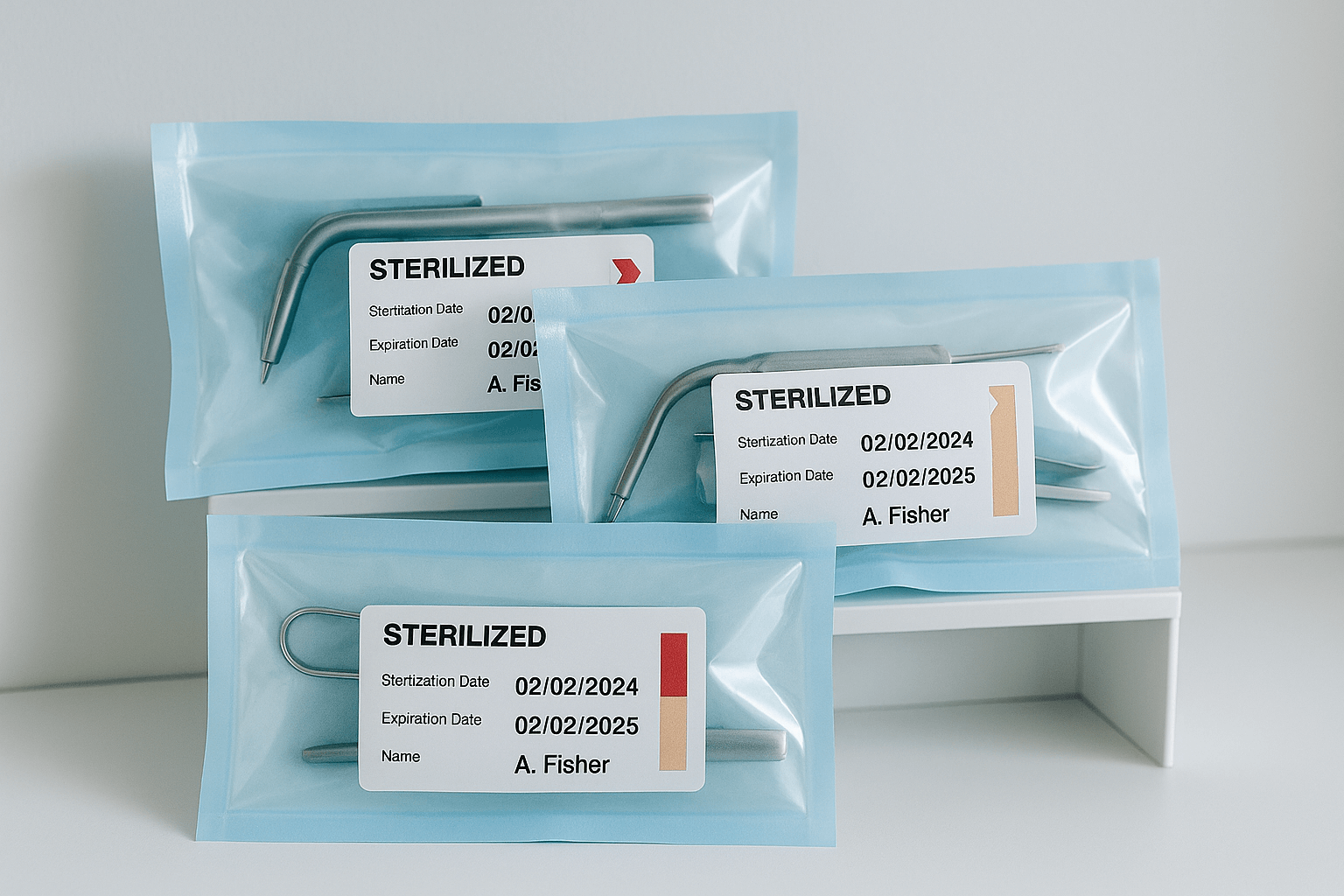 RKI 9: Labelling After Sterilization
 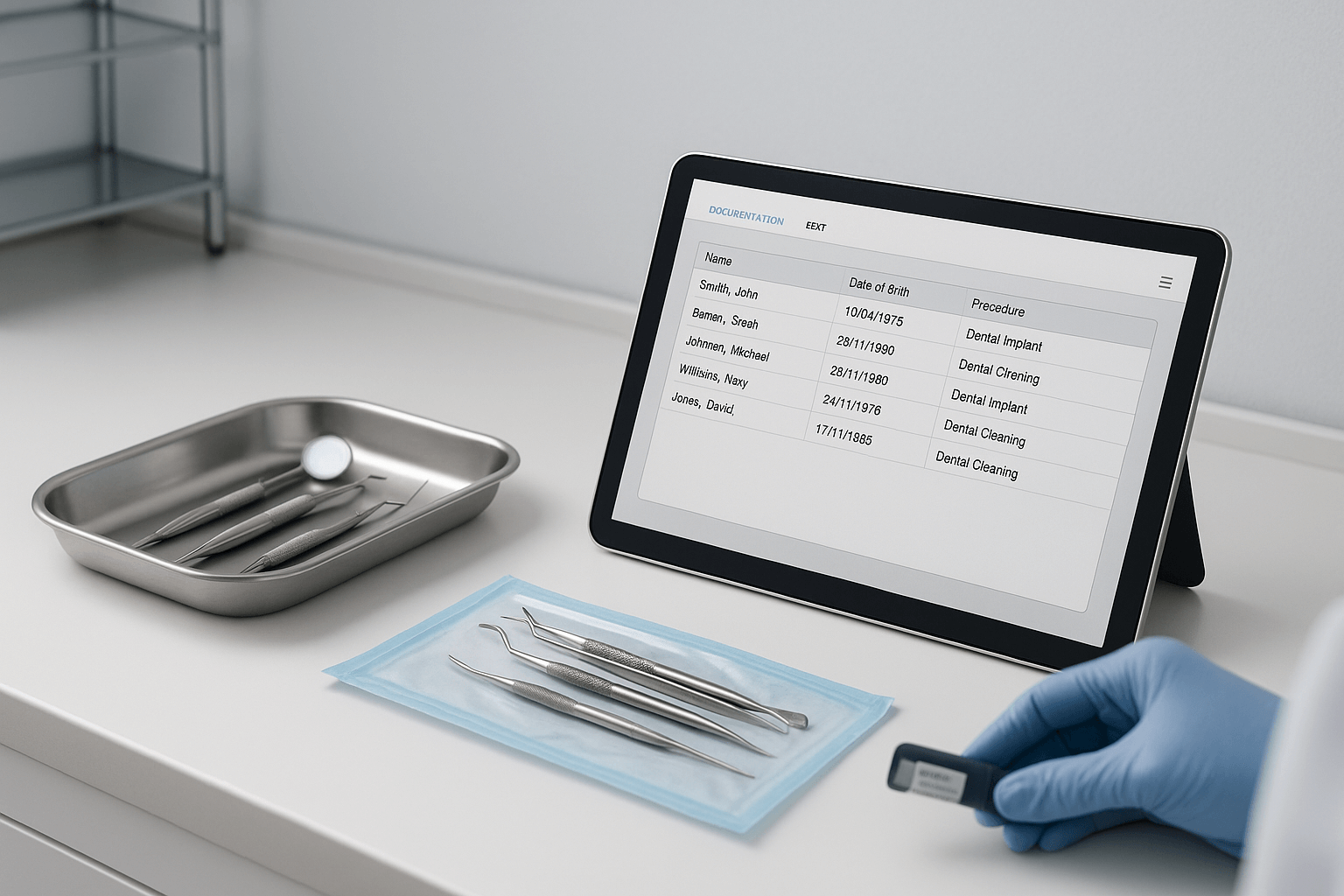 RKI 10: Documentation After Patient Use
 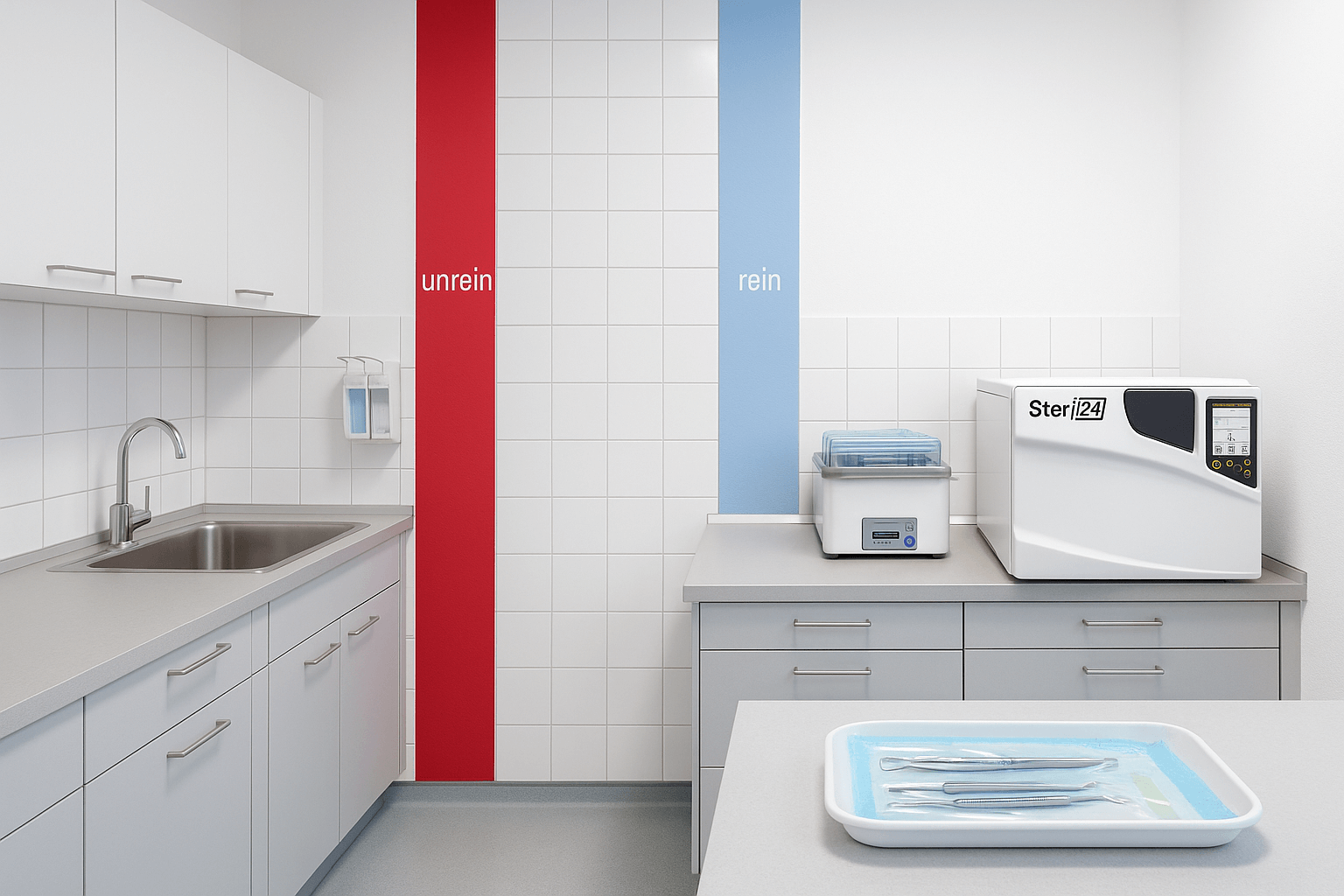 RKI 11: Hygiene Room per KRINKO
 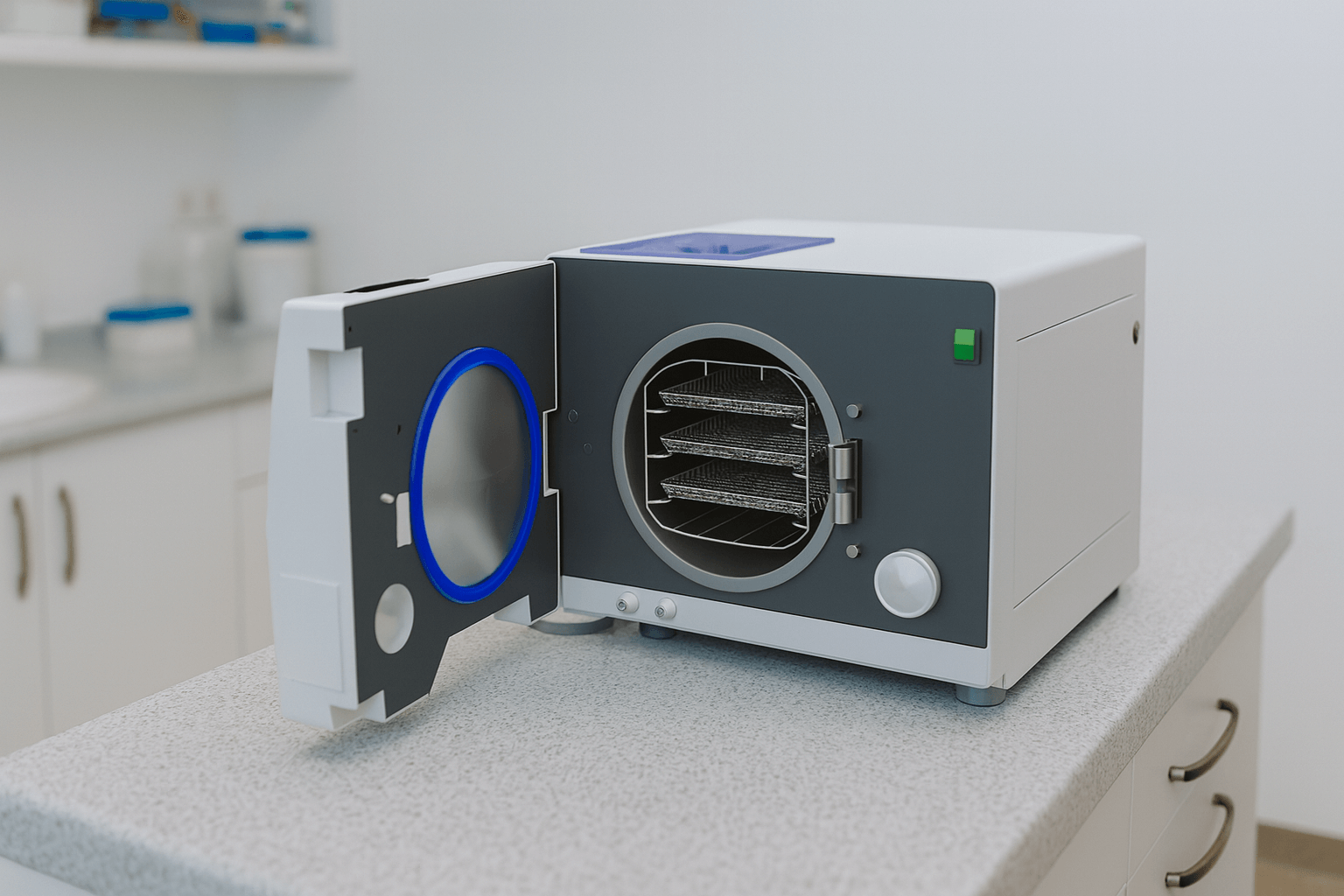 RKI 12: Initial Validation of a Klasse B Autoclave
Meet RKI requirements – free of charge
Use the free ClavioSoft to run a complete audit check of your practice in just a few minutes – the software automatically generates any missing documentation. This saves you up to 90 % of the work.

Sterile Packaging: How to Correctly Package Instruments
Packaging critical instruments preserves their sterility until the point of use. It forms the sterile barrier system (SBS), which keeps out dust, moisture and micro-organisms after sterilization. Packaging materials must meet the requirements of DIN EN ISO 11607-1 (or the DIN EN 868 series) and must be declared suitable by the manufacturer for the chosen sterilization method (e.g. steam at 134 degrees C). The sealing process must be validated in accordance with DIN EN ISO 11607-2.
1What is a sterile barrier system (SBS)?
An SBS is the sealed packaging that protects the sterile instrument from recontamination until the point of use (e.g. a transparent sterilization pouch or a container). It must form a microbial barrier, allow steam penetration, and permit aseptic opening. Requirements for materials and processes are governed by DIN EN ISO 11607-1 (materials/systems) and -2 (validation of the packaging process).
Sources: KRINKO/BfArM 2012, Section 2.2.4; DIN EN ISO 11607-1/-2; DGSV guideline on validation of packaging processes.2Common packaging types
| Packaging type | Suitability & requirements |
|---|---|
| Sterilization paper rolls (with a sealing device) | Individually cuttable to size; ideal for larger instruments/sets. Wrinkle-free seal seam (≥ 6 mm wide), distance from seal seam to instrument ≥ 30 mm (3 cm); if the manufacturer specifies higher values, the manufacturer's specification applies. |
| Self-sealing pouches | Convenient (simply peel and seal), contents visible through transparent film; for smaller instruments. Wrinkle-free seam, overlap ≥ 1 cm, labelling with a solvent-free marker outside the seal seam. |
| Sterilization containers | Provide excellent protection for sets/surgical instruments. Wrap instruments in lint-free cloth; replace disposable filters before each use, maintain and document reusable filters; keep steam ports clear; seal/lock/tamper-proof the container for storage. |
| Crepe/non-woven sheets | Flexible, ideal for irregularly shaped instruments and mixed sets; use protective caps to prevent puncture by sharp/pointed tips. |
3The seal seam – and why it must be inspected
The seal seam is the most critical point of the packaging. It must be continuous, wrinkle-free and firm. A validated sealing process (temperature, contact pressure, speed) must be demonstrated in accordance with DIN EN ISO 11607-2. During routine operation, inspect the seam regularly:
Daily: Seal check / ink test, visual inspection of the seam (uniform contrast, sharp contours) and peel test (paper separates from the film with virtually no residue).
Periodically: Tensile strength testing of the seam.
Find the right Klasse B autoclave
Important additional points per RKI & standards
These points are frequently overlooked in practice but are essential for correct and legally compliant implementation:
- Process/treatment indicator on the packaging: Use sterilization packaging with an integrated process indicator (treatment indicator) or apply one separately. The colour change confirms that the package has been through the sterilization process and distinguishes processed from unprocessed sterile goods. Visual inspection of the indicator is part of the batch-related checks and the release procedure.Source: KRINKO/BfArM 2012, Appendix 'Notes on the use of chemical indicators' (Class 1 process indicators) and Section 2.2.6 (process indicators for labelling)
- Labelling in the course of sterilization and release: During packaging, non-critical preliminary labelling (e.g. contents) may be applied outside the seal seam and only on the paper side. The labelling-relevant information – sterilization date or batch identification, expiry date or sterile shelf life where applicable, and the release decision – is documented on the packaging in the course of sterilization and release, not in advance during packing. This batch- and release-related documentation (batch documentation) can be completed in just a few clicks with the free ClavioSoft – stored in a tamper-proof format.Source: KRINKO/BfArM 2012, Section 2.2.6 (labelling: sterilization date, batch identification, expiry date, sterile shelf life, release decision)
- Mandatory inspection of the packaging immediately before use: Regardless of batch-related checks, the packaging must be inspected again immediately before each use (dryness, integrity, intact seal seams, valid labelling). If the packaging is damaged, moist or the labelling is invalid, the instrument must not be used but must be reprocessed and repackaged.Source: KRINKO/BfArM 2012, Section 2.2.4 ('Obligation to inspect immediately before use') and Annex 4 (batch-related checks – visual inspection of packaging: dryness, integrity, intact seal seams, complete labelling)
- Sterile shelf life depends on packaging and storage conditions: Sterile goods must be stored dust-free, clean, dry and at room temperature. The permissible storage period depends on the quality of the packaging material, the tightness of the seal seams and the storage conditions; under favourable conditions, shelf lives of more than six months are possible. Define the shelf life within your facility and take into account the information provided by the manufacturers of both the medical device and the packaging material.Source: KRINKO/BfArM 2012, Section 3 (transport and storage): dust-free/clean/dry, storage period depends on packaging quality, seal tightness and storage conditions, shelf lives of more than six months feasible
- Dryness of sterile goods before packaging: Only instruments that have been thoroughly cleaned, disinfected and dried may be packaged. Residual moisture under the film compromises the sterile barrier and shelf life and may cause corrosion. Before packaging, check cleanliness, dryness and functionality (e.g. place hinged instruments in the open position).Source: KRINKO/BfArM 2012, Sections 2.2.1/2.2.4 (inadequate drying as a source of error; visual check for dryness) and Annex 4 (place instruments with open hinges/joints)
- Packaging process as a validated, SOP-governed part of the overall process: The packaging step is part of the reprocessing procedure that, under the MPBetreibV, must be carried out using suitable validated methods and by personnel with the required expertise, and must be defined in a standard operating procedure (SOP). Heat sealers must be validated and maintained in accordance with the manufacturer's instructions; the critical parameters (in particular temperature and contact pressure) must be set and documented. The SOP and ongoing documentation can be managed quickly and easily with the free ClavioSoft.Source: MPBetreibV (reprocessing with validated methods); KRINKO/BfArM 2012, Annex 4 (heat sealers: critical process parameters temperature and contact pressure, operating instructions must be available; prepare standard operating procedure); DIN EN ISO 11607-2
Required equipment, consumables & accessories
Checklist for this step – items you should have on hand (shopping list):
Equipment
- Validatable heat sealer with adjustable temperature and contact pressure; for higher throughput, a continuous sealing device with automatic cutting function Order in our shop
- Klasse B autoclave (steam sterilizer per DIN EN 13060) as the subsequent process step; the packaging material must be suitable for its procedure Order in our shop
- Packing station in the clean zone with good lighting for visual inspection of the seal seam
Consumables
- Self-sealing transparent sterilization pouches in various sizes for small individual instruments Order in our shop
- Transparent sterilization rolls (paper/film) for custom cutting to size for larger instruments and sets Order in our shop
- Crepe/non-woven sterilization sheets for irregularly shaped instruments and mixed sets
- Container filters (replace disposable filters before each use or maintain reusable filters) for sterilization containers Order in our shop
- Lint-free cloths for wrapping set instruments inside the container
- Solvent-free, rub-resistant sterilization markers (label only on the paper side, outside the seam) Order in our shop
- Packaging with integrated process indicator or separate process indicators Order in our shop
- Protective caps or protective paper for sharp/pointed instrument tips (autoclavable) Order in our shop
Accessories
- Seal-check / ink-test strips and peel-test material for daily seal seam inspection Order in our shop
- Test equipment or service for periodic tensile strength testing of the seam (as part of maintenance/revalidation) Order in our shop
- Validation and maintenance contract for the sealing device (initial validation, interval maintenance per manufacturer specifications) Order in our shop Request validation
- Sterilization containers with lid/filter holder and locking/latching system for storage and transport Order in our shop
- Sample tray list or packing schema template for documenting the contents and layout of each tray/set Create digitally with ClavioSoft
- Standard operating procedure 'Packaging' as well as documentation/release software or forms Order in our shop Create digitally with ClavioSoft
- Dust-proof, enclosed storage cabinet or drawer for packaged sterile goods
Templates & sources
- KRINKO/BfArM 2012, Bundesgesundheitsbl. 55:1244–1310 – Section 2.2.4.
- DIN EN ISO 11607-1/-2; DGSV guideline on validation of packaging processes.
- DIN 58953 (sterile supply management); routine operation checklist for sealing devices; MPBetreibV § 8.
How audit-ready is your practice?
Find out in just a few minutes how well prepared you are for the next inspection — category by category, with clear progress tracking and specific open items. Completely free with ClavioSoft.
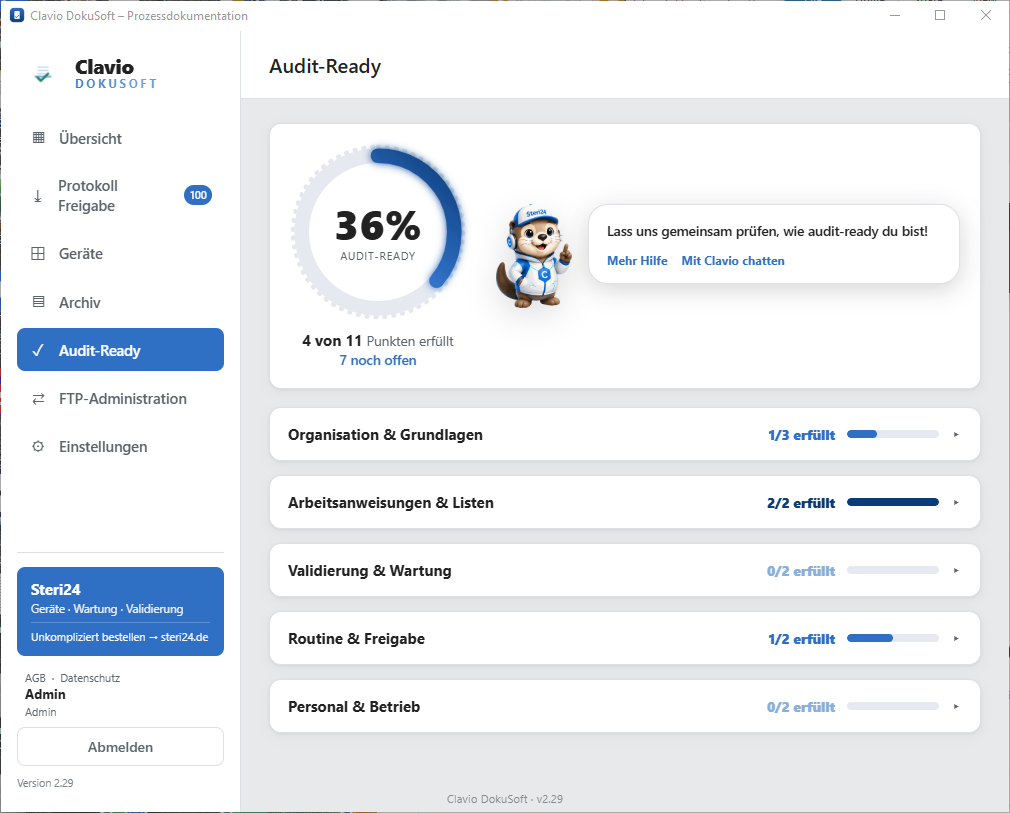
.png "Preview: Clavio DokuSoft")


Frequently Asked Questions
RKI Instrument Packaging – key questions answered clearly.