Frequently Asked Questions
Sealing Devices – key questions answered clearly.
What is a sealing device used for in instrument reprocessing?
A sealing device closes sterilization pouches and reels with a tight sealing seam so that the instruments remain packaged sterile after steam sterilization. It creates the sterile barrier system that maintains sterility until use.
Do I need a validatable sealing device?
In Germany and Switzerland, the validation of packaging processes is effectively mandatory via the MPBetreibV in conjunction with DIN EN ISO 11607-2. Non-validatable sealing processes are therefore not permitted; the device must make the sealing parameters adjustable and monitorable. The CertoSeal 200 and 300 are validatable, while the Pro Touch is a simple entry-level device without validatability.
What does validatable mean for a sealing device?
Validatable means that the critical process parameters such as sealing temperature and contact pressure are adjustable and monitorable and can be documented reproducibly. Only this enables process validation in accordance with DIN EN ISO 11607-2 as the basis for legally compliant operation.
Which CertoSeal model is right for me?
The Pro Touch is suitable for low volumes and getting started, but is not validatable. The CertoSeal 200 is a validatable continuous sealing device with good value for money; the CertoSeal 300 additionally offers an automatic cutting function and LAN connectivity. For a precise recommendation, feel free to use our advisory service.
What is the difference between a continuous and a manual sealing device?
Continuous sealing devices (CertoSeal 200/300) feed the pouch through automatically and create a uniform, reproducible seam, ideal for higher volumes. Manual devices (Pro Touch) are compact and inexpensive for small volumes.
What is the benefit of the CertoSeal 300's automatic cutting function?
The CertoSeal 300 seals and automatically cuts the pouch to the desired length in a single pass, saving time and producing clean, uniform packaging. A continuous sealing device with an integrated automatic cutting function is rare on the market.
Which sealing device suits high packaging volumes?
For high volumes we recommend the continuous sealing devices CertoSeal 200 or 300, because they feed the pouch in automatically and quickly produce a uniform seam. The CertoSeal 300 additionally cuts fully automatically.
Which sealing device is sufficient for small volumes?
For occasional, small volumes the compact entry-level Pro Touch or self-sealing ready-made pouches without any device are often enough. As soon as you have to validate or package regularly, the validatable CertoSeal 200/300 are the better choice.
Is a validatable sealing device required in podology?
Yes, in Germany a validatable sealing device is required in podology, even if this is not checked equally strictly in every federal state. The CertoSeal 200 or 300 meets this requirement.
Do I need a sealing device in foot care?
You need a sealing device as soon as you have to package critical instruments, that is, those that pierce the skin or may come into contact with blood. These must be sterilized while packaged, which requires a tight sealing seam.
Which standard applies to the sealing of the sterile-goods packaging?
DIN EN ISO 11607-2 applies to the validation of the sealing processes; the requirements for materials and sterile barrier systems are governed by DIN EN ISO 11607-1, supplemented by the DIN EN 868 series. Validatable sealing devices are designed to meet these requirements.
What is the minimum width the sealing seam must be?
According to the recognized requirements, the sealing seam width must be at least 6 mm, and the minimum distance between the sealing seam and the medical device should be 3 cm. The validatable CertoSeal devices produce correspondingly sufficiently wide seams.
Which process parameters are critical during sealing?
The critical process parameters in heat sealing are the sealing temperature and the contact pressure. Validatable devices make these adjustable and monitorable, so that a reproducible, tight seam is created.
Which routine checks are needed on the sealing device?
Routine checks usually include an ink test or seal check, the testing of sealing seam strength and peelability, as well as the monitoring of the critical parameters. The exact requirements may vary depending on the responsible chamber.
Is a daily seal check on the sealing device required?
The requirements may vary depending on the responsible chamber; a daily seal check and an annual validation with a sealing seam strength test are often provided. The sealing seam test is required if you seal critical medical devices for use on humans.
Must sealing devices be validated before first use?
Validatable sealing devices such as the CertoSeal 200 and 300 must undergo initial validation; in Germany the validation of the sealing process is indirectly mandatory via standards and the MPBetreibV. We carry out the initial validation on site.
Do you handle the validation of the sealing device?
Yes. We validate your sealing process in accordance with DIN EN ISO 11607-2 on site, manufacturer-independent and including documentation for your QM. This is available for CertoSeal 200 and 300.
At what intervals must sealing devices be serviced?
Sealing devices are serviced every 24 months in accordance with the legal regulations in Germany, Austria and Switzerland. Continuous sealing devices must additionally be serviced at the latest after a certain number of sealing operations.
How often must a sealing device be revalidated?
A recurring revalidation as part of maintenance is customary; many chambers provide for an annual validation with a sealing seam strength test. It is best to combine maintenance and revalidation in a single on-site appointment.
Do you offer on-site service for sealing devices?
Yes. With 39 of our own locations and over 150 partners in the DACH region, we handle the installation, validation and maintenance of your sealing device on site, manufacturer-independent.
What does the USB documentation on the sealing device mean?
The validatable CertoSeal 200 and 300 have a USB port via which the sealing parameters can be documented. This provides the proof of the maintained process parameters for your QM.
Can the sealing device be connected to the practice software?
The CertoSeal 300 can be connected to any practice software via LAN, so that the sealing documentation can be integrated into your process chain. The CertoSeal 200 documents via USB.
Can I read out the process data of the sealing device?
With the validatable CertoSeal devices, the sealing parameters can be documented, via USB on the 200 and additionally via LAN connectivity on the 300. We are happy to advise you on connecting to a specific documentation software.
How does the sealing device count the batch number?
During sealing, the batch number increases by one for each pouch, so that every package remains uniquely traceable. This is part of the seamless documentation of reprocessing.
Do I need a sealing device for self-sealing pouches?
No. Self-sealing pouches have an integrated adhesive strip and are closed by hand; they are suitable for occasional use and small volumes. For higher requirements and roll stock, a sealing device is the better solution.
Which packaging do I use with the sealing device?
With the sealing device it is best to use sterilization reels (roll stock), which you cut to the required length and seal. The pouches and reels should be manufactured in accordance with DIN EN 868 and approved for Klasse B autoclaves.
Are the matching sterilization reels manufactured to standard?
Yes, the sterilization pouches and reels are manufactured in accordance with DIN EN 868 and are suitable for steam sterilization in Klasse B autoclaves. Roll stock is the most economical choice if you own a sealing device.
On which side of the pouch do I label packaged instruments?
Labeling is generally done on the film side, so that the paper side remains permeable. According to KRINKO, every package must be labeled in such a way that traceability is ensured; both handwriting and labels are permitted.
When do I label the sealed pouches?
Labeling is generally done on the packaging and after sterilization, at minimum with the batch number. Use a suitable sterilization pen or a removable label for this.
How do I store packaged sterile goods after sealing?
Store packaged sterile goods protected from dust, ideally upright (film to film, paper to paper) or with the paper side facing down. This keeps the sterile barrier intact for as long as possible.
How long do sealed instruments remain sterile?
In a non-dust-protected environment (a normal drawer) about 6 months, with dust protection up to 5 years, regardless of whether single or double sealed. The prerequisite is undamaged, tight packaging.
How do I care for the sealing seam and how do I recognize a good seam?
A good sealing seam is continuous, evenly wide (at least 6 mm) and free of channels or air pockets. Check regularly with a seal check/ink test and inspect the integrity of the seam before use.
My sealing device no longer works, what should I do?
Please describe the fault and, if possible, send a photo via steri24.de/help or to support@certoclav.com. For validatable sealing devices, a technician will support you with the solution or maintenance.
Why does my sealing device not give an audible signal after sealing?
Not every model and not every configuration has an audible completion tone. If the sealing process otherwise runs cleanly and the seam is fine, this is generally not a defect; if in doubt, our service team can help.
The sealing seam is leaky or comes apart, what is the cause?
Common causes are a sealing temperature that is too low, incorrect contact pressure, dirty sealing jaws or unsuitable packaging material. Check the set parameters and clean the sealing surface; if the problem persists, contact our service team.
Can I exchange an already purchased device for another CertoSeal model?
A change of model can often be arranged as part of our advisory service, for example from an entry-level device to a validatable continuous sealing device. Please contact us directly about this.
Is a sealing device a medical device?
Sealing devices fall under the Machinery Directive and bear the CE mark; they are not a medical device in the narrower sense. For legally compliant operation, however, the validation of the sealing process is decisive.
Roughly what does the validation of the sealing device cost?
The initial validation of the sealing device is a one-time service; the later revalidation is lower. We are happy to tell you the exact conditions for your location in a brief advisory conversation.
Is a complete package of autoclave and sealing device worthwhile?
Yes, it is often sensible to configure the autoclave, sealing device and accessories together, because delivery, installation and validation can be bundled into a single appointment. Use our configurator to put together your package individually.
How is the revalidation arranged for a set of autoclave and sealing device?
The autoclave is revalidated on site on a regular cycle; the continuous sealing device is additionally serviced at the latest after a defined number of sealing operations. It is best to order the overall package of maintenance and revalidation.
Why buy from Steri24 when I don't know the brand?
Steri24 is a brand of CertoClav Sterilizer GmbH from Austria, on the market since 1957. CertoSeal is our in-house development; we sell directly and handle the service ourselves, with a dense on-site service network at fairer prices than established expensive providers.
How does CertoSeal differ from established expensive providers?
The CertoSeal devices offer validatable continuous sealing at fair prices, combined with our own on-site service throughout the DACH region. Established higher-priced providers often offer comparable performance significantly more expensively and with a less dense service network.
Is CertoSeal an in-house development by Steri24?
Yes, CertoSeal is an in-house development by Steri24, including the validatable continuous sealing devices. As a result, we handle development and service from a single source.
What distinguishes the CertoSeal 200 from the 300?
Both are validatable continuous sealing devices with USB documentation. The CertoSeal 300 additionally cuts automatically and can be connected via LAN to any practice software, while the 200 is cut manually.
Can the Pro Touch be validated?
No, the Pro Touch is a compact manual entry-level device without validatability and without a USB port. If you have to validate, the CertoSeal 200 or 300 is the right choice.
Which sealing device suits a dental practice?
For dental practices with regular packaging volumes, the validatable continuous sealing devices CertoSeal 200 or 300 are recommended, the 300 because of its automatic cutting function and practice-software connectivity. We are happy to advise you on the specific selection.
Which sealing device suits tattoo or piercing studios?
Since critical instruments have to be sterilized while packaged, a validatable sealing device is the safe choice here too, for example the CertoSeal 200. For low volumes, self-sealing pouches are a simple alternative.
Do critical instruments have to be sealed before sterilizing?
Yes, critical instruments are sterilized packaged (sealed) so that they remain sterile after autoclaving until use. The decisive factor is the risk classification according to KRINKO; in case of doubt, instruments are considered critical.
Do hinged instruments have to be open for sealing?
When sealing, hinged instruments do not have to be open. During cleaning and disinfection in the thermal disinfector, however, they should be open or leaned ajar.
May I reseal and re-sterilize expired packaged sterile goods?
Packaged instruments may be re-sterilized after the storage period has expired, provided the packaging was undamaged and clean, but then repackaged, not in the same pouch. If the packaging is damaged, the goods must run through the complete reprocessing cycle again.

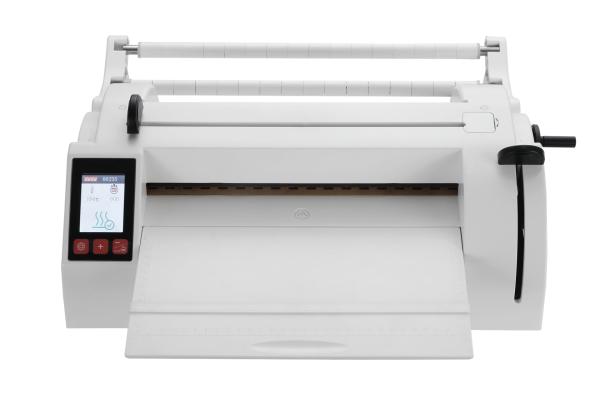 CertoSeal Pro Touch
Compact entry-level sealing device
CertoSeal Pro Touch
Compact entry-level sealing device
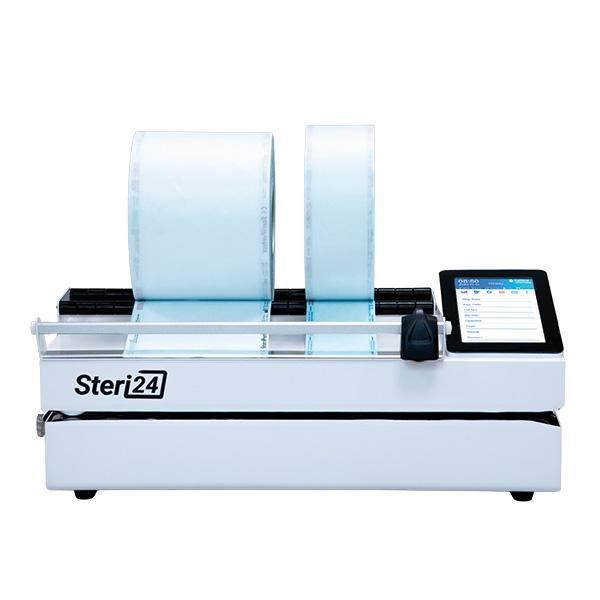 CertoSeal 200
Continuous sealing device · best value for money
CertoSeal 200
Continuous sealing device · best value for money
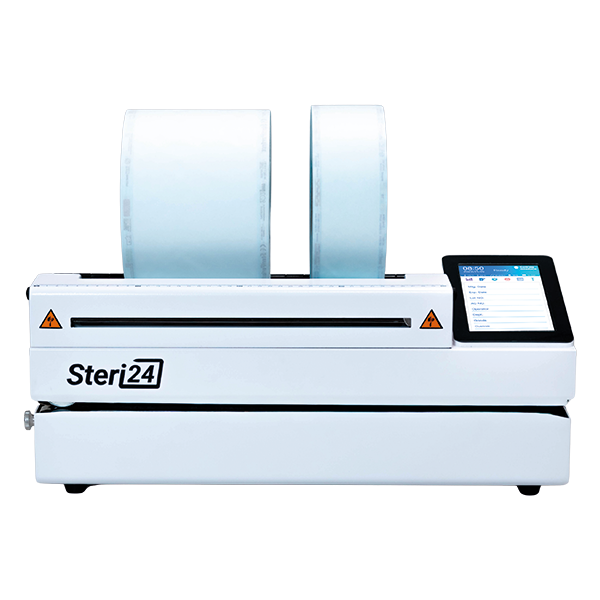 CertoSeal 300
Innovation: automatic cutting function – rare on the market
CertoSeal 300
Innovation: automatic cutting function – rare on the market


