Frequently Asked Questions
General practice – key questions answered clearly.
Which autoclave is suitable for a general medical (GP) practice?
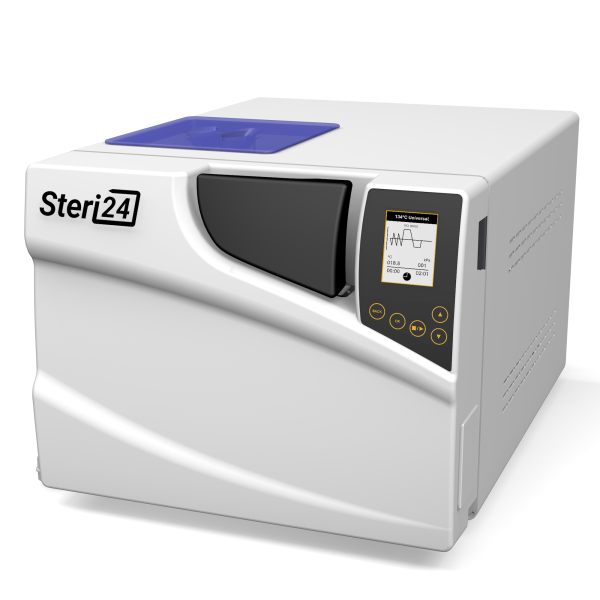
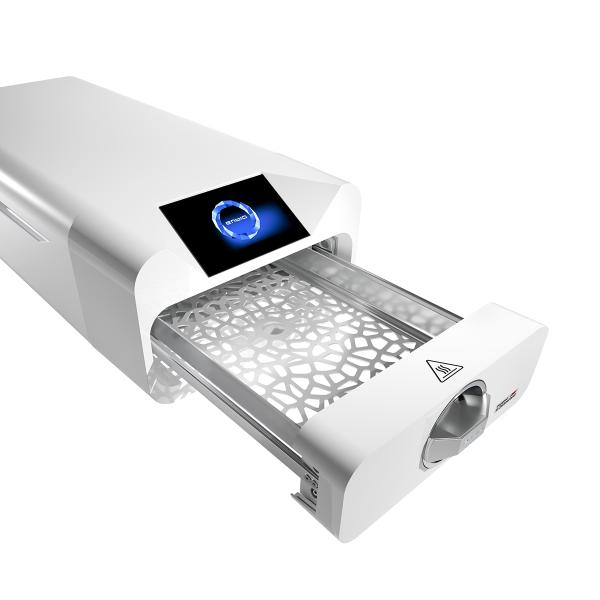
For doctors', GP and internal medicine practices, our Klasse B autoclaves are a good fit. With a low instrument volume the compact 3 L is often enough, while the 12 L is recommended for busier days. The exact choice depends on the largest instrument and the quantity of instruments per cycle - the fastest way to find the right model is via our autoclave configurator.
Do I really need a Klasse B autoclave in a general practice?
For the sterilisation of packaged, critical instruments, a Klasse B process to EN 13060 is the safe standard, as only this reliably sterilises hollow bodies and packaged goods too. Which instruments count as critical in your practice follows from the RKI risk classification. If in doubt, we are happy to advise you.
What does Klasse B mean on an autoclave?
Klasse B to EN 13060 is the highest class for benchtop steam sterilisers. It uses a fractionated vacuum process and can therefore sterilise all types of load - including packaged, hollow and porous instruments. This covers the entire range of a medical practice.
Do your autoclaves meet the RKI requirements for a medical practice?
Yes. All our devices are Klasse B to EN 13060 and CE-certified via TÜV SÜD. They document every batch in an audit-proof way via USB and thermal printer; on request we carry out initial validation and maintenance on site.
Is the compact 3 L autoclave enough for my GP practice?
With a low instrument volume and small instruments, the 3 L is often sufficient and particularly space-saving. As soon as you reprocess more instruments per day or larger instruments, the 12 L is usually the better choice. Our configurator helps with the decision.
How fast is a sterilisation cycle in a general practice?
The compact 3 L autoclave offers a quick programme of about 7 minutes, so instruments are quickly available again in everyday practice. The cycle time depends on the selected programme and the load.
Do I need a fixed water connection for the autoclave?
No. Our compact Pro devices have an integrated water tank with internal fresh- and waste-water management. You simply set the device up, connect it to the power supply and get started - no fixed water connection needed.
Which water do I fill into the autoclave?
Use demineralised or distilled water of suitable quality to avoid limescale deposits and water-quality error messages. A water treatment system such as AQUAdem can ensure an ongoing supply of treated water.
Does the autoclave have a drying function?
Yes, our Klasse B autoclaves have an integrated drying phase, so the sterile goods can be removed dry at the end of the cycle. Dry sterile goods are a prerequisite for the safe storage of packaged instruments.
Does the autoclave need a separate room in the practice?
A separate room is not strictly necessary; the autoclave can also stand in the treatment room. If reprocessing takes place in the treatment room, this should only happen when no patients are in the room. A window and a water connection are not required.
Do I need a compressed-air connection for the autoclave?
No, a compressed-air connection is not required for our benchtop autoclaves. A standard power connection is sufficient; the compact models additionally work with an internal water tank.
How loud is the autoclave during practice operation?
Our benchtop autoclaves operate with a moderate noise level that is usual in everyday practice and can therefore be placed near workstations too. If you have special requirements, we are happy to advise you on placement.
Do I have to sterilise instruments packaged in a general practice?
Above all, instruments that penetrate the skin or come into contact with blood/wounds (critical instruments), as well as instruments that are to be stored sterile, must be sterilised packaged. The exact classification follows from the RKI risk assessment.
Do I need a sealing device in a GP practice?
For most instruments, self-sealing sterilisation pouches are sufficient - inexpensive and uncomplicated in everyday use. A sealing device such as the CertoSeal is possible, but not strictly necessary in a general practice.
Which instruments can I sterilise in the autoclave?
All steam-stable, reusable medical devices can be sterilised - such as scissors, tweezers, clamps and probes made of metal. Heat-sensitive plastics or products that the manufacturer does not approve for autoclaving do not belong in the steam steriliser.
How do I prepare instruments correctly before sterilisation?
Reprocessing is carried out in the steps of pre-cleaning, cleaning, disinfection, inspection/packaging and sterilisation. Pre-cleaning in the ultrasonic cleaner reliably removes coarse and fine contamination before the instruments go into the autoclave.
Why is a steam steriliser better than a hot-air steriliser?
For critical instruments, the legally binding KRINKO recommendation no longer provides for a hot-air steriliser - it must be steam autoclaves. In the hot-air process, packaged goods also cannot be reliably sterilised.
How long do packaged instruments remain sterile?
With correct packaging, dry sterilisation and proper, dry and dust-protected storage, sterile goods remain usable over a longer, defined period. The exact deadline depends on the type of packaging and the storage conditions - document the batch and date on the packaging.
How do I store sterile goods correctly in the practice?
Sterile goods are stored dry, dust-protected and protected from mechanical damage. Label each pack with the batch and sterilisation date so that shelf life and traceability remain verifiable at all times.
Are short programmes just as safe as long ones?
Yes - provided the programme is approved for the respective load, the standard-compliant sterilisation parameters (temperature, pressure, holding time) are maintained in every cycle. Shorter programmes are intended for certain, less complex loads.
Which sterilisation checks should I carry out in the practice?
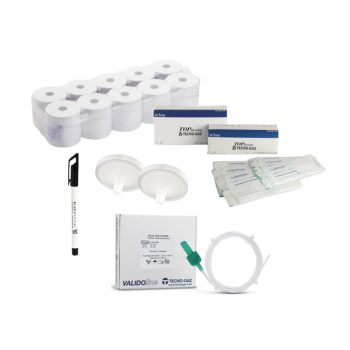
Common ones are the vacuum test to check chamber tightness, the Helix/Bowie-Dick-type test for steam penetration, and chemical indicators for batch control. Which tests are needed at which interval follows from the requirements for Klasse B devices and your validation.
How do I recognise from the printout that sterilisation was successful?
The protocol documents the process parameters achieved as well as the release/success message of the cycle. If temperature, pressure and holding time match the target values and there is no error message, the batch is considered successful.
How do I document batches in an RKI-compliant way?
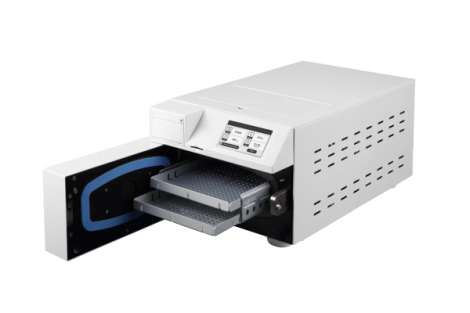
With USB and an integrated thermal printer you document every batch in an audit-proof way - entirely without complicated technology. Protocols can be printed directly or saved to USB and are thus ideally prepared for the next inspection.
How long do I have to keep sterilisation protocols?
Reprocessing, release and sterilisation protocols must be kept traceable over a defined period. The specific retention period depends on the applicable requirements of your country; we support you in setting up audit-proof documentation.
Who is allowed to release instruments and operate the device?
Reprocessing and batch release require appropriate expertise. An introduction is included during commissioning or initial validation on site; on request we additionally train your staff in sterilisation.
Do you offer training for the practice staff?
Yes. An introduction to the device is included during commissioning or initial validation on site. In addition, we offer training for your staff on correct sterilisation.
What does validation of the autoclave mean?
During validation, a specialist company with measurement technology checks and documents on site that your device, with your instruments and loads, reproducibly achieves the required sterilisation results. It is the basis for safe, standard-compliant operation.
Is validation mandatory in a general practice?
For the reprocessing of critical medical devices, validation of the sterilisation process is required. On request, we carry out the initial validation and the recurring revalidation directly at your premises on site.
When must the initial validation take place?
The initial validation should take place promptly after setup and commissioning of the device, before critical instruments are routinely reprocessed. We arrange the appointment with you and carry it out with your instruments on site.
At what intervals must revalidation be carried out?
Revalidation takes place at recurring intervals, usually annually, and additionally after significant work on the device. We define the exact rhythm with you as part of the service or maintenance contract.
Do you handle setup, installation and validation on site?
Yes. On request we handle delivery, installation, commissioning and the initial validation directly at your practice - including instruction of the staff.
How often does the autoclave need to be serviced?
Regular maintenance - usually on an annual basis - keeps the device safe and durable. With a maintenance contract, servicing is carried out as scheduled, including travel and replacement of wear parts.
What does a service include?
The service includes travel, the work itself, the scheduled replacement of all critical wear parts, and a report. This keeps your autoclave safe and reliable in the long term.
How is the service organised in Germany and the DACH region?
We sell directly from the manufacturer and handle the service ourselves - with a dense on-site service network of numerous locations and partners in the DACH region, plus a 24h emergency service. This means we can be at your premises at short notice too.
Is there a loan device during maintenance or a breakdown?
So that your practice operation does not come to a standstill, a replacement solution can be arranged during maintenance or repair. Get in touch about this - we will find the right option for your situation.
What can I do if the autoclave no longer turns on?
First check the power connection, fuse and plug connection. If the device still shows no sign of life, contact our customer service - through our service network and the 24h emergency service we help quickly.
What does a water-quality error message mean?
This message usually indicates excessive conductivity or contamination of the water used. Use sufficiently pure, demineralised water and check the water treatment if necessary; if the message persists, our service will help.
Why are instruments still wet after sterilisation?
Residual moisture can be caused by overloading, incorrect loading or a shortened drying phase. Load the trays loosely, avoid stacking and use the appropriate programme; if the problem persists, we will check the device in our service.
What should I do if a test or indicator strip does not show a sterile result?
Do not release the affected batch, check the loading, packaging and programme selection, and repeat the cycle with a correct test. If the result remains abnormal, contact our service for clarification.
Can I pay in instalments in the practice?
Yes. Instalment payment is possible via Klarna or PayPal - this way you spread the purchase conveniently over several months, without a large upfront investment. Simply get in touch with us.
Is leasing possible for the autoclave?
Yes, leasing is possible for our devices and can include service performance depending on the agreement. We are happy to prepare a non-binding leasing offer for you on request.
Which payment methods do you offer?
You can pay by PayPal, Klarna, credit card (Visa, Mastercard, Amex) and by bank transfer; instalment payment and leasing are also possible. Business customers can receive a written quote on request.
Can I order on account as a practice?
Certain customer groups, such as public institutions and existing customers, can order on account. Get in touch about your case - we will check the suitable payment option for your practice.
Do you take back my old device and dispose of it?
Yes. We advise you on switching, take back your old device on request and dispose of it properly - regardless of the manufacturer too. This makes the change easy without additional effort for your practice.
I don't know Steri24 - why should I switch?
Steri24 sells directly - without the detour via depots or intermediaries - and handles the service itself. This gives you a dense on-site service network like that of established expensive providers, but at fairer prices. Manufacturer since 1957.
How do your devices differ from established expensive providers?
Our Klasse B autoclaves offer the same standard-compliant performance as premium devices from established providers - including RKI-compliant documentation and dense on-site service. Thanks to direct sales without intermediaries, the prices remain significantly fairer.
What warranty and maintenance options are there?
As standard you receive a two-year warranty, which can be extended to up to three years with a maintenance contract. We offer maintenance and validation at a fixed price including travel.
How quickly is delivery and installation carried out?
Devices are usually available at short notice. On request we handle delivery, installation and commissioning in accordance with medical device regulations, as well as the initial validation on site.
Are your autoclaves also approved for Austria and Switzerland?
Yes, our devices are CE-certified and suitable for use in Germany, Austria and Switzerland; for Switzerland the required registration is additionally carried out. We offer service and validation on site in all three countries.
How do I find the right device for my practice the fastest?
Use our autoclave configurator: in around two minutes you receive a suitable recommendation including accessories for your practice. Alternatively, we will prepare a non-binding quote for you or advise you personally.





 39 locations · 150+ partners