
RKI Sterilization in the Autoclave
 RKI 1: Legal Requirements & Overview
 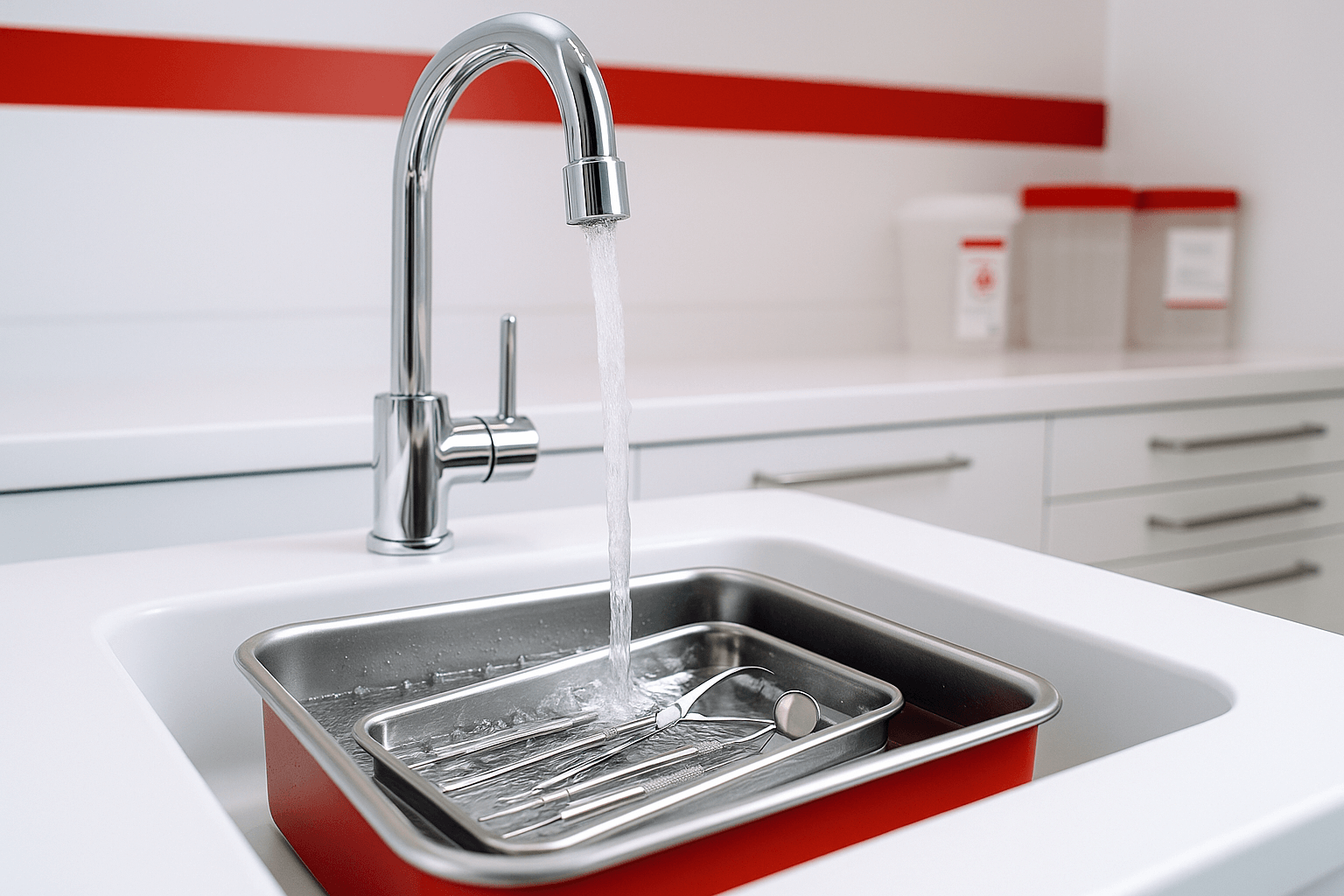 RKI 2: Correct Pre-Cleaning
 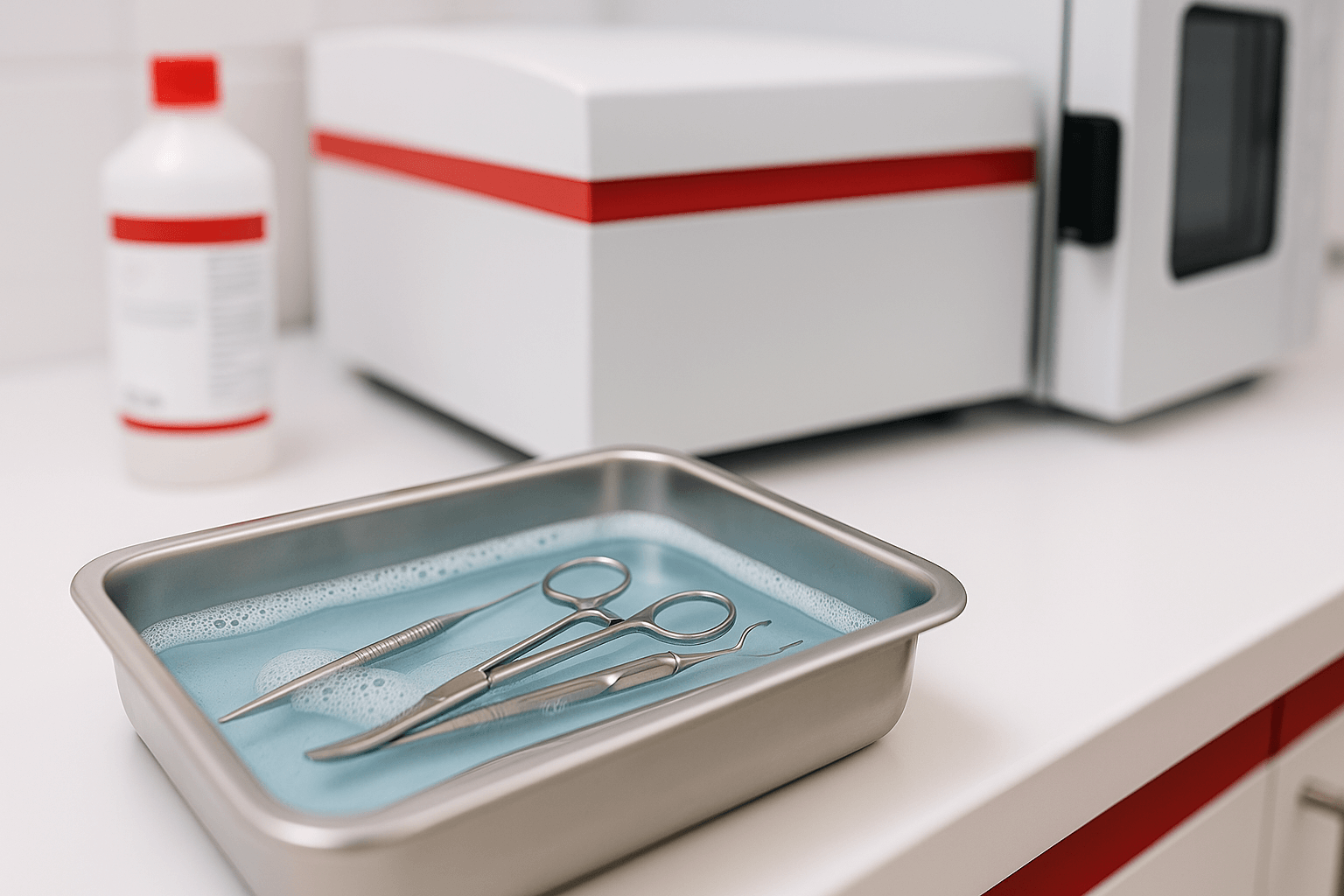 RKI 3: Cleaning & Disinfection
  RKI 4: Instrument Care
 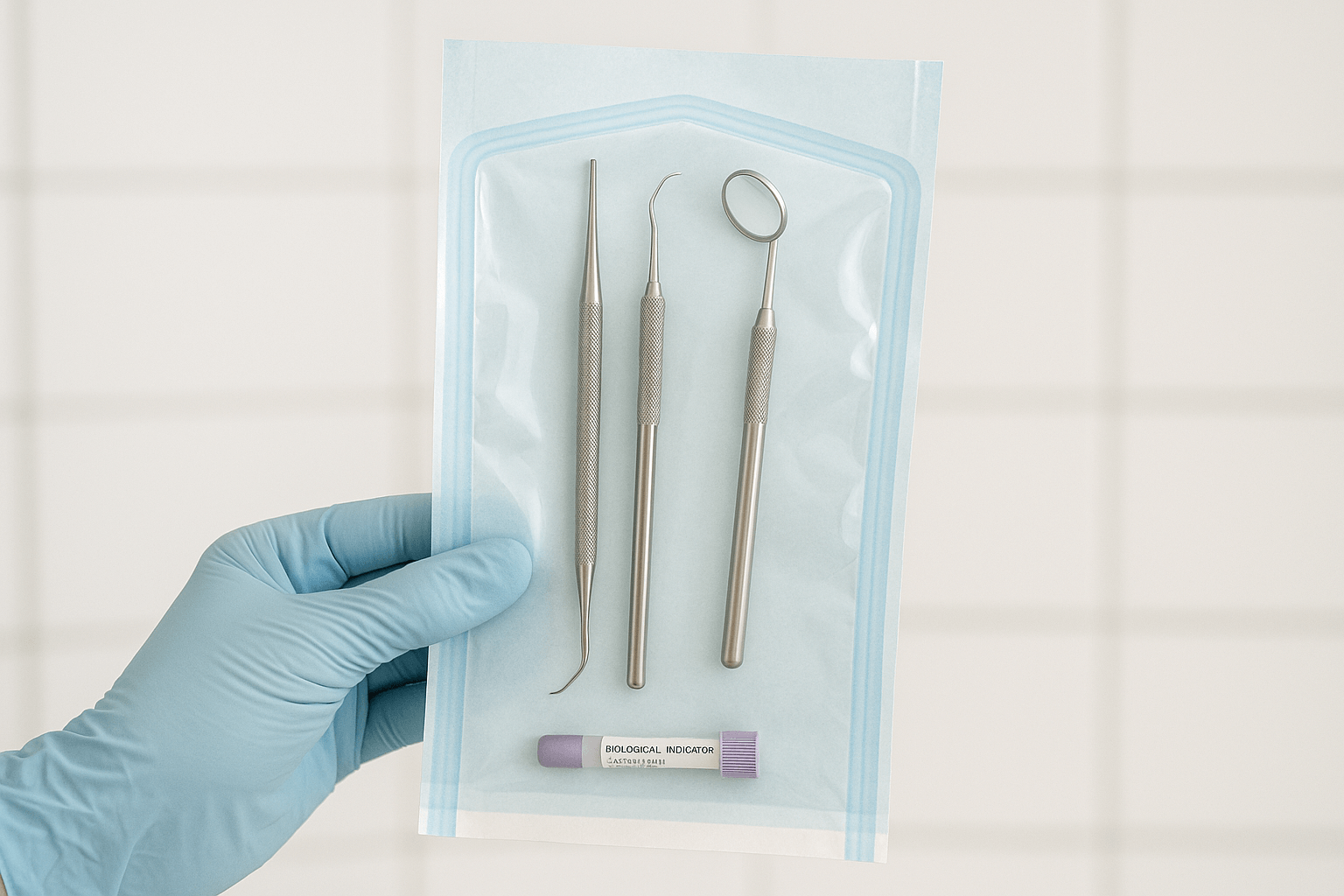 RKI 5: Instrument Packaging
 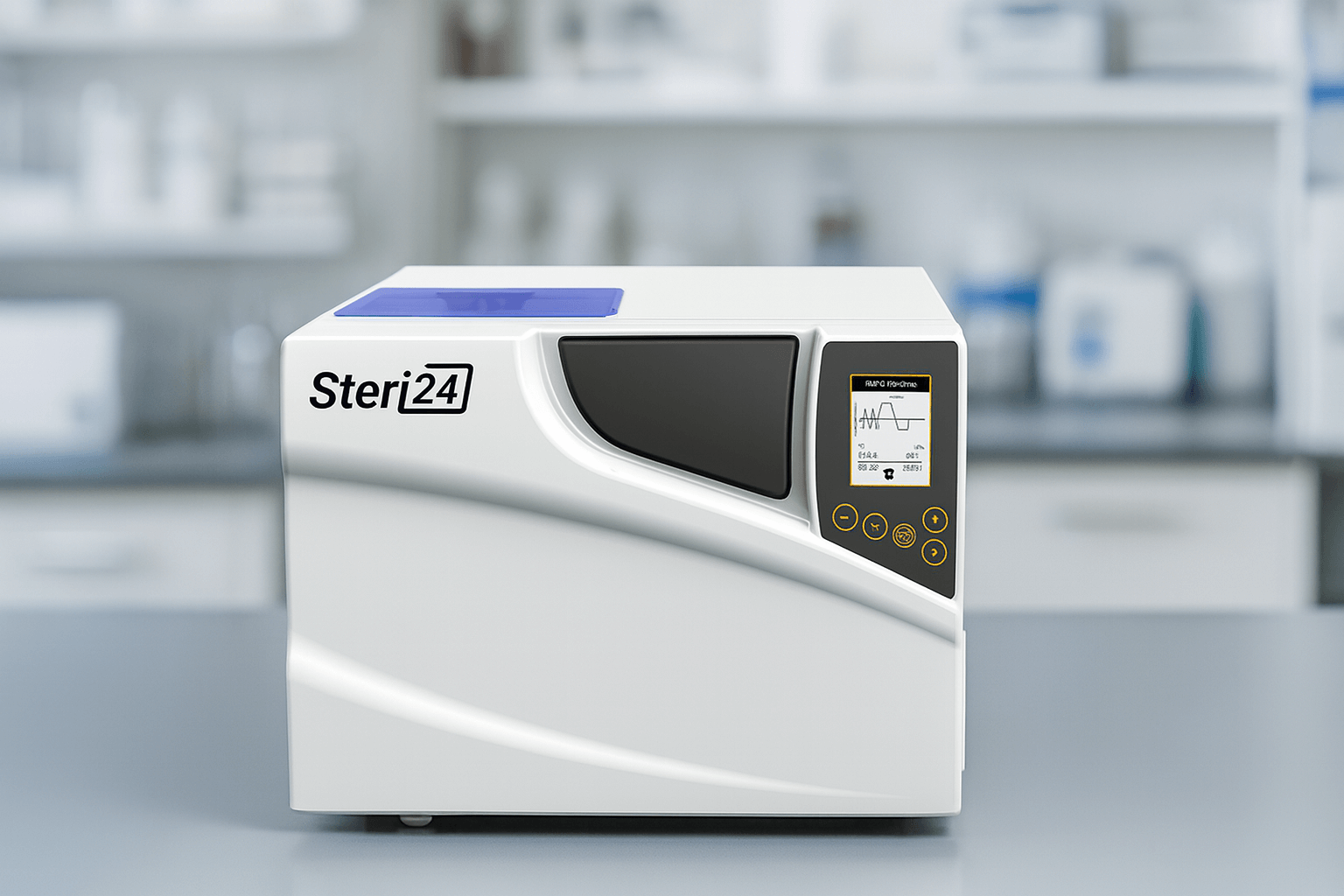 RKI 6: Sterilization in the Autoclave
 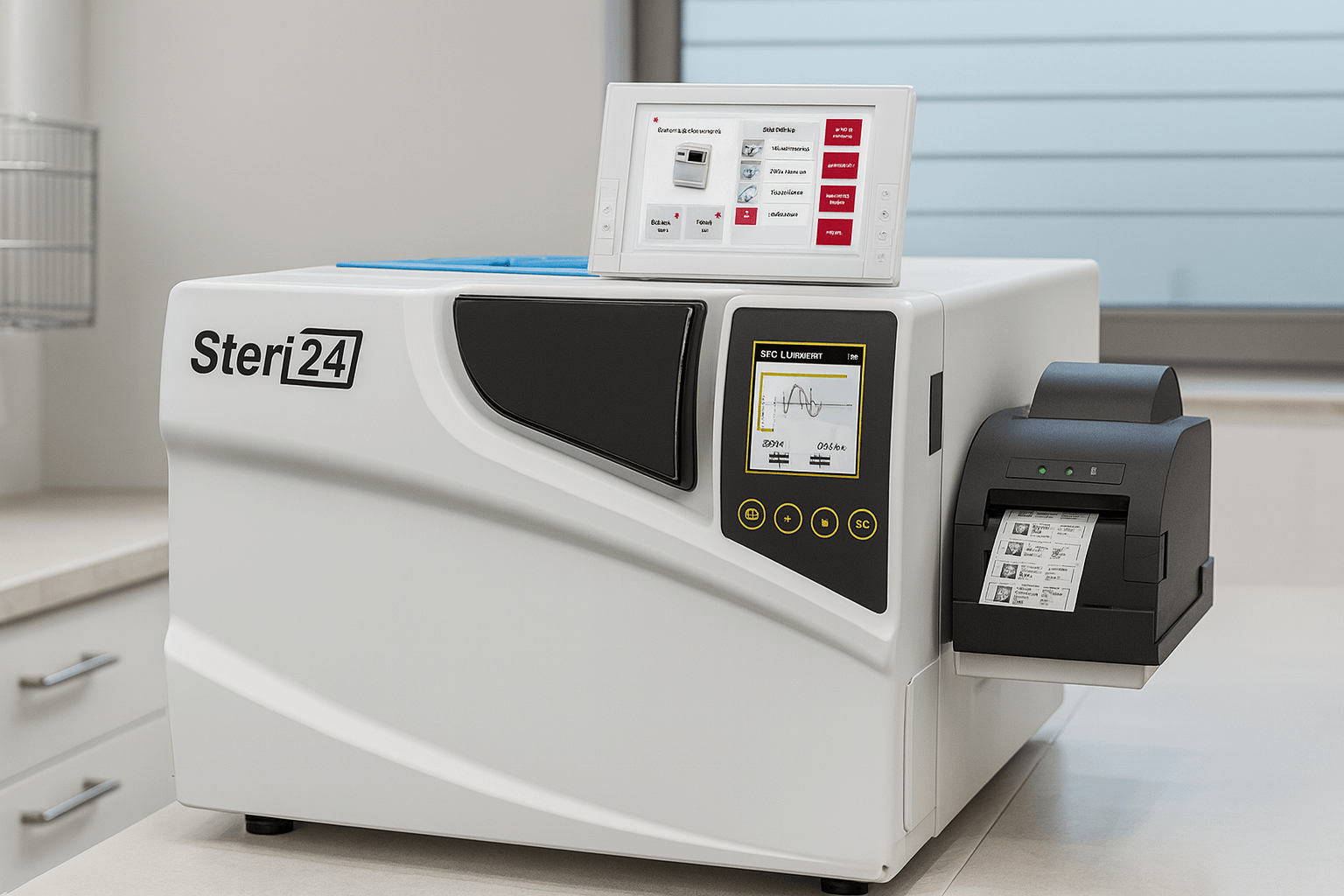 RKI 7: Release & Documentation
 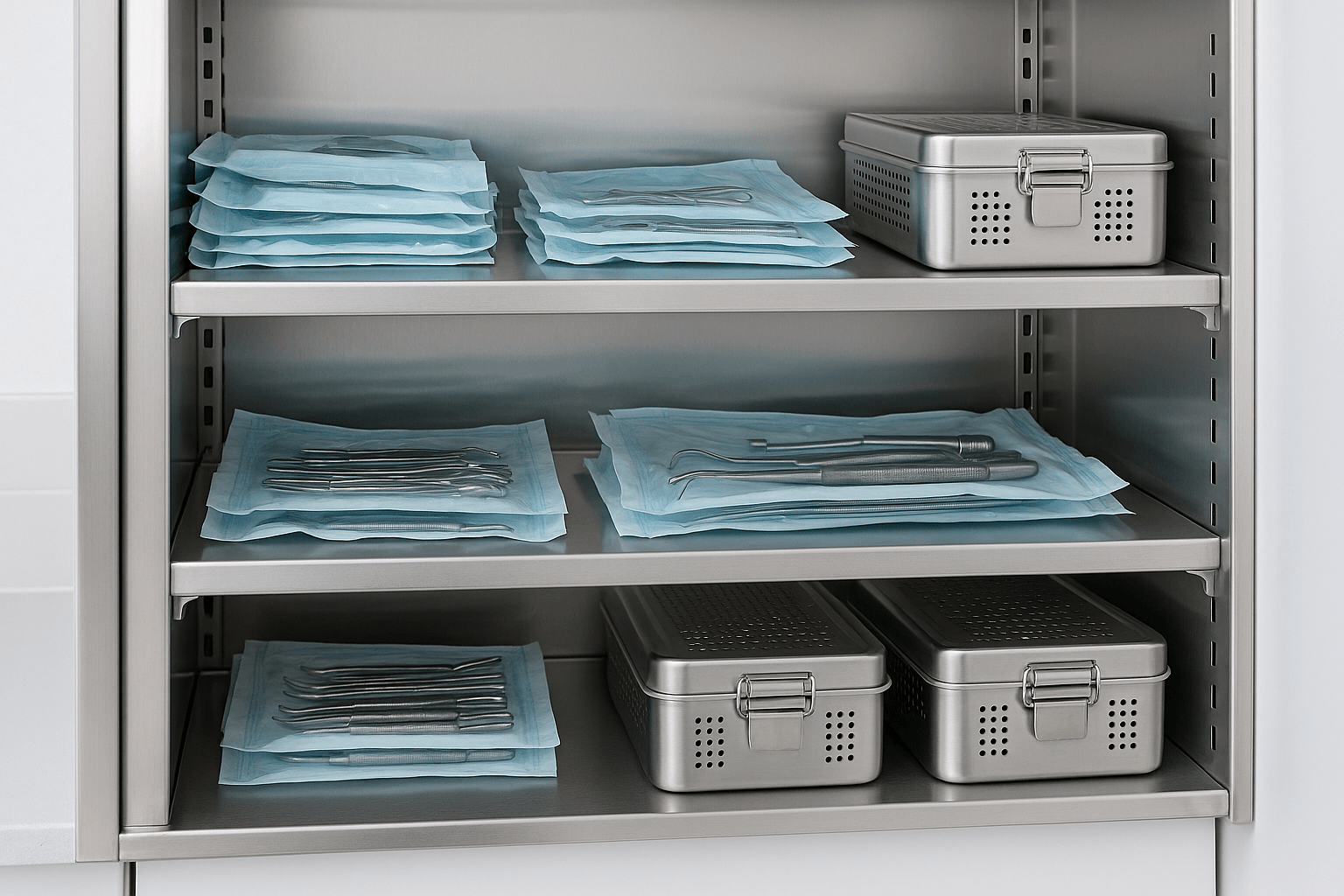 RKI 8: Storage of Sterile Instruments
 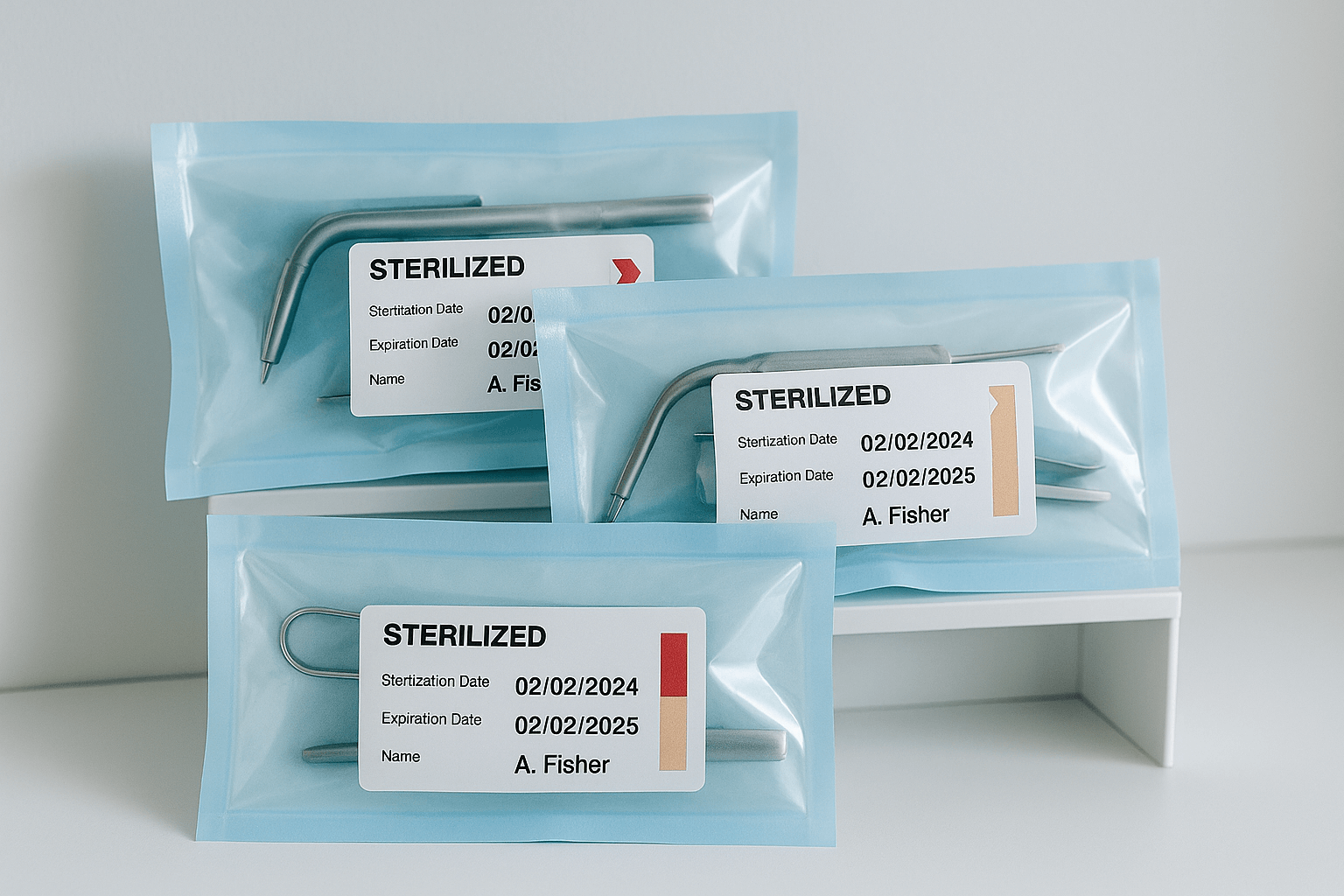 RKI 9: Labelling After Sterilization
 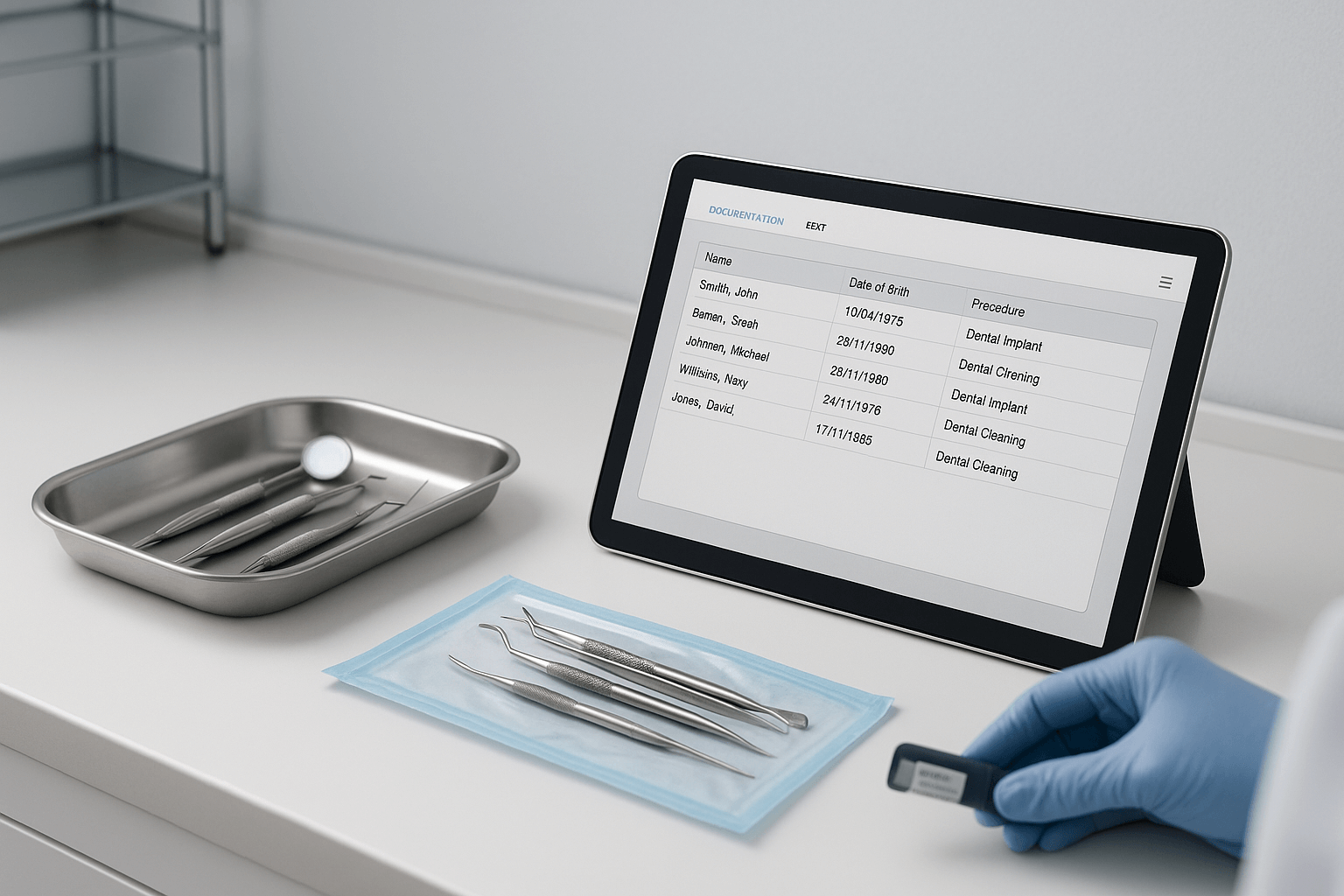 RKI 10: Documentation After Patient Use
 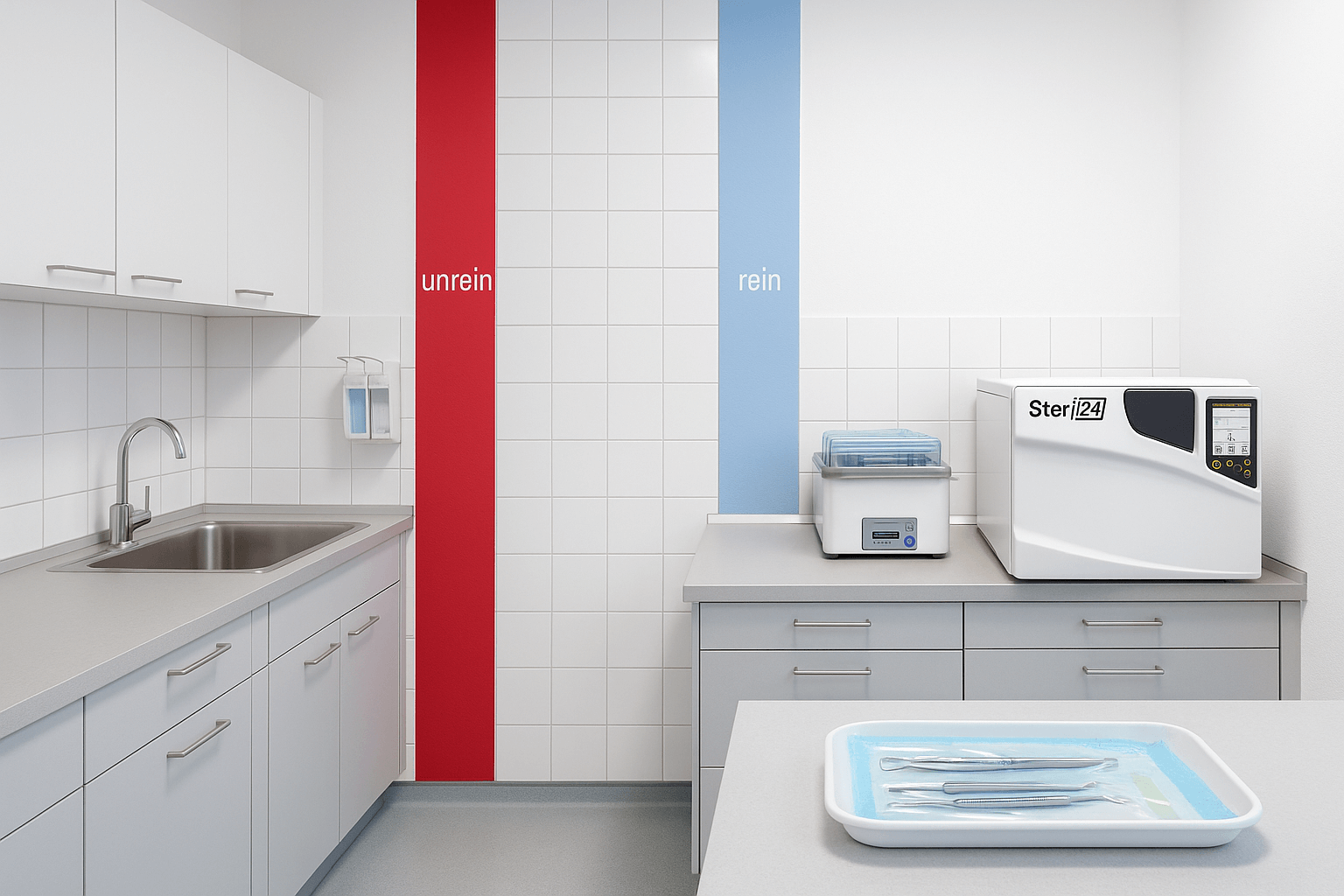 RKI 11: Hygiene Room per KRINKO
 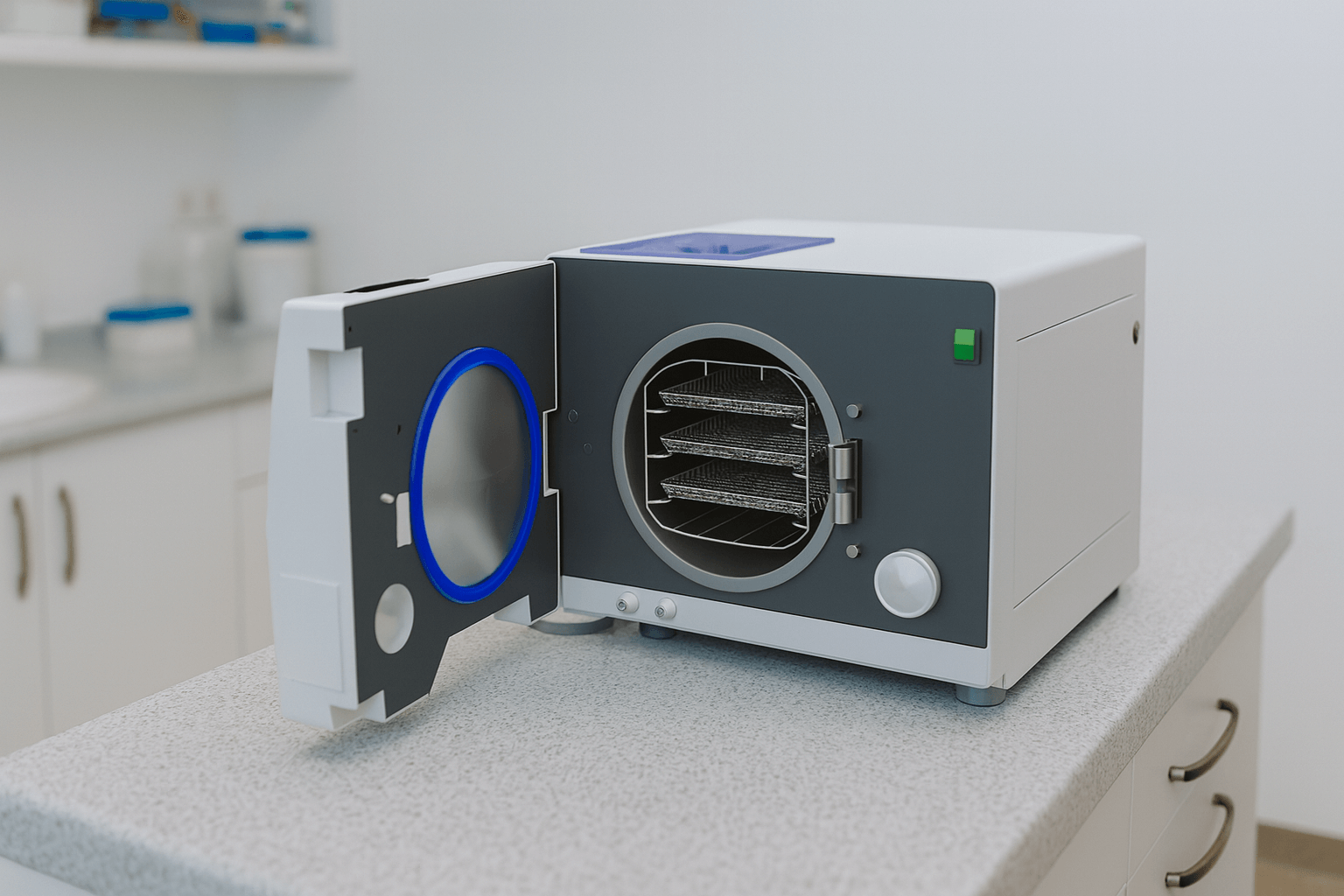 RKI 12: Initial Validation of Klasse B Autoclave
Meet RKI requirements – free of charge
Use the free ClavioSoft to run an audit check of your practice in just a few minutes – the software automatically generates any missing documentation. This saves you up to 90 % of the work.

Sterilization in a Klasse B Autoclave
Sterilization in an autoclave is the critical step that converts the reprocessed, packaged medical device to a sterile state, achieving a Sterility Assurance Level (SAL) of 10-6 – provided that the preceding cleaning, disinfection, drying and packaging steps have been carried out correctly. For packaged and hollow-body (critical) instruments, the Klasse B steam sterilizer compliant with DIN EN 13060 is the reliable standard.
1Why Klasse B?
A Klasse B sterilizer operates with fractionated vacuum: before sterilization, air is evacuated from the chamber in multiple cycles so that saturated steam fully penetrates even narrow lumens, hollow bodies and packaged instruments. Klasse B therefore covers the entire range of steam-sterilizable medical devices (solid, porous, hollow, packaged – including critical B). Non-heat-/steam-resistant (thermolabile) products are excluded; the reprocessing instructions provided by the respective instrument manufacturer (in accordance with DIN EN ISO 17664) are authoritative. Klasse S devices are approved only for a limited range of loads defined by the manufacturer.
Sources: KRINKO/BfArM 2012, Section 2.2.5; DIN EN 13060 (small steam sterilizers, classes B/S/N).2Preparing the load
· Place instruments on trays or in sterilization containers.
· Wrapped instruments go into clear-view sterilization pouches, sterilization paper or containers.
· Unwrapped, solid and heavy instruments should be placed separately.
· Separation: wrapped items on top, unwrapped/heavy instruments on the bottom.
· Use inserts for vertical arrangement to make optimal use of the available space.
Loading rules
· Film side facing up: for paper-film pouches, the film (clear) side faces upward (condensate drainage).
· Do not stack paper directly on plastic; pouches may overlap by no more than two-thirds.
· Ensure clearance: steam must be able to circulate around every instrument completely – do not overload.
3Water quality
The feed water must meet the limits for steam-generator feed water specified in DIN EN 13060 (based on DIN EN 285), including low conductivity and low hardness. Distilled or fully demineralized (deionized) water is suitable; tap water is unsuitable and causes staining, corrosion and error messages. A water treatment system (e.g. AQUAdem) provides consistently suitable quality.
4Sterilization programmes
| Programme | Application |
|---|---|
| 134 °C, wrapped (Universal) | Standard programme for wrapped instruments and mixed loads; holding time (plateau time) at least 5 min per KRINKO/BfArM, otherwise according to the validated process and manufacturer specifications. |
| 134 °C, unwrapped (Solid) | For unwrapped, solid instruments. |
| 121 °C | For heat-sensitive products (with manufacturer approval). |
| Prion programme 134 °C | In case of prion/TSE risk: holding time 18 min following a suitable (partially prion-inactivating) cleaning procedure; steam sterilization has limited efficacy here and forms part of a coordinated package of measures. |
5After sterilization
The documented release of critical instruments is carried out by a person authorized in writing based on: conformity of the load/process parameters with the configuration specified during validation, evaluation of the batch-related indicators (Class 1 process indicator; for critical B additionally a PCD, e.g. Helix test, Class 2), visual inspection of the packaging (dryness, integrity, intact seal seams) and verification of complete labelling. Batch, date and release of the sterile goods are recorded in the batch documentation and archived (see Step 7: Release & Documentation). This release documentation can be completed in just a few clicks with the free ClavioSoft – including tamper-proof filing.
Find the right Klasse B autoclave
Important additional points per RKI & standards
These points are frequently overlooked in practice but are essential for correct and legally compliant implementation:
- Validation as a prerequisite for routine operation (MPBetreibV § 8): A validated sterilization process is a prerequisite for any routine operation: the reprocessing of critical medical devices must be carried out using suitable, validated procedures (MPBetreibV § 8). This includes the initial validation (installation, operational and performance qualification) at the point of use, periodic re-qualification of performance, and re-validation after significant changes; each batch is checked against the configuration specified during validation.Source: MPBetreibV § 8; KRINKO/BfArM 2012 Section 1.3 / Annex 1; DIN EN ISO 17665
- Daily routine checks before the first sterilization run: Before the first sterilization run of the day, daily checks must be performed and documented: including a function test, inspection of the recording device, where applicable a vacuum test (leak test) and, where applicable, a steam penetration test using a suitable process challenge device (PCD; e.g. Bowie-Dick/Helix test). Sterile goods may only be produced after all checks have been passed.Source: KRINKO/BfArM 2012 Annex 7 (Daily routine checks); DIN EN ISO 17665-1
- Batch-related monitoring and PCD/Helix test for critical B: Each batch must be monitored and documented on a per-batch basis: conformity of the load with the validated configuration, evaluation of the process indicator (Class 1), review of the physical process parameters (time, temperature, pressure via the recording device) and, for critical-B loads, an additional Process Challenge Device (PCD), e.g. Helix test (Class 2 indicator).Source: KRINKO/BfArM 2012 Annex 7 (Batch-related checks: critical B with PCD)
- Drying as an integral part of the process; cooling before handling: The sterilization cycle includes a drying phase that is an integral part of the process and must not be deactivated. Remove and handle sterile goods only after sufficient cooling to prevent condensation and recontamination of the still warm, moist packaging. Residual moisture prevents release.Source: DIN EN 13060 (drying as part of the process); KRINKO/BfArM 2012 Annex 7 (visual inspection: dryness of packaging)
- Labelling, shelf life and traceability of sterile goods: Each released packaging unit must be labelled, including sterilization date, batch identification and, where applicable, sterile-goods shelf life. The shelf life depends on the type of packaging and storage conditions (DIN 58953). The batch documentation must ensure traceability back to the person who released the goods; this seamless batch documentation can be conveniently managed digitally with the free ClavioSoft.Source: KRINKO/BfArM 2012 Annex 7 (labelling, batch documentation, release); DIN 58953 (sterile goods storage)
- Competence of operating and releasing personnel: Sterilization and release may only be performed by demonstrably qualified personnel; persons authorized to release goods must be designated in writing (authorization list). The competence requirements are described in KRINKO/BfArM Annex 6; tasks and responsibilities should be defined in standard operating procedures (SOPs).Source: KRINKO/BfArM 2012 Annex 6 (personnel competence) and Annex 7 (authorization list/release)
- Packaging and seal seam inspection (standard): Sterile barrier systems must comply with DIN EN ISO 11607-1 (packaging) and the sealing process with DIN EN ISO 11607-2; seal seams must be inspected for completeness and integrity. Do not overfill clear-view pouches (rule of thumb: fill no more than approximately three-quarters) to ensure intact seams and reliable steam penetration.Source: DIN EN ISO 11607-1/-2 (packaging/sealing process); DIN 58953
Required equipment, consumables & accessories
Checklist for this process step – items you should have ready (shopping list):
Equipment
- Steam sterilizer (Klasse B autoclave per DIN EN 13060) with fractionated pre-vacuum, integrated drying and process data recording Order in our shop
- Recording/logging device (integrated printer) or digital documentation software for seamless batch documentation Order in our shop Create digitally with ClavioSoft
- Water treatment system for supplying demineralized/deionized feed water (alternatively a water distiller) Order in our shop
- Conductivity meter for monitoring feed water quality
- Sealing device for standard-compliant sealing of clear-view sterilization pouches (preceding step for wrapped instruments) Order in our shop
Consumables
- Distilled or demineralized/deionized feed water of suitable quality (low conductivity, not tap/utility water) Order in our shop
- Clear-view sterilization packaging (paper-film pouches/rolls) and/or sterilization paper per DIN EN ISO 11607-1 Order in our shop
- Class 1 process indicators (one per package/batch) Order in our shop
- Process Challenge Device (PCD) or Class 2 Helix test indicators for batch-related monitoring of critical B loads Order in our shop
- Steam penetration / Bowie-Dick test pack or indicators for daily routine testing Order in our shop
- Biological indicators (supplementary only; not a substitute for validation or physical/chemical routine testing)
- Labels/marking materials for sterilization date, batch identification and shelf life Order in our shop
- Wear parts: replacement door gasket and water treatment filters/cartridges Order in our shop
Accessories
- Trays, perforated trays and sterilization baskets (chamber inserts) matching the device Order in our shop
- Holders/inserts for vertical arrangement of wrapped instruments (condensate drainage) Order in our shop
- Sterilization containers (if used) Order in our shop
- Validation report and reference load documentation (loading pattern with photo and item list) kept at the device Commission validation
- Standard operating procedures (SOPs), batch/release records and authorization list of persons approved to release goods Create digitally with ClavioSoft
- Heat-protection gloves and a surface for cooling sterile goods before handling
Templates & sources
- KRINKO/BfArM 2012, Bundesgesundheitsbl. 55:1244–1310 – Section 2.2.5.
- DIN EN 13060 (small steam sterilizers); DIN EN ISO 17665 (steam sterilization).
- MPBetreibV § 8; loading patterns (reference load).
How audit-ready is your practice?
Find out in just a few minutes how well prepared you are for the next inspection — category by category, with clear progress tracking and specific open items. Completely free with ClavioSoft.
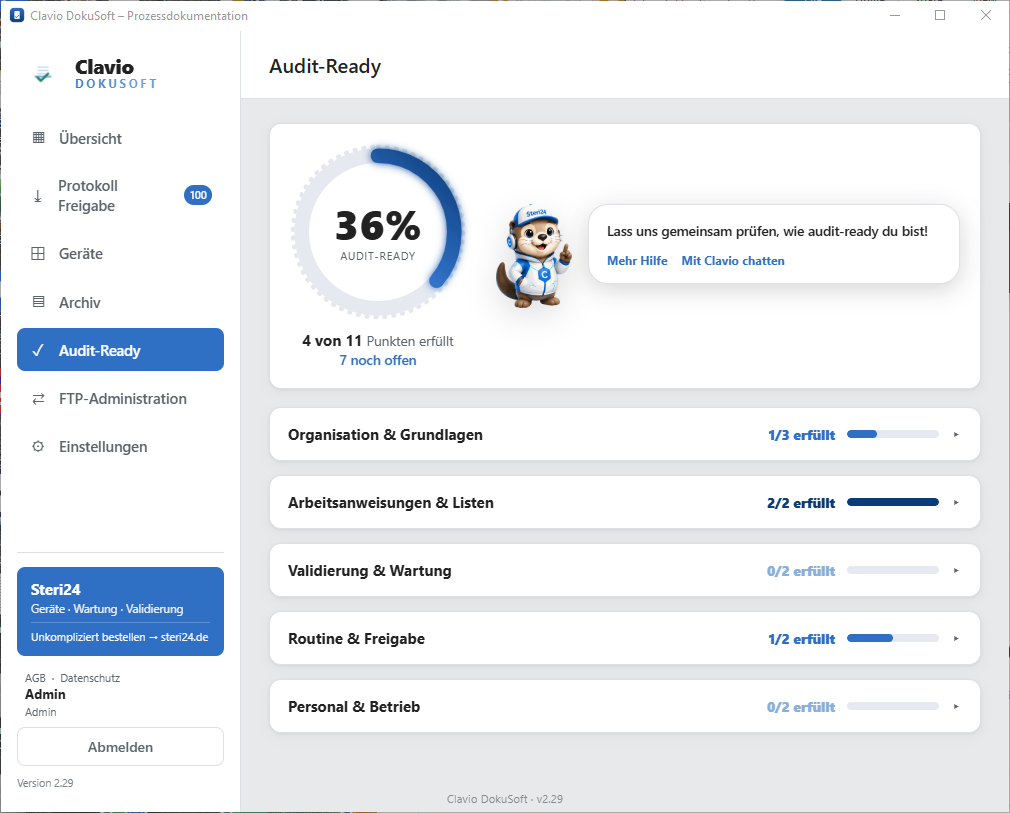
.png "Preview: Clavio DokuSoft")


Frequently Asked Questions
RKI Sterilization in the Autoclave – key questions answered clearly.