RKI Storage of Sterile Instruments

Meet RKI requirements – free of charge

Use the free ClavioSoft to run an audit check of your practice in just a few minutes – the software automatically generates any missing documentation. This saves you up to 90 % of the work.

Clavio has an idea
 

Storage of Sterile Instruments per RKI


After sterilization, proper storage determines how long instruments remain sterile. Sterile goods must be stored dry, dust-free and separated from non-sterile materials – the permissible storage period depends primarily on the packaging.

1Dry & dust-free storage

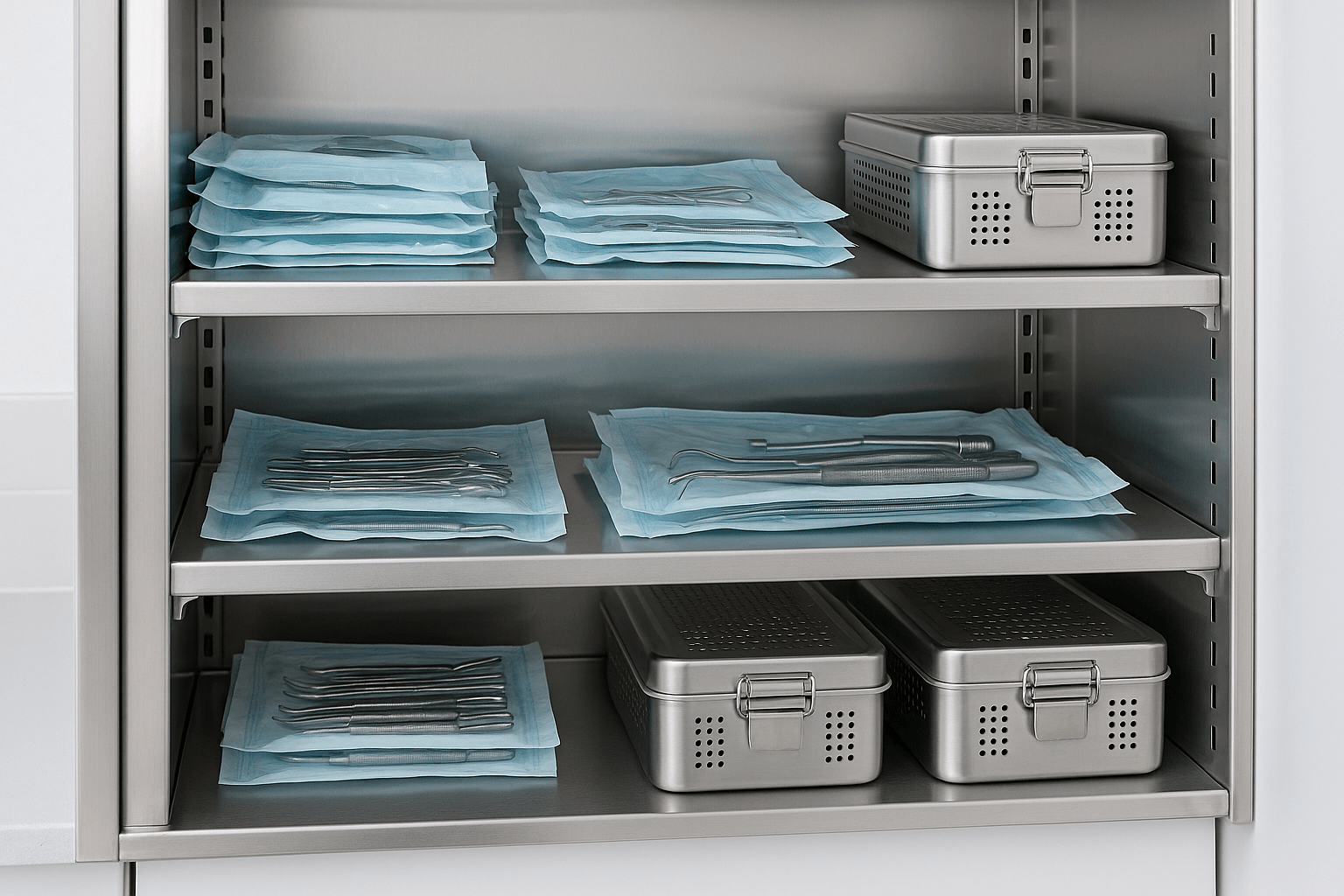
· Store in dry, dust-free cabinets or drawers.
· Store at room temperature; avoid moisture sources as well as significant temperature and humidity fluctuations. Specific climate limits are derived from the manufacturer's instructions, not from a blanket percentage figure.
· Sterile and non-sterile/contaminated instruments must never be stored together.
· Document the requirements for sterile goods storage in your hygiene plan or standard operating procedure so that every team member follows the same protocol.

2Storage period (guide values)

Storage conditionsGuide value for storage period
Unprotected (e.g. open shelves)use promptly only
Protected (closed cabinets/drawers)considerably longer; depending on packaging and storage conditions, over 6 months is possible
There is no rigid uniform deadline: the permissible storage period is determined by the quality of the packaging material, the integrity of the seal seams and the storage conditions (KRINKO/BfArM 2012); the manufacturer's instructions for the medical device and the packaging material are authoritative.

3Wrapped (critical) instruments

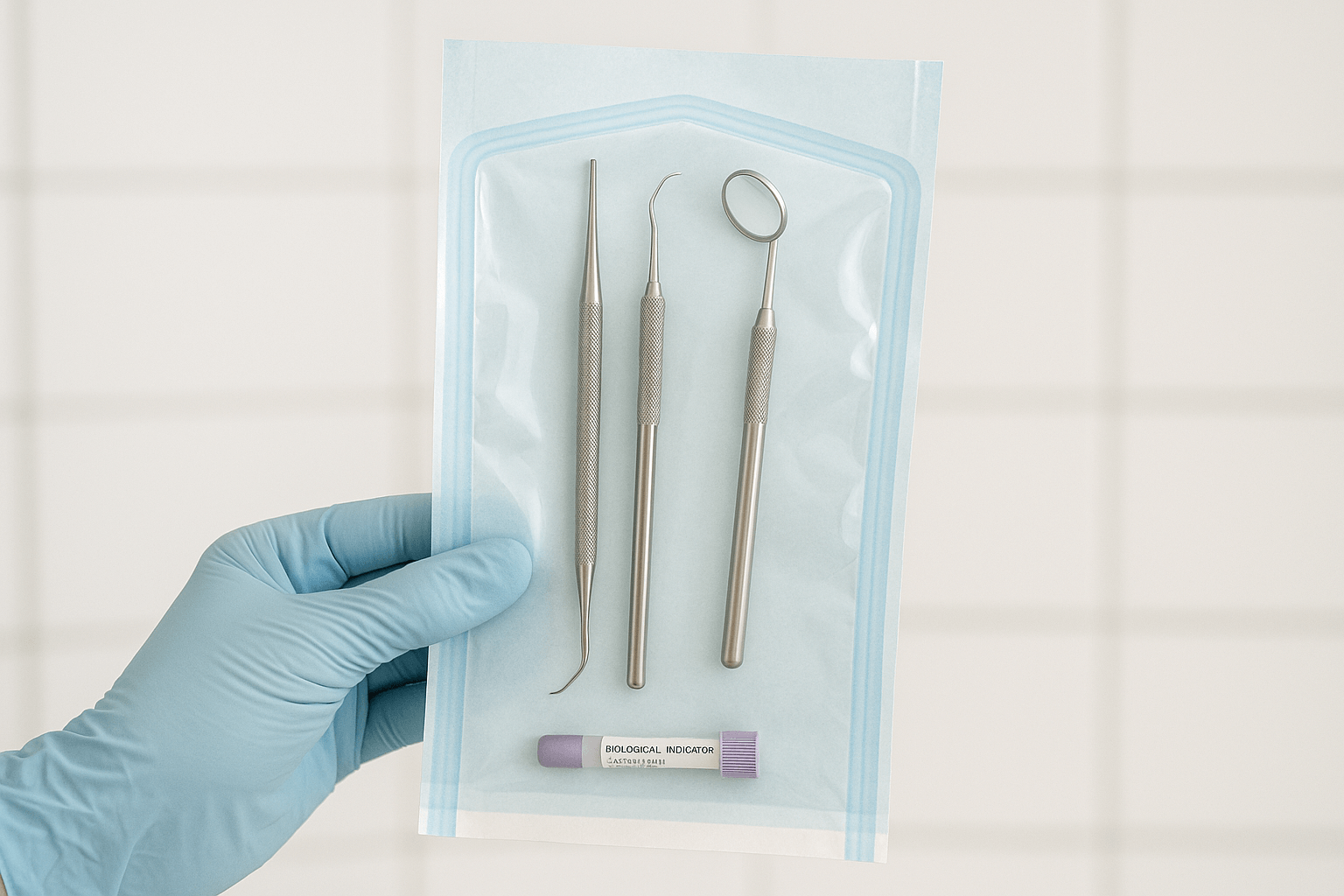
· Must remain in their sterile barrier packaging.
· Mechanical protection: secure sharp or pointed instruments with protective caps or holders to prevent damage to the packaging.
· Packaging with tears, defects or moisture ingress must not be used – reprocess the instruments instead.

4Labelling & organisation

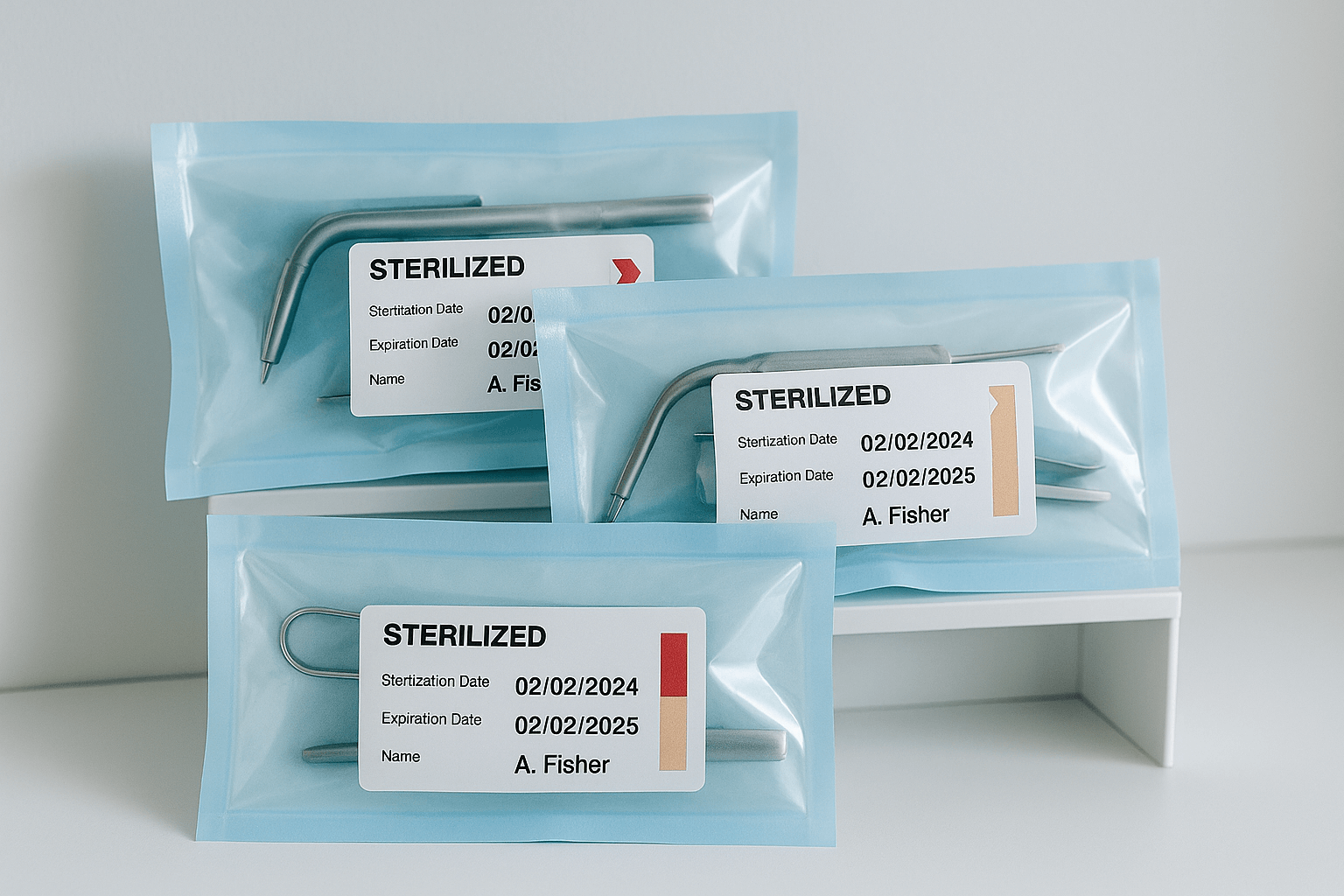
Each package must bear the following information, readily identifiable by the user at all times: identification/contents (if not self-evident), sterilization date and batch identification of the sterilization cycle (for traceability), the release decision and – where specified – the expiry date or sterile goods shelf life, if this is shorter than the expiry date. Store according to the first-in-first-out (FIFO) principle so that older sterile goods are used first. Correct labelling and storage organisation requires appropriate specialist knowledge on the part of the reprocessing staff and is regularly checked during practice inspections.

Rule of thumb: When in doubt, treat damaged or moist packaging as non-sterile. It is better to reprocess than to take a risk.
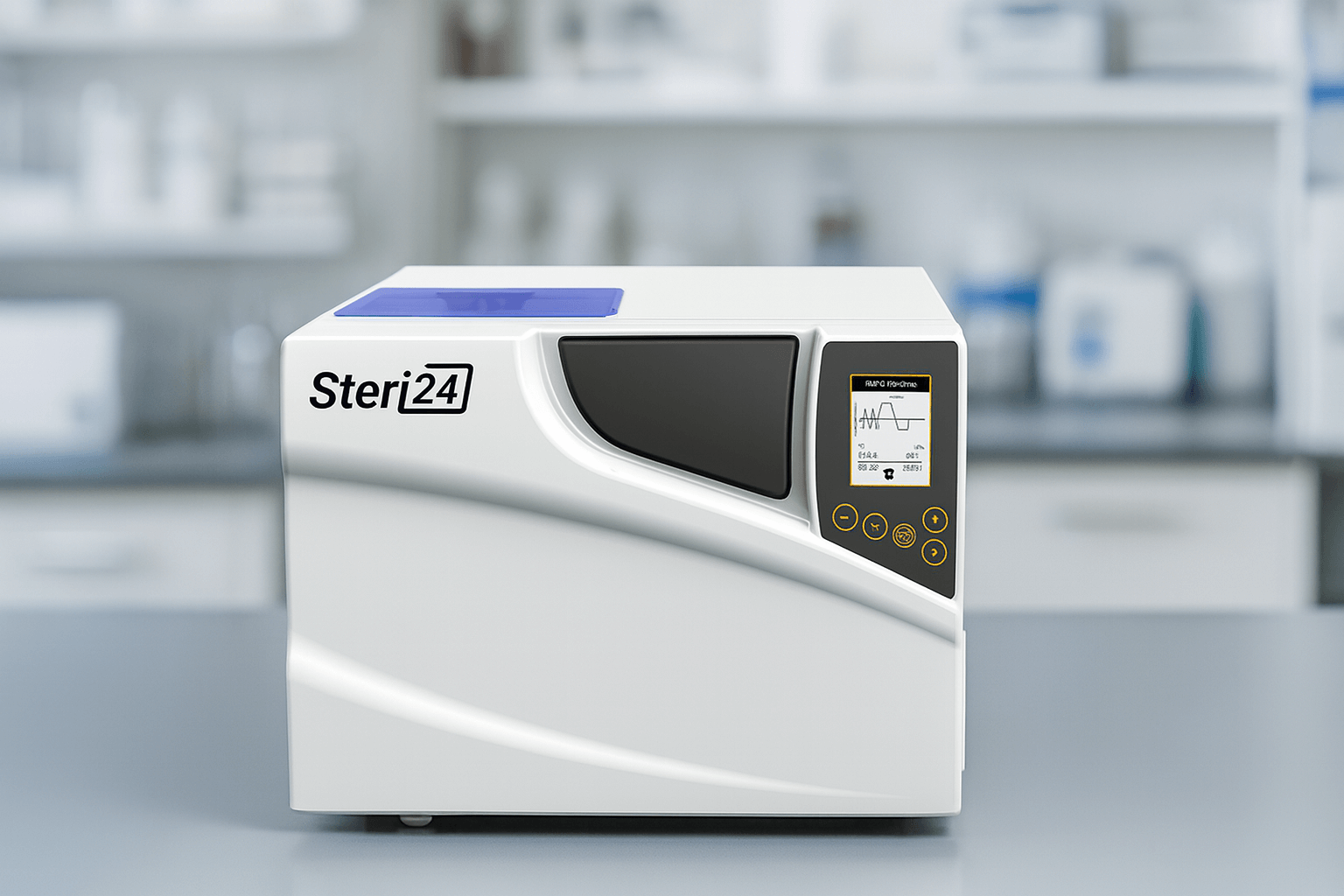
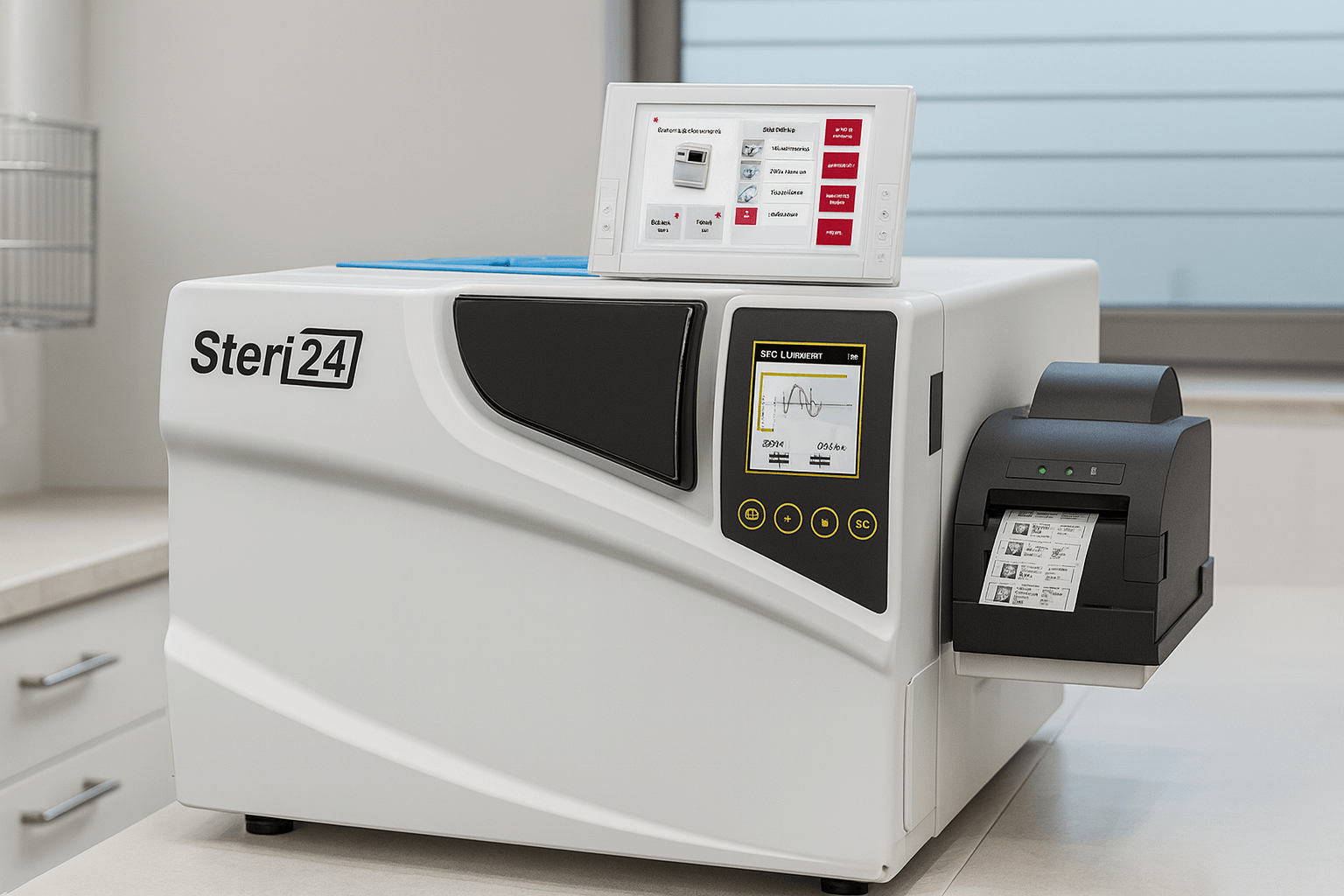
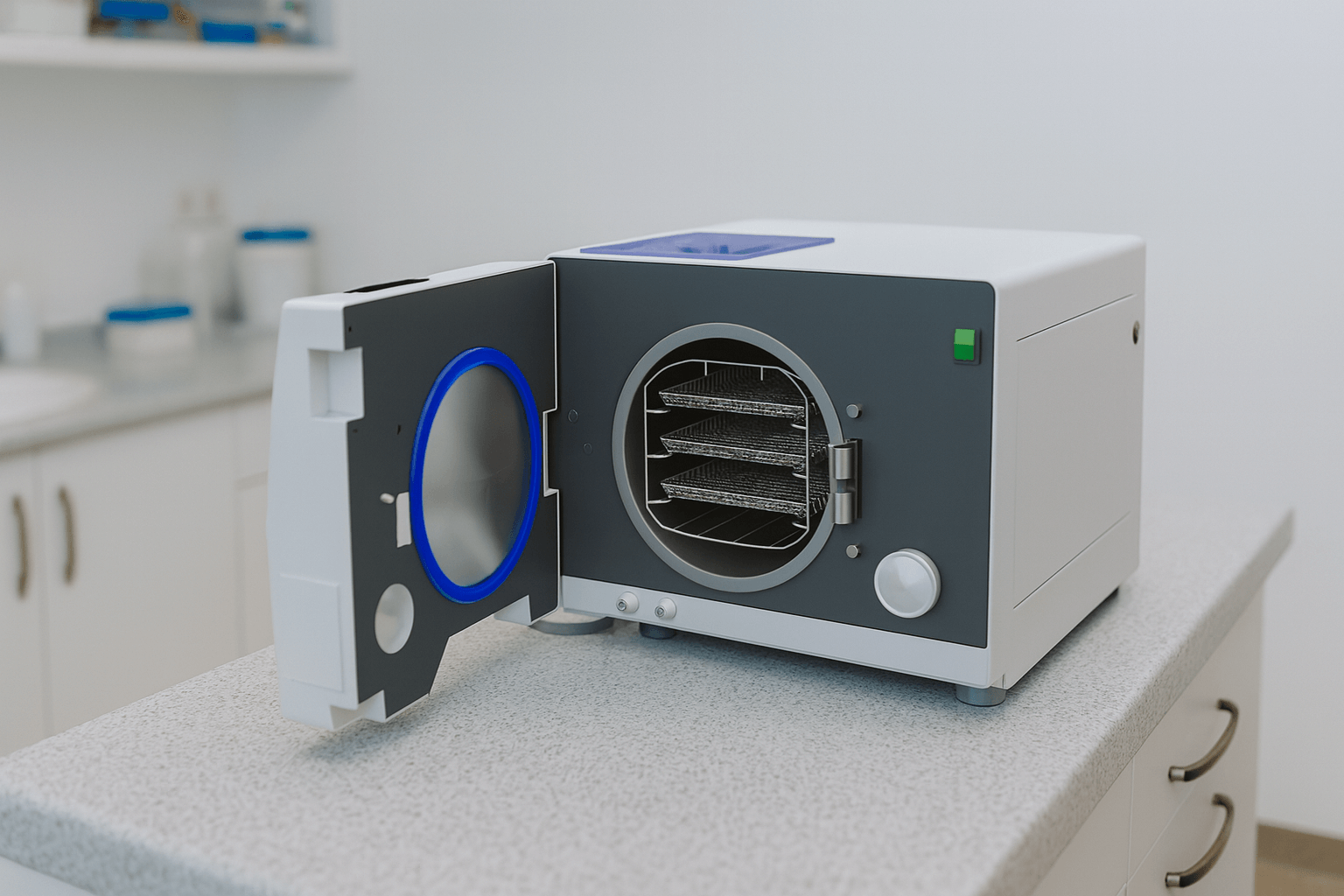
Safe storage requires completely dry sterile goods – the key factors are a validated process with an adequate drying phase, correct loading and suitable packaging; a Class B autoclave with reliable drying capability provides the technical foundation. Find the right device for your needs.
Find the right Class B autoclave

Important additional points per RKI & standards

These points are frequently overlooked in practice but are important for correct and legally compliant implementation:

  • Manufacturer's instructions take precedence: The permissible storage period is primarily determined by the instructions of the medical device manufacturer and the packaging material manufacturer. Where such instructions exist, they take precedence over general guide values and should be documented in the standard operating procedure or QM manual.Source: KRINKO/BfArM 2012, Section 3 (consider manufacturer's instructions for the medical device and packaging material); MPBetreibV Section 8
  • Visual inspection of sterile goods immediately before use: Before each use, inspect the sterile barrier packaging: undamaged, dry, intact seal seams, correct colour change of the process indicator, legible labelling and shelf life/expiry date not exceeded. If there is any doubt about integrity or dryness, the goods are considered non-sterile and must be reprocessed.Source: KRINKO/BfArM 2012, Sections 2.2.6/2.2.7 (labelling, verification of integrity and dryness)
  • Correct arrangement of transparent peel pouches (paper to paper, film to film): Store wrapped sterile goods pressure-free and without compression: do not stack transparent peel pouches flat on top of each other; instead, arrange them upright with paper side to paper side and film side to film side to avoid pressure marks, creases and stress on the seal seams. Do not overfill packaging or store it under tension.Source: Steri24 practice FAQ (storage of wrapped sterile goods, paper/film side); packaging manufacturer's instructions
  • Store only after documented release and complete cooling: Sterile goods may only be stored after the documented batch release and complete cooling of the load. Warm or moist goods must not be placed in the storage cabinet, as condensation can penetrate the sterile barrier and compromise sterility. You can record the documented batch release traceably with the free ClavioSoft.Source: KRINKO/BfArM 2012, Section 2.2.7 (documented release, verification of dryness before release)
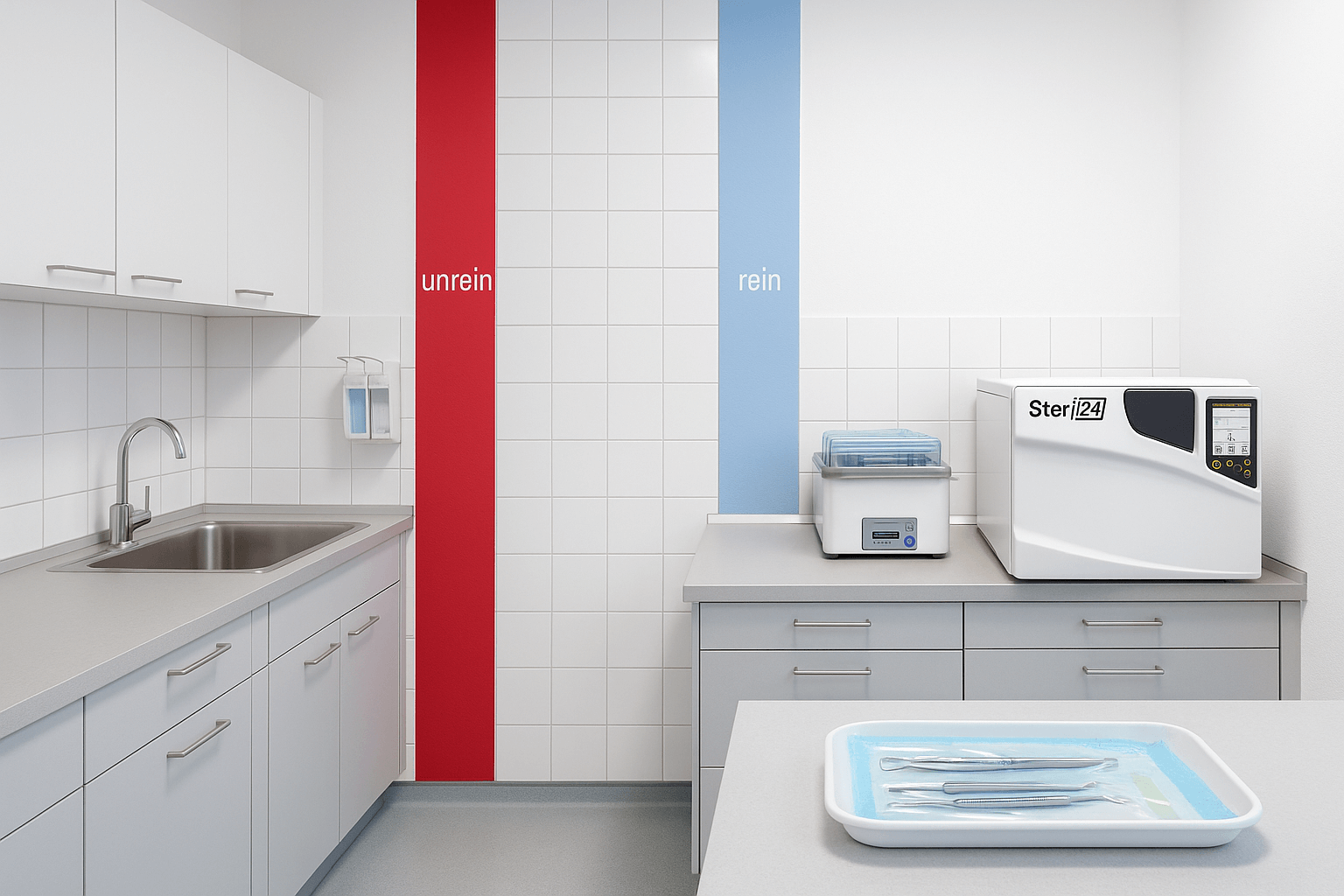
  • Protect the storage location from external influences: Protect the sterile goods storage location from splashing water, aerosols, direct sunlight and heat sources, and keep it in the clean/hygienic area, separated from the reprocessing and treatment areas.Source: KRINKO/BfArM 2012, Section 3 (storage must not adversely affect the properties) and 2.2.7
  • Documentation and traceability of batches: Batch release and the assignment of batches to application/patient must be documented and retained in accordance with the applicable retention periods, so that each sterile goods package can be unambiguously traced back to its sterilization batch via its batch identification. Batch release and traceability can be completed in just a few clicks with the free ClavioSoft - including tamper-proof archiving.Source: KRINKO/BfArM 2012, Sections 2.2.6/2.2.8 (labelling, batch documentation, traceability); MPBetreibV Section 8
  • Handling expired but undamaged sterile goods: Wrapped sterile goods whose shelf life has expired but which are externally undamaged, clean and dry may be re-sterilized - however, they must be repackaged (not in the same pouch). If the packaging is damaged or moisture-affected, the goods must undergo the complete reprocessing cycle (cleaning + disinfection/washer-disinfector) again.Source: Steri24 practice FAQ (reprocessing after expiry of shelf life); KRINKO/BfArM 2012, Sections 2.2.1/2.2.4

Required equipment, consumables & accessories

Checklist for this process step – items you should have ready (shopping list):

Equipment

Consumables

  • Sterile barrier packaging (transparent peel pouches/rolls, sterilization paper if applicable) per manufacturer's instructions Order here in our shop
  • Labels/indicator labels with sterilization date, batch identification and shelf life/expiry date if applicable Order here in our shop
  • VAH-listed surface disinfectant wipes for regular cleaning of storage areas and cabinets
  • Protective caps/sleeves for sharp or pointed instruments to protect the packaging Order here in our shop

Accessories

  • Trays/baskets/holders for pressure-free, upright arrangement of peel pouches (paper to paper, film to film) Order here in our shop
  • Marking pen or label printer for permanent, legible labelling Order here in our shop
  • FIFO organisational aids for expiry/shelf-life marking of storage locations
  • Designated, protected storage zone for separation of clean and contaminated areas

References

  1. KRINKO/BfArM 2012, Bundesgesundheitsbl. 55:1244–1310 – Section 2.2.
  2. DIN 58953 (sterile goods supply, storage); DGSV expert recommendations.
  3. MPBetreibV § 8.

How audit-ready is your practice?

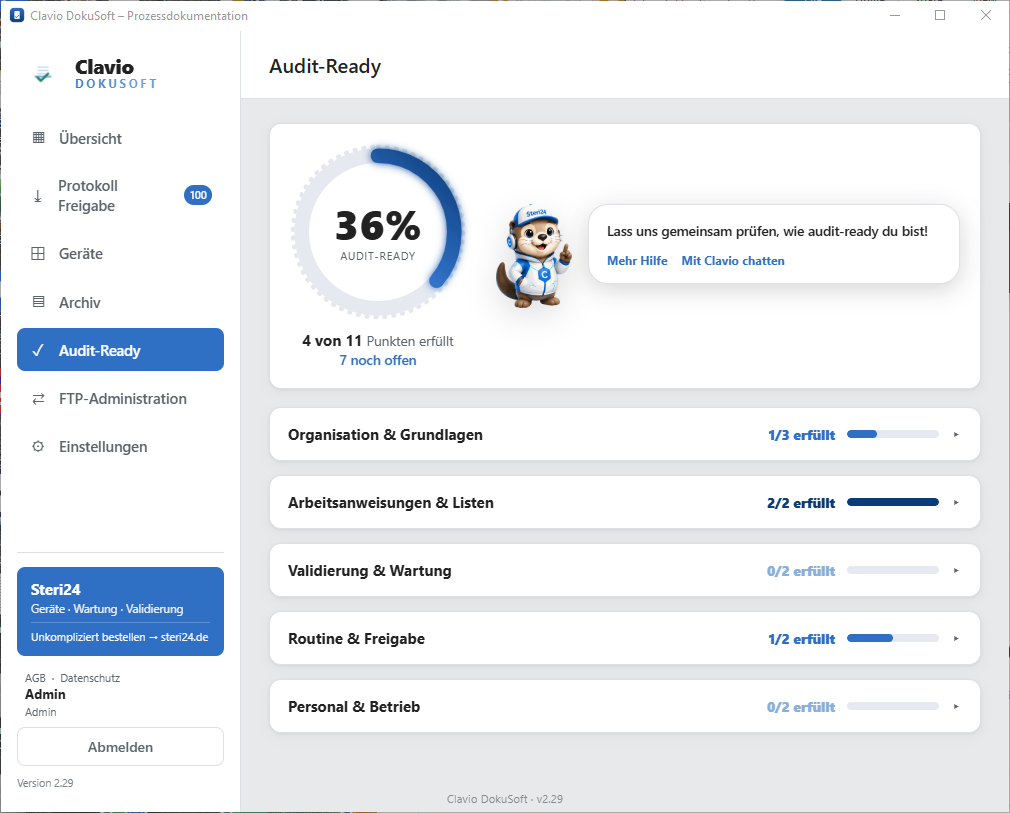
Find out in just a few minutes how well prepared you are for your next inspection — category by category, with clear progress tracking and specific open items. Completely free with ClavioSoft.

ClavioSoft Audit-Ready Check: progress display and categories
Download ClavioSoft for free
Free forever For autoclaves from all manufacturers RKI-compliant

1 to 1 (from a total of 1)

Frequently Asked Questions

RKI Storage of Sterile Instruments – key questions answered clearly.

How long do sterile goods remain usable after sterilization?
There is no rigid uniform deadline. The permissible storage period depends on the quality of the packaging material, the integrity of the seal seams and the storage conditions (KRINKO/BfArM 2012). The instructions of the medical device and packaging manufacturers take precedence.
How long do sterile goods last in a standard drawer?
In a standard drawer without dust protection, shelf life is approximately six months. In a dust-protected drawer with a sealing lip, considerably longer storage is possible. Store dry and in closed cabinets in the clean area.
How should transparent peel pouches be stored correctly - paper or film?
Store transparent peel pouches upright, paper side to paper side and film side to film side, rather than stacked flat on top of each other. This prevents pressure marks, creases and stress on the seal seams and keeps the sterile barrier intact.
Where should sterile goods be stored in a medical practice?
Sterile goods belong in dry, dust-protected cabinets or drawers in the clean, hygienic area, separated from the reprocessing and treatment areas. Protect the storage location from splashing water, aerosols, sunlight and heat sources (KRINKO/BfArM 2012).
May sterile and non-sterile instruments be stored together?
No. Sterile and non-sterile or contaminated instruments must never be stored together. Sterile goods are kept in the clean area, spatially separated from the contaminated reprocessing area, to prevent recontamination (KRINKO/BfArM 2012).
How long do sterile goods last in an open drawer or on a shelf?
Sterile goods stored unprotected, for example on open shelves, should be used promptly. Dust and air movement compromise the sterile barrier. For longer storage, closed, dust-protected cabinets or drawers are required.
May sterile goods be stored for longer than 6 months?
Yes. According to KRINKO/BfArM 2012, storage periods exceeding six months are possible depending on packaging quality, seal seam integrity and storage conditions. The manufacturer's instructions and your defined sterile goods shelf life remain authoritative.
What temperature and humidity apply to sterile goods storage?
Sterile goods are stored at room temperature; moisture sources as well as significant temperature and humidity fluctuations must be avoided. Specific climate limits are derived from the packaging manufacturer's instructions, not from a blanket percentage figure.
What must be indicated on a sterile goods package?
The following must be clearly identifiable: identification/contents (if not self-evident), sterilization date and batch identification for traceability, the release decision and the expiry date or sterile goods shelf life, if this is shorter than the expiry date (KRINKO/BfArM 2012).
What does the first-in-first-out principle mean for sterile goods?
FIFO means that older sterile goods are removed and used first. Place newly stored packages at the back so that nothing exceeds its shelf life unused. This prevents expired sterile goods from remaining in stock.
May expired sterile goods be re-sterilized?
Yes. If the packaging is undamaged, dry and clean, the instruments may be repackaged in fresh packaging, relabelled, released and re-sterilized - not in the same pouch. If the packaging is damaged or moisture-affected, the goods must undergo complete reprocessing.
What should be done if the sterile goods packaging is moist or wet?
Moist or wet packaging is considered non-sterile and must not be used. The instruments must be reprocessed. Moisture compromises the sterile barrier, as microorganisms can migrate along the moisture path.
May sterile goods with a tear or damaged packaging be used?
No. Packaging with tears, holes, defects or worn-through areas must not be used, as the sterile barrier is compromised. The instruments must be reprocessed. When in doubt: treat as non-sterile.
What must be checked on sterile goods immediately before use?
Immediately before use, check: packaging undamaged and dry, intact seal seams, correct colour change of the process indicator, legible labelling and shelf life not exceeded (KRINKO/BfArM 2012). If in doubt, the goods are considered non-sterile.
Must sterile goods cool down completely before storage?
Yes. Sterile goods may only be stored after complete cooling and documented batch release. Warm goods form condensation in the cabinet, which can penetrate the sterile barrier and compromise sterility (KRINKO/BfArM 2012).
How do I check whether sterile goods are dry after sterilization?
Inspect the packaging and contents immediately after the cycle for residual moisture and visible condensation. Moist goods must not be released or stored. The basis is a validated process with an adequate drying phase and correct loading.
How do I protect packaging from damage with pointed instruments?
Secure sharp and pointed instruments with protective caps or holders to prevent them from piercing the sterile goods packaging. This keeps the sterile barrier intact during storage and transport and the instrument ready for use.
What does the batch identification on sterile goods packaging mean?
The batch identification assigns each package to a specific sterilization batch and enables traceability all the way to patient use. Along with the sterilization date and release decision, it is a mandatory entry per KRINKO/BfArM 2012.
Must an expiry date be shown on the sterile goods packaging?
The expiry date or sterile goods shelf life must be indicated if it has been defined and is shorter than the expiry date. The determination is based on packaging type, transport and storage conditions and should be documented in the standard operating procedure.
Who determines the sterile goods shelf life in a practice?
The shelf life is determined by the operator in the standard operating procedure or QM manual, primarily based on the instructions of the medical device and packaging manufacturers. Where such instructions exist, they take precedence over general guide values (KRINKO/BfArM 2012).
Which standard governs the packaging and storage of sterile goods?
Useful guidance on sterile goods supply is provided by the DIN 58953 series of standards. It supplements the requirements of the KRINKO/BfArM recommendation 2012 and MPBetreibV regarding packaging, transport and storage of sterile goods.
How should semi-critical instruments be stored correctly?
Low-bioburden, semi-critical medical devices must be stored in a way that prevents recontamination: dry, dust-protected, in closed cabinets or drawers in the hygienic area (KRINKO/BfArM 2012). Sterile packaging is not mandatory in this case.
Must critical instruments remain packaged until use?
Yes. Wrapped critical instruments must remain in their sterile barrier packaging until use. Opening or repackaging before use compromises sterility. The packaging is only opened immediately at the point of treatment.
What does dust-protected storage of sterile goods mean in practice?
Dust-protected means storage in closed cabinets or drawers, ideally with a sealing lip, so that no dust particles or aerosols reach the packaging. Open shelves do not provide this protection and are suitable for short-term storage only.
How do I protect the sterile goods storage location from external influences?
Protect the storage location from splashing water, aerosols, direct sunlight and heat sources and keep it in the clean area, separated from the reprocessing and treatment areas (KRINKO/BfArM 2012). This keeps the packaging intact and dry.
Why is documented batch release before storage important?
Only after documented batch release is the batch considered fit for use and may be stored. The release confirms that sterilization, drying and packaging inspection were successful. It is a prerequisite for traceability and legal compliance.
How is traceability of stored sterile goods ensured?
Through the batch identification on each package and the documented assignment of batch to application or patient. This allows any package to be traced back if needed. Documentation must be retained in accordance with the applicable retention periods (KRINKO/BfArM 2012).
How long must sterilization and release records be retained?
KRINKO/BfArM and MPBetreibV require that documentation be kept available and legible in accordance with the applicable retention periods. Long-term, ideally digital archiving is recommended. The specific retention period should be clarified with QM and legal counsel.
Must indicator and helix test strips be retained?
The mandatory requirement is documented batch release including evaluation of batch-related tests. The physical indicator and helix test strips themselves are generally not archived long-term. Follow your QM guidelines and regional requirements on this point.
What is the purpose of the process indicator on stored sterile goods?
The process indicator shows through a colour change that the load has undergone the sterilization process. Check for the correct colour change before each use; if it is absent, the goods are not considered safely processed and must not be used.
How many instruments may be placed in a single sterile goods package?
Multiple instruments are permissible as long as steam penetration and drying are ensured and the packaging is not overfilled or stored under tension. Overfilling stresses the seal seams and compromises sterility.
Which cabinet is best suited for sterile goods storage?
Closed, dry cabinets or drawers with a sealing lip in the clean area, protected from moisture, sunlight and heat, are suitable. Dust-protected drawers significantly extend shelf life compared to open or unsealed storage.
May sterile goods be stored in the treatment room?
Permanent storage belongs in the clean, hygienic area separated from the treatment area. In the treatment room, sterile goods are exposed to aerosols, splashing water and fluctuations that can compromise the sterile barrier and shelf life.
How do I store sterile goods correctly with limited space?
Even with limited space: use closed, dust-protected drawers or cabinets, arrange pouches pressure-free and follow FIFO. Do not stack flat and do not overfill compartments so that the seal seams remain unstressed.
What is the difference between expiry date and sterile goods shelf life?
The expiry date indicates the latest point of use. The sterile goods shelf life is the practice-specific period after which sterility is no longer considered assured. If it is shorter than the expiry date, it must be indicated on the packaging.
How often should the sterile goods inventory be checked?
Check the inventory regularly and consistently following FIFO so that no goods exceed their shelf life. In addition, verify shelf life, dryness and integrity of each package immediately before every use.
Can sterile goods be stored in sterilization containers instead of pouches?
Yes. Sterilization containers are an approved sterile barrier and allow adhesive-free storage without film. The container manufacturer's instructions regarding filter replacement, shelf life and correct handling are authoritative.
How must the filter of a sterilization container be maintained?
Filters and seals must be inspected and replaced regularly in accordance with the container manufacturer's instructions, as they form the sterile barrier. A defective or expired filter compromises protection and jeopardises the sterility of the contents.
Why do seal seams break with incorrect storage?
Stacking pressure, compression, creases and storage under tension place mechanical stress on the seal seams. This can cause them to open, making the sterile barrier leak. Therefore, arrange pouches pressure-free, upright and film to film.
Do you offer containers or baskets for sterile goods storage?
Steri24 carries rectangular sterilization baskets that fit Class B autoclaves, as well as packaging materials. For adhesive-free storage without film, sterilization containers are suitable. For specific containers or trays, please contact us.
What role does the autoclave's drying phase play in shelf life?
The drying phase is crucial: only completely dry sterile goods can be stored safely. A Class B autoclave with a reliable drying phase, correct loading and suitable packaging provides the technical foundation for safe storage.
What should I do if I doubt the sterility of stored goods?
When in doubt: treat damaged, moist or questionable packaging as non-sterile. It is better to reprocess than to risk an infection. This rule of thumb protects patients and ensures legally compliant reprocessing.
Must instruments always be packaged for storage?
Critical medical devices intended for sterile use always require packaging and are stored packaged. Unpackaged sterilization is suitable only for immediate use, not for storage, as sterility cannot be maintained otherwise.
How do I transport sterile goods without compromising the sterile barrier?
Transport sterile goods protected from moisture, dust and mechanical pressure, pressure-free and without compression. Transport and storage must not adversely affect the properties of the medical device (KRINKO/BfArM 2012).
Which storage conditions shorten the shelf life of sterile goods?
Moisture, temperature and humidity fluctuations, dust, sunlight, heat sources and mechanical pressure shorten shelf life and compromise the sterile barrier. Closed, dry, climate-stable storage in the clean area preserves sterility the longest.
Must sterile goods storage be documented in the QM manual?
Yes. Storage conditions, defined sterile goods shelf lives and the procedure for damaged goods must be included in the standard operating procedure or QM manual (MPBetreibV, KRINKO/BfArM 2012). This ensures traceable and legally compliant documentation.
How do I document batch release before storage?
Record the sterilization result, the check for dryness and integrity, and the release decision with date in writing or digitally. Software such as the free ClavioSoft creates and archives documented batch release traceably.
May stored sterile goods be repackaged or relabelled?
No, opening or repackaging compromises sterility. The labelling must be applied correctly before sterilization. If labelling is illegible, the goods are considered not clearly identifiable and should be reprocessed.
What are the legal requirements for storing sterile medical devices?
The authoritative sources are the KRINKO/BfArM recommendation 2012 (Section 3, transport and storage) and MPBetreibV Section 8. In addition, the DIN 58953 series of standards provides practical guidance on sterile goods supply and storage.
How long may used instruments be stored before reprocessing?
Cleaning should take place as soon as possible after use to prevent drying of blood and tissue. Intermediate storage is only acceptable without gross soiling; contaminated instruments belong promptly and separately from sterile goods in the contaminated area.