Frequently Asked Questions
Urology – key questions answered clearly.
Which autoclave is suitable for a urology practice?
For urology practices we generally recommend a Class B autoclave with 12 to 18 L, depending on the volume of instruments and the number of practitioners. Since cystoscopy accessories, probes and sets vary in size, it is worth using the configurator or a brief phone consultation before buying to find the right capacity.
Why do I need a Class B autoclave for urology?
Class B provides full sterilisation with a fractionated vacuum process and is also suitable for wrapped, hollow and porous instruments – as frequently used in urology. In Germany, a Class B device is mandatory for reprocessing critical instruments in medical facilities.
Can the autoclave reliably sterilise hollow instruments and probes?
Yes, thanks to the fractionated vacuum process our Class B autoclaves are suitable for hollow instruments, probes and flexible critical instruments. The only exceptions are instruments that the manufacturer explicitly marks as not autoclavable.
What is the difference between Pro and Premium for my practice?
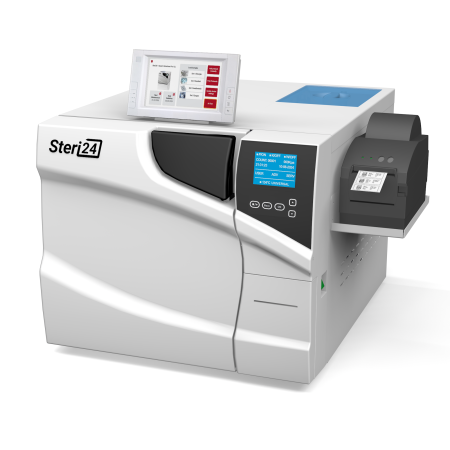
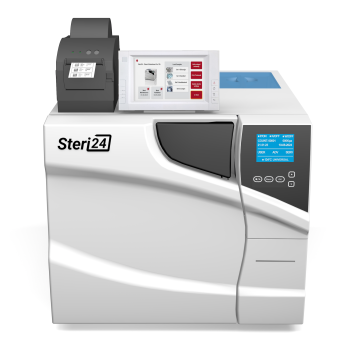
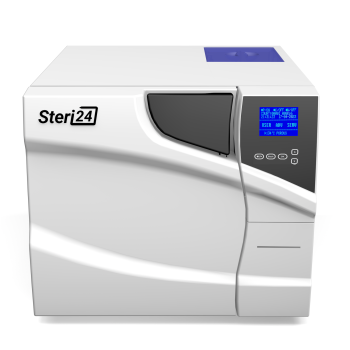
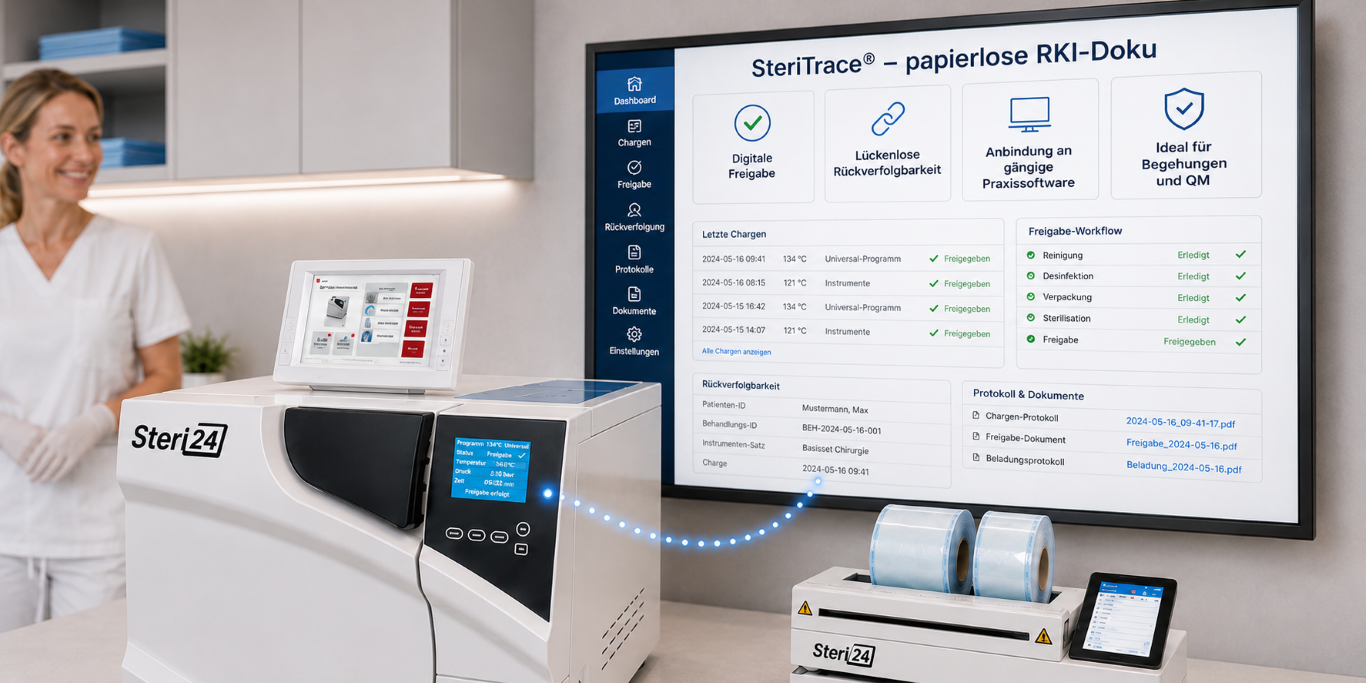
The autoclave and its operation are essentially the same. Premium additionally offers a fixed water connection, LAN/WLAN connection to the practice software, as well as paperless batch release and documentation on the touchscreen (SteriTrace). With the Pro, documentation is done via the integrated printer and USB, and water is filled manually.
Which capacity do I need – 12 or 18 litres?
This depends on the quantity and length of the instruments per cycle. The 12 L offers three trays, the 18 L five trays and therefore more capacity for several practitioners. For a precise recommendation it is best to use our configurator.
Do I meet the RKI requirements with your devices?
Yes. All our devices are Class B in accordance with EN 13060. With SteriTrace you document every batch in an audit-proof and paperless way; on request we carry out validation and maintenance on site.
Is validation of the autoclave mandatory?
In Germany, validation is mandatory for everyone who reprocesses critical instruments used on humans – this also applies to urology practices. The basis includes the MPBetreibV. Those who do not reprocess critical instruments that come into contact with blood or mucous membranes are usually not obliged to do so.
What does validation of an autoclave mean?
Validation is a formal test that proves your autoclave and the entire reprocessing process meet the applicable standards and sterilise reliably. It is usually carried out every two years on site, using your instruments as the load.
Does the initial validation have to take place on site?
Yes, according to the requirements, validation must take place on site with your instruments as the load, as it tests the actual conditions at the place of use. Shipping the device to the factory for this is not possible; we can service a device sent in, but not validate it.
Can I use the autoclave immediately after delivery or only after validation?
You can use the device immediately after delivery and commissioning. The initial validation is a process validation and can also be carried out shortly afterwards in a separate appointment on site.
How often does the autoclave have to be validated?
Revalidation is generally due every two years (24 months) and is carried out on site. Larger devices or a very high number of cycles may require earlier revalidation.
Who carries out the validation – can I do it myself?
Validation must be carried out by an approved validator with special measuring equipment and is practically impossible to do yourself. Steri24 handles the entire process on site; in principle it can also be carried out by another approved provider.
How often does the autoclave have to be serviced?
In Germany, Austria and Switzerland, maintenance is required every 24 months, but earlier as soon as 1,000 sterilisation cycles are reached – regardless of actual usage.
Do you carry out maintenance and validation on site at my practice?
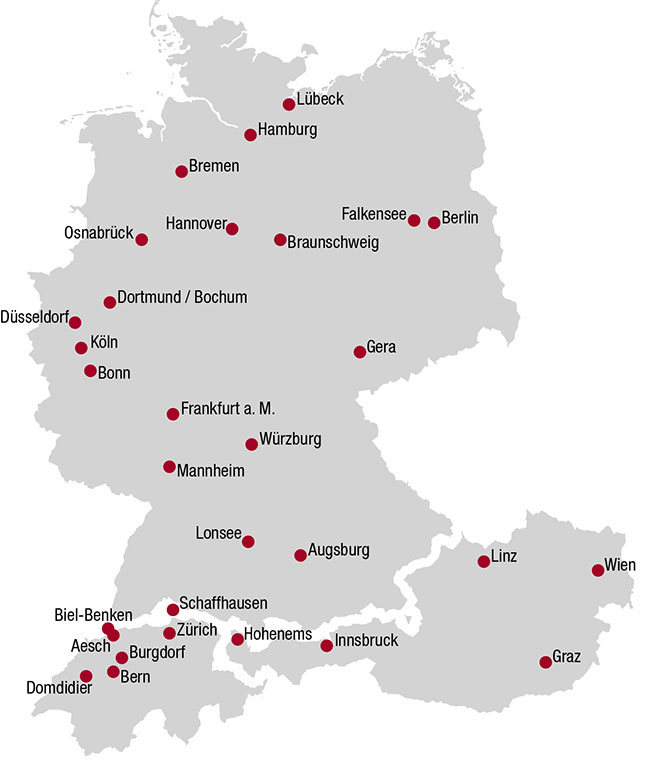
Yes, we have trained technicians and service partners throughout the DACH region who come on site for installation, validation, maintenance and repair. It is sensible and cheaper to have maintenance and revalidation carried out together as a package in one appointment.
Is there a maintenance contract and what does it offer?
A maintenance contract secures the required maintenance and can extend the warranty to up to three years. We remind you in good time, arrange the appointment and take care of the execution, spare parts and report; the contract itself is free of charge.
What warranty options are available?
As standard you receive a two-year warranty, extendable to up to three years when a maintenance contract is taken out. We will be happy to give you the exact conditions in the quote.
Can I have my old autoclave replaced?
Yes. Most practices come to us because they are replacing an older device. We advise you on the switch and, on request, take back and properly dispose of the old device – regardless of manufacturer – as well as carrying out installation and instruction.
I don't know Steri24 – why should I switch?
Steri24 sells directly without going through depots or middlemen and handles the service itself. This gives you a dense on-site service network like that of established expensive providers, but at fairer prices. Manufacturer since 1957.
How quickly is the device delivered and installed?
Devices are usually available at short notice. On request we handle delivery, installation and commissioning as well as the initial validation on site. We arrange exact dates individually with you.
Can I install the autoclave myself?
Yes, according to the manual you may carry out setup and commissioning yourself – all you need is a power socket and distilled water. There are instructions and videos as well as free instruction via video chat; an on-site setup can be booked optionally.
Is a normal socket enough or do I need a high-voltage connection?
A normal household socket is sufficient; a high-voltage connection is not required. Apart from the power connection, no further connection is needed for the model without a fixed water connection.
Does the autoclave need a fixed water connection?
No. All devices are stand-alone with an integrated fresh and waste water tank and can be filled manually with distilled water. A fixed water connection is available as an option from 12 L and can also be retrofitted later.
Which water do I have to use?
Use distilled or demineralised water with the lowest possible conductivity. Standard distilled water is suitable; technical battery or iron water as well as tap water are not suitable and can damage the device.
Does the autoclave have to be in a separate room?
A separate room is not strictly necessary; the autoclave can also be placed in the treatment room. If reprocessing is carried out in the treatment room, this may only be done when no patients are in the room. A window and water connection are not required.
How long does a sterilisation cycle take?
The duration depends on the model, programme and load. With a full load of wrapped instruments, typical values are around 30 to 35 minutes for the 12 L and around 45 to 50 minutes for the 23 L. The smaller the device, the shorter the running time.
Which programmes does the autoclave have?
The devices have several sterilisation programmes, including Universal/Solid, Hollow, Porous/Textile, Prion as well as a short/quick programme and the vacuum test. The exact programme list is in the operating manual of the respective model.
How do I document the batch release?
The batch release must be documented according to RKI – by hand with a template and sterilisation pen or digitally with SteriTrace. On Premium devices the digital release is done directly on the touchscreen; for critical instruments there is a batch tracking and labelling obligation.
Can I transfer the records to my practice PC?
Yes. With the Pro you save the records via printer and USB, with the Premium via LAN/WLAN with a connection to common practice software and paperless documentation. This way you are always audit-proof for inspections and quality management.
How long must the sterilisation records be kept?
The retention periods vary depending on the legal basis; according to RKI they are at least five years, while other bases provide for longer periods. We recommend keeping the entire documentation long-term and ideally digitally.
Which instruments must be sterilised wrapped?
Critical instruments that penetrate skin or mucous membranes or come into contact with blood must be sterilised wrapped (sealed). Semi-critical instruments may also be autoclaved unwrapped. The decisive factor is the risk classification according to KRINKO.
How are instruments classified according to RKI/KRINKO?
Instruments are divided into non-critical, semi-critical and critical. Critical A refers to instruments without hard-to-reach areas, Critical B those with cavities or joints, Critical C special manufacturer requirements. The classification determines cleaning, packaging and tests.
Must probes be reprocessed wrapped and sterile?
Probes that come into contact with blood or mucous membranes are considered critical instruments and must be sterilised wrapped in the Class B autoclave after cleaning and disinfection, and stored wrapped. The exact classification is based on KRINKO.
Do I also need a washer-disinfector?
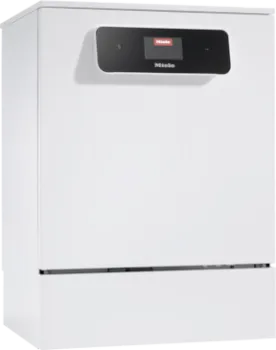
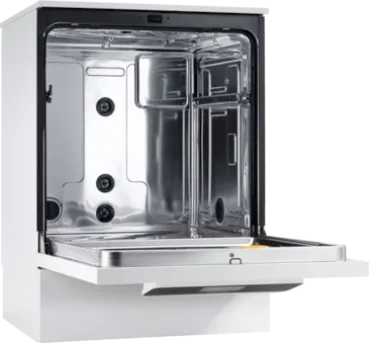
A washer-disinfector (WD) handles the reproducible, validatable machine cleaning and disinfection and is required for critical B instruments. It does not replace the sterilisation of critical instruments in the autoclave but is the upstream step – you get both from us from a single source.
Is an ultrasonic cleaner enough instead of a washer-disinfector?
For critical A instruments an ultrasonic cleaner can be sufficient for cleaning, while for critical B instruments a washer-disinfector is required. The ultrasonic cleaner supplements the process during pre-cleaning but never replaces sterilisation.
What do I need a sealing device for?
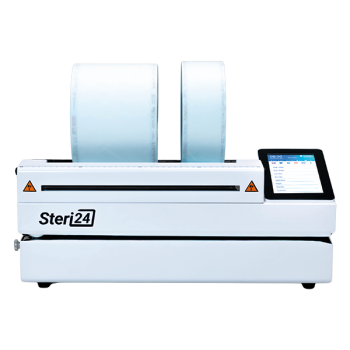
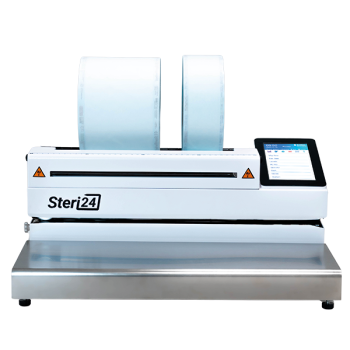
With a sealing device you package critical instruments in sterilisation pouches before they go into the autoclave. This keeps them stored sterile after sterilisation. Matching CertoSeal sealing devices and containers are available from us from a single source.
How often do I have to carry out the vacuum test?
You should carry out the vacuum test yourself once a week in the morning with a cold chamber. It is standardised in EN 13060 and takes about 15 to 20 minutes. Switch on the device and navigate to the vacuum test in the menu.
Is a Helix test mandatory?
The Helix test is required for critical B instruments or wrapped instruments and demonstrates steam penetration. It does not necessarily have to be done on every run, but many include it routinely in every batch. It is approved for daily routine monitoring.
Which tests do I need for my autoclave?
Essentially two checks are relevant: the Helix test steam indicator for critical B or wrapped instruments and the Class 5 steam indicator for critical A or unwrapped instruments. You only need the Bowie & Dick test for textiles.
Is a spore test mandatory?
A spore test is not mandatory for autoclaves in Germany; Class 5 or Helix tests are sufficient. Spore tests are possible, however, and can be useful for critical B instruments.
Which process parameters apply to a valid steam sterilisation?
According to EN 13060 and KRINKO, the chamber is in the range of 121–125 °C or 134–138 °C. Binding values are about 134 °C for four minutes in the universal programme or 121 °C for 20 minutes – the values laid down in the standards are decisive.
How does the autoclave indicate whether sterilisation was successful?
On success, the message Cycle completed appears, in accordance with EN 13060 as text, often with three beeps, and the door unlocks. In the event of an error, an error code appears instead.
How long do sealed instruments remain sterile?
In a normal drawer that is not dust-protected, the shelf life is about six months; in a dust-protected drawer with a rubber lip it is up to five years. Store the sterile goods dry and dust-protected in the hygienic area.
When do I have to write the batch number on the packaging?
Always after sterilisation. At least the batch number must be written on the wrapped instruments, ideally with a suitable sterilisation pen. Tracing labels are also applied after sterilisation.
How do I load the autoclave correctly?
Ensure sufficient air and steam penetration: do not place instruments too close together, ideally wrap them individually and distribute the load evenly. Avoid overloading so that instruments do not touch or slide together.
Instruments are wet after sterilisation – what should I do?
Residual moisture or standing water can have several causes, such as loading, drying or the seal. Please report the problem via steri24.de/help, then a technician will get in touch to resolve it.
The door won't open after the programme – what should I do?
A locked door can often be resolved by switching off and on again or together over the phone. Please report the problem with a description and photos via steri24.de/help; if the door remains locked, we will contact you for further assistance.
Is there an emergency service if the device fails?
Yes. Steri24 offers a 24-hour emergency service, also on weekends, with service directly from the manufacturer and a dense network of locations and partners in the DACH region.
Can you also service or validate my device of a different brand?
We generally cannot service third-party devices, as we lack spare parts and manufacturer approvals; however, we can validate many third-party devices, provided the required maintenance has been carried out beforehand. Send us the model and manufacturer and we will check the individual case.
Do you offer a complete solution for reprocessing?
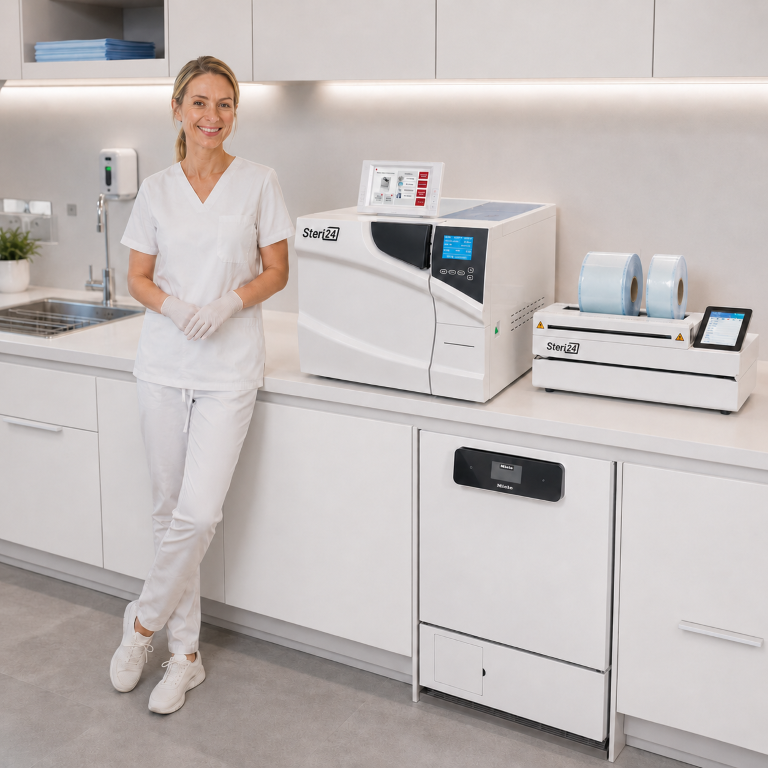
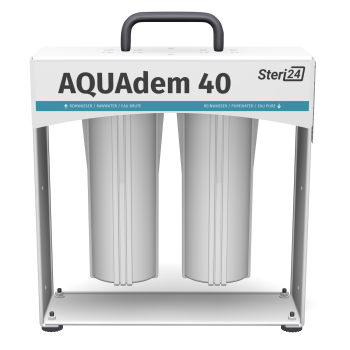
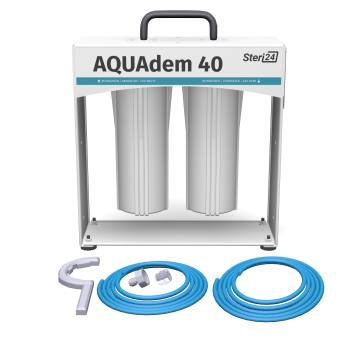
Yes. From the washer-disinfector through the Class B autoclave and the CertoSeal sealing device to water treatment, you get your entire reprocessing from a single source – perfectly matched, installed and maintained by one provider.
How do I find out which device suits my practice?
The easiest way is to fill out our autoclave configurator: in just a few minutes you receive a tailored recommendation including accessories for your urology practice. Alternatively, we are happy to advise you by phone or prepare a no-obligation quote.