Frequently Asked Questions
Sealing Devices – key questions answered clearly.
What does a sealing device do?
A sealing device closes sterilisation pouches and rolls airtight and germ-tight before the instruments are sterilised in the autoclave. A heated contact surface seals the packaging, and a blade cuts it to the right length. This keeps the instruments sterile after sterilisation until they are used.
Why do I even need a sealing device?
Critical instruments must be packaged before steam sterilisation so they remain sterile after the cycle and can be stored and transported free of contamination. With reel material (rolls) and a sealing device you create reproducible, tight sealing seams. For occasional use there are also self-sealing pre-made pouches that require no device.
Do I need a validatable sealing device?
In Germany and Switzerland the validation of packaging processes is effectively mandatory – arising from the MPBetreibV in conjunction with DIN EN ISO 11607-2. Non-validatable sealing processes are not permitted, so the device must make the parameters adjustable and monitorable. The CertoSeal 200 and 300 are validatable; the Pro Touch is a simple entry-level device without validatability.
What exactly is the obligation for a validatable sealing device based on?
The obligation is not based on state law but on federal law: on the MPBetreibV in conjunction with DIN EN ISO 11607-2 on the validation of all packaging processes. It therefore effectively applies in all 16 federal states and in Switzerland too, regardless of how strictly it is checked in individual cases.
Is a validatable sealing device mandatory in podiatry?
Yes, in podiatry a validatable sealing device is mandatory in Germany, even though this is not strictly checked in every federal state. As soon as you seal instruments that pierce the skin or can come into contact with blood, the requirements for validatable sealing processes apply.
What is the difference between a continuous and a manual sealing device?
Continuous sealing devices (CertoSeal 200/300) pull the pouch through automatically and produce an even, reproducible seam – ideal for higher packaging volumes. Manual devices (Pro Touch) are compact and inexpensive for small quantities.
Which CertoSeal model is right for me?
The Pro Touch is the compact, inexpensive entry point for small quantities, but it is not validatable. The CertoSeal 200 is a validatable continuous sealing device with good value for money, and the CertoSeal 300 additionally offers an automatic cutting function and LAN connectivity. We are happy to clarify in a consultation which model suits your volume.
What is the benefit of the CertoSeal 300's automatic cutting function?
The CertoSeal 300 seals and cuts the pouch automatically to the desired length in a single pass – saving time and ensuring clean, consistent packaging. A continuous sealing device with an integrated automatic cutting function is rare on the market.
What does the continuous principle mean when sealing?
With the continuous principle the pouch is pulled through the device automatically while the heated contact surface produces a continuous, even sealing seam. This is faster and more reproducible than manual sealing and particularly advantageous with high packaging volumes.
What does validatable actually mean for a sealing device?
Validatable means that the critical process parameters – temperature and contact pressure – can be set and monitored and that routine checks and documentation are possible. Only then can the sealing process be validated to DIN EN ISO 11607-2 and operated in a legally compliant manner.
Do you handle the validation of the sealing device?
Yes. For the CertoSeal 200 and 300 we carry out the validation of your sealing process to DIN EN ISO 11607-2 on site – independent of the manufacturer and including documentation for your quality management.
When can you deliver and validate a validatable sealing device?
We coordinate delivery and initial validation individually with you. The CertoSeal 200 is usually available at short notice; for the CertoSeal 300 the delivery time is longer due to its design. Our technicians carry out the validation on site – contact us to arrange an appointment.
Do sealing devices have to be validated before first use?
Validatable sealing devices such as the CertoSeal 200/300 must undergo initial validation. In Germany the validation of the sealing process is indirectly mandatory via the standards and the MPBetreibV. We handle the initial validation and the later revalidation on site.
At what interval do sealing devices have to be serviced?
Sealing devices are serviced every 24 months in accordance with the statutory regulations in Germany, Austria and Switzerland. Continuous sealing devices must additionally be serviced after a certain number of sealing operations at the latest.
How is revalidation handled for a complete set of autoclave and sealing device?
The autoclave is revalidated on site after a defined number of cycles or after a certain period; it is best to order the complete package of maintenance and revalidation. Continuous sealing devices are additionally serviced after a defined number of sealing operations at the latest.
What documentation obligations apply to the sealing device, and is a seal check necessary?
The requirements can vary depending on the responsible chamber (e.g. a daily seal check and an annual validation with a seal seam strength test). A seal seam test is particularly required if you seal critical medical devices for use on humans. We advise you on the requirements applicable to your practice.
What routine checks does the KRINKO require for sealing?
According to the KRINKO, routine checks include an ink or seal check, a check of the seal seam strength/peelability and the monitoring of the critical parameters. The tightness of the sealing seams must also be demonstrated by visual inspection during reprocessing and immediately before use.
How wide must a sealing seam be at minimum?
According to the KRINKO requirements, the sealing seam width must be at least 6 mm, and the minimum distance between the sealing seam and the medical device should be 3 cm. The critical process parameters here are temperature and contact pressure.
Which standard applies to sterile barrier packaging?
The relevant standard is DIN EN ISO 11607: Part 1 governs the requirements for materials and sterile barrier systems, and Part 2 the validation of the forming, sealing and assembly processes. The DIN EN 868 series and DIN 58953 are additionally relevant.
What is a sterile barrier system?
The packaging system usually consists of a sterile barrier system and, where applicable, a protective packaging. The sterile barrier system – such as a sealed transparent pouch – must allow sterilisation and ensure the sterility of the instrument until use when stored properly.
Which packaging materials can I process with the sealing device?
Commercially available sterilisation pouches and rolls (transparent pouches with a paper/film side) as reel material are mounted on the sealing device and sealed and cut to the desired length. Anyone who has a sealing device is best advised to order reel material on rolls.
Do you also offer sterilisation packaging (pouches, rolls)?
Yes, we offer sterilisation packaging as reel material on rolls and as ready-made, self-sealing pouches. Reel material is the most economical choice if you use a sealing device; self-sealing pouches are suitable for smaller quantities without a device.
What are self-sealing pouches and do they require a sealing device?
Self-sealing pouches have an integrated adhesive strip and are closed by hand without a sealing device. They are suitable for occasional use and small quantities. For higher volumes, reel material with a sealing device is recommended for even, reproducible seams.
Which side of the pouch faces up and how is it labelled?
When loading the autoclave, the paper side of the sterile pouch faces up. Labelling is generally done on the film side so that the permeability of the paper side is not impaired. Labelling is done after sterilisation.
How do I store packaged sterile goods correctly?
Store packaged sterile goods with the paper side facing down or upright – film to film, paper to paper. Dust-protected storage is important so that sterility is maintained until use.
How many pouches can I stack on top of each other?
Packaged sterile goods are best stored upright and not tightly stacked so that steam and air can circulate well during sterilisation and the packaging is not damaged. In the autoclave, place pouches individually and with spacing.
When is the packaged instrument labelled – before or after sterilisation?
Always after sterilisation. At least the batch number must be written on the packaged instruments, ideally with a sterilisation pen free of toxic chemicals, or via a label. Tracing labels are also applied after sterilisation.
How does the batch number work with the sealing device?
The batch number is a sequential figure that increases by 1 with each process run – per pouch when sealing. Together with the documentation, it enables the traceability of every packaged batch.
Can the CertoSeal be connected to practice software?
The CertoSeal 300 can be connected to any common practice software via LAN, so that the sealing parameters can be documented and read out. The CertoSeal 200 and 300 additionally have a USB port for documenting the sealing parameters.
What is the USB port on the CertoSeal 200 and 300 for?
The sealing parameters are documented and stored via the USB port. This is the basis for legally compliant, validatable operation and makes it easier to provide evidence for your quality management. The Pro Touch has no USB port.
Does every pouch have to be documented individually?
For traceability, every sealed batch must be clearly identifiable – when sealing, the batch number increases per pouch. Validatable devices such as the CertoSeal 200/300 support the documentation of the sealing parameters via USB. We are happy to clarify which evidence your chamber requires.
Which instruments must be sterilised packaged?
Critical instruments that come into contact with blood or penetrate skin or mucous membranes must be sterilised packaged (sealed). Non-critical and semi-critical instruments may be sterilised unpackaged. The decisive factor is the risk classification according to the KRINKO.
Do I have to package instruments in cosmetic foot care?
You must package the instruments as soon as they can pierce the skin or come into contact with blood (critical instruments). For this application you need a sealing device and suitable sterilisation packaging.
Do tattoo and piercing studios need a sealing device?
In tattoo and piercing studios, instruments are usually classified as critical and must be sterilised packaged – for this you need a sealing device or self-sealing pouches. For small quantities, self-sealing pouches are often sufficient; for higher volumes a continuous sealing device is recommended.
Where does sealing fit into the reprocessing workflow?
Reprocessing takes place in several steps: pre-cleaning/cleaning (e.g. ultrasonic bath or thermal disinfector), disinfection, drying and packaging (sealing), followed by steam sterilisation in the autoclave. First dry, then package, then sterilise.
Do the instruments have to be dry before packaging?
Yes. After cleaning and disinfection, the instruments are dried and only then packaged and sealed. Residual moisture in the packaging can impair sterilisation and the durability of sterility.
May expired packaged sterile goods be sterilised again?
Packaged instruments may be sterilised again after the storage period has expired, provided the packaging is undamaged and clean – but then repackaged, not in the same pouch. If the packaging is damaged, the goods must go through the full cleaning and disinfection process again.
What should I do if the sealing seam is leaky or untidy?
A faulty sealing seam usually indicates the wrong temperature or contact pressure, a dirty heating surface or unsuitable material. Check the settings and the cleanliness of the device; for validatable devices, our technician will support you with troubleshooting and maintenance.
How do I check whether the sealing seam is tight?
The tightness of the sealing seams must be demonstrated at least by simple checks during reprocessing, for example by visual inspection as well as an ink or seal check and a test of the seal seam strength. Immediately before use, the packaging must be checked again for integrity.
My sealing device does not give a signal tone after completion – is this a fault?
Not necessarily; the behaviour depends on the device and the configuration. Please describe the fault and, if applicable, send us a photo via steri24.de/help. Our service team will help you clarify the issue and, if necessary, arrange maintenance.
Who do I contact in the event of a defect on the sealing device?
Describe the fault and, if needed, send us a photo via steri24.de/help. For validatable sealing devices, a technician will support you with the solution or organise on-site maintenance via our DACH service network.
Do you have your own service network for sealing devices?
Yes. With 39 own locations and over 150 partners in the DACH region, we handle the installation, validation and maintenance of your sealing device on site. The CertoSeal is an in-house development by Steri24, so the service comes directly from us.
Is a sealing device a medical device?
Sealing devices fall under the Machinery Directive and bear the CE mark, but are not themselves medical devices in the strict sense. What is decisive for legally compliant operation is that the sealing process is validatable and documented.
Can I order the sealing device together with an autoclave as a set?
Yes, you can put together an autoclave, sealing device, ultrasonic cleaner, packaging and tests as an individual package. This bundles maintenance and validation and is often cheaper. Use our configurator for this or have a package offer prepared.
Why buy from Steri24, even though I don't know the brand?
Steri24 is a brand of CertoClav Sterilizer GmbH from Austria (since 1957). CertoSeal is our in-house development. We sell directly and handle the service ourselves – with a dense on-site service network at fairer prices than established expensive suppliers.
What distinguishes the CertoSeal from devices by established expensive suppliers?
The CertoSeal offers validatable continuous technology – with the 300 even an automatic cutting function that is rare on the market – at a fairer price, because we sell directly as the manufacturer. In addition, there is our own on-site service across the entire DACH region instead of long routes via intermediaries.
What running costs should I expect with a sealing device?
Running costs arise mainly for packaging material (rolls/pouches), regular maintenance and – for validatable devices – the initial and revalidation. We are happy to give you the specific amounts individually; contact us for a quote.
Is a more expensive validatable device worth it compared to a simple entry-level device?
If you reprocess critical instruments for use on humans, a validatable sealing device is effectively required – a simple entry-level device without validatability is then not sufficient. The Pro Touch is only suitable for non-critical applications or small quantities without a validation requirement.
How fast does a continuous sealing device seal at high volumes?
Continuous sealing devices work continuously: the pouch is fed in automatically and sealed throughout, which is significantly faster and more even than manual sealing at high packaging volumes. The CertoSeal 300 additionally cuts to length automatically.
Can I have packaging samples sent to me in advance?
Yes, we are happy to send you free samples of our sterilisation packaging. Just let us know the desired size as well as your postal address and email address. This way you can check the material and sealing quality before purchasing.


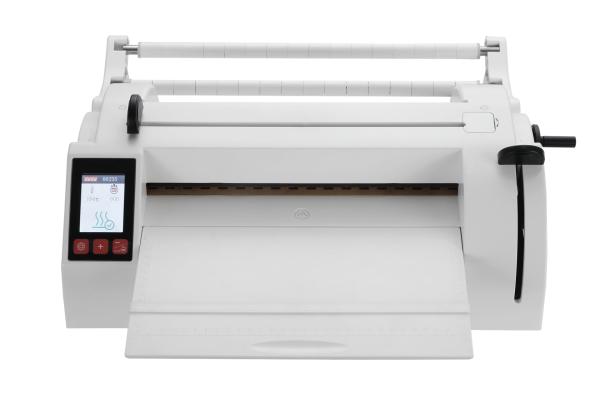 CertoSeal Pro Touch
Compact entry-level sealing device
CertoSeal Pro Touch
Compact entry-level sealing device
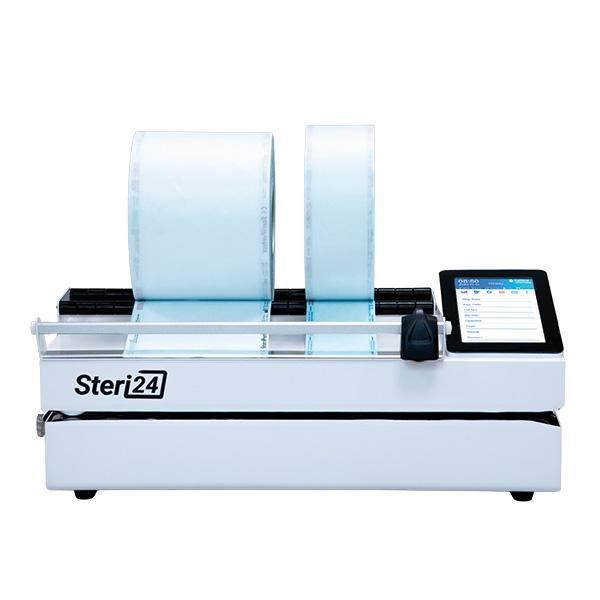 CertoSeal 200
Continuous sealing device · best value for money
CertoSeal 200
Continuous sealing device · best value for money
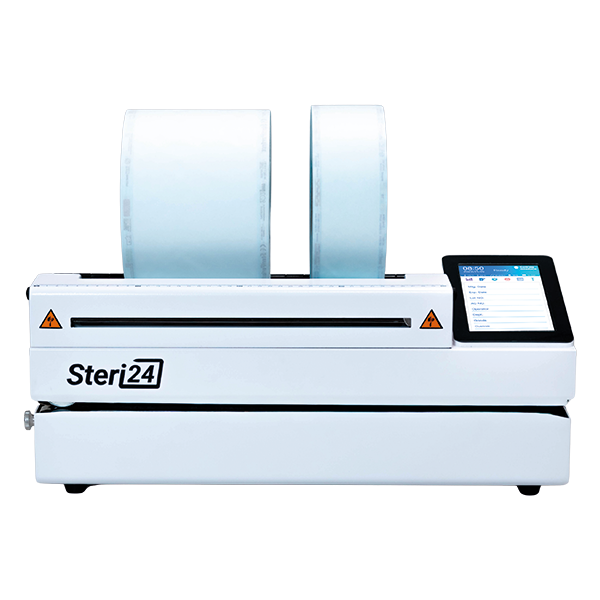 CertoSeal 300
Innovation: automatic cutting function – rare on the market
CertoSeal 300
Innovation: automatic cutting function – rare on the market


