RKI Instrument Maintenance

Meet RKI requirements – free of charge

Use the free ClavioSoft to run an audit check of your practice in just a few minutes – the software automatically generates any missing documentation. This saves you up to 90 % of the work.

ClavioSoft documentation software for RKI-compliant instrument maintenance
 

Instrument maintenance per RKI: correct lubrication and inspection


Maintenance follows directly after cleaning and drying and is carried out before packaging. It keeps moving parts functional, protects against corrosion and prepares the instruments for sterilisation – particularly important for turbines as well as handpieces and contra-angle handpieces.

1Purpose of maintenance

Regular maintenance prevents wear, corrosion and malfunctions and significantly extends the service life of instruments. Transmission instruments with moving parts must be maintained or lubricated as required in accordance with the instrument manufacturer's instructions. Use lubricants only in the required quantity, as they can impair the success of sterilisation.

Source: KRINKO/BfArM 2012, Section 2.2.3 (Inspection of technical-functional safety; maintenance per manufacturer's instructions); maintenance always per manufacturer's instructions (DIN EN ISO 17664).

2Procedure – step by step

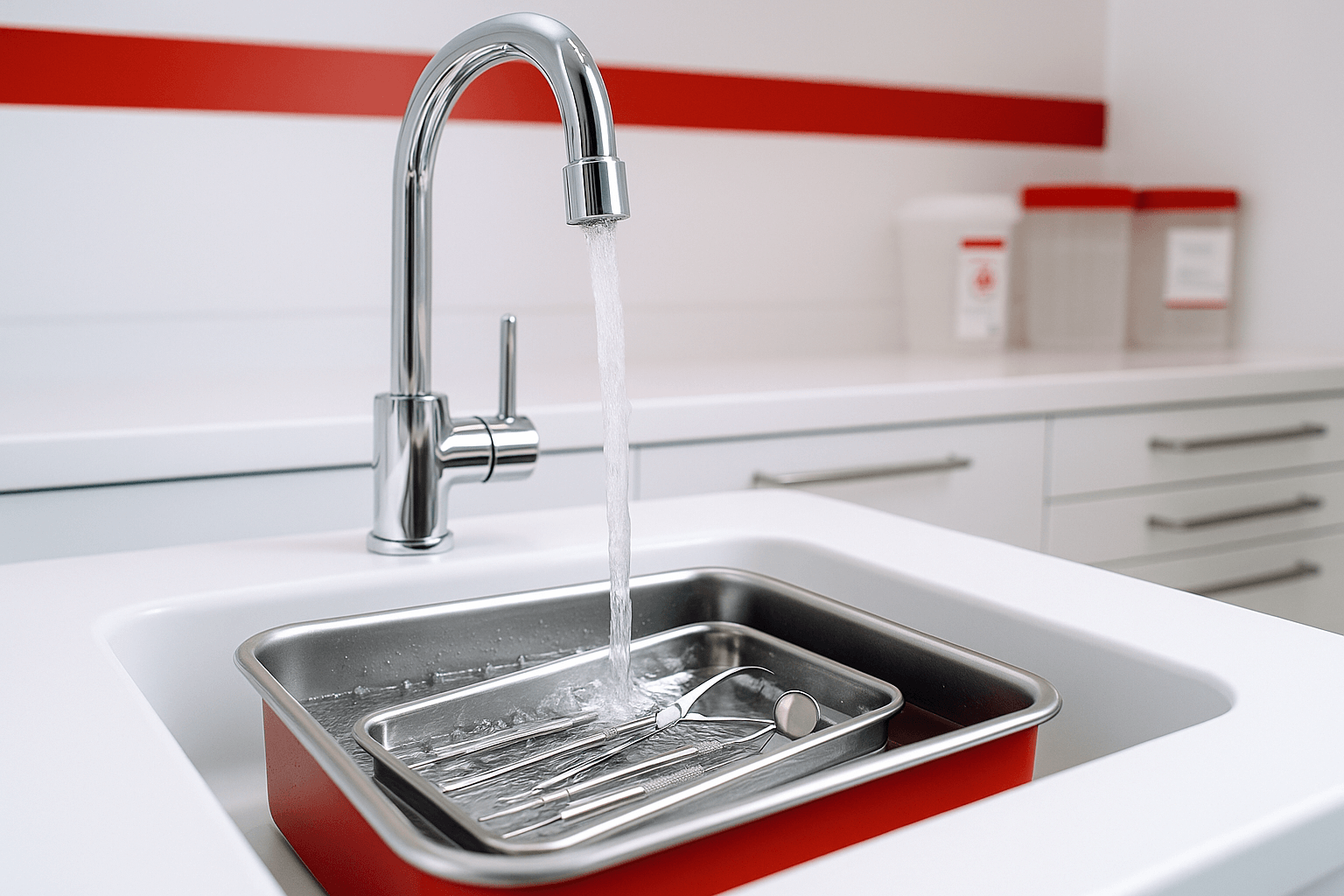
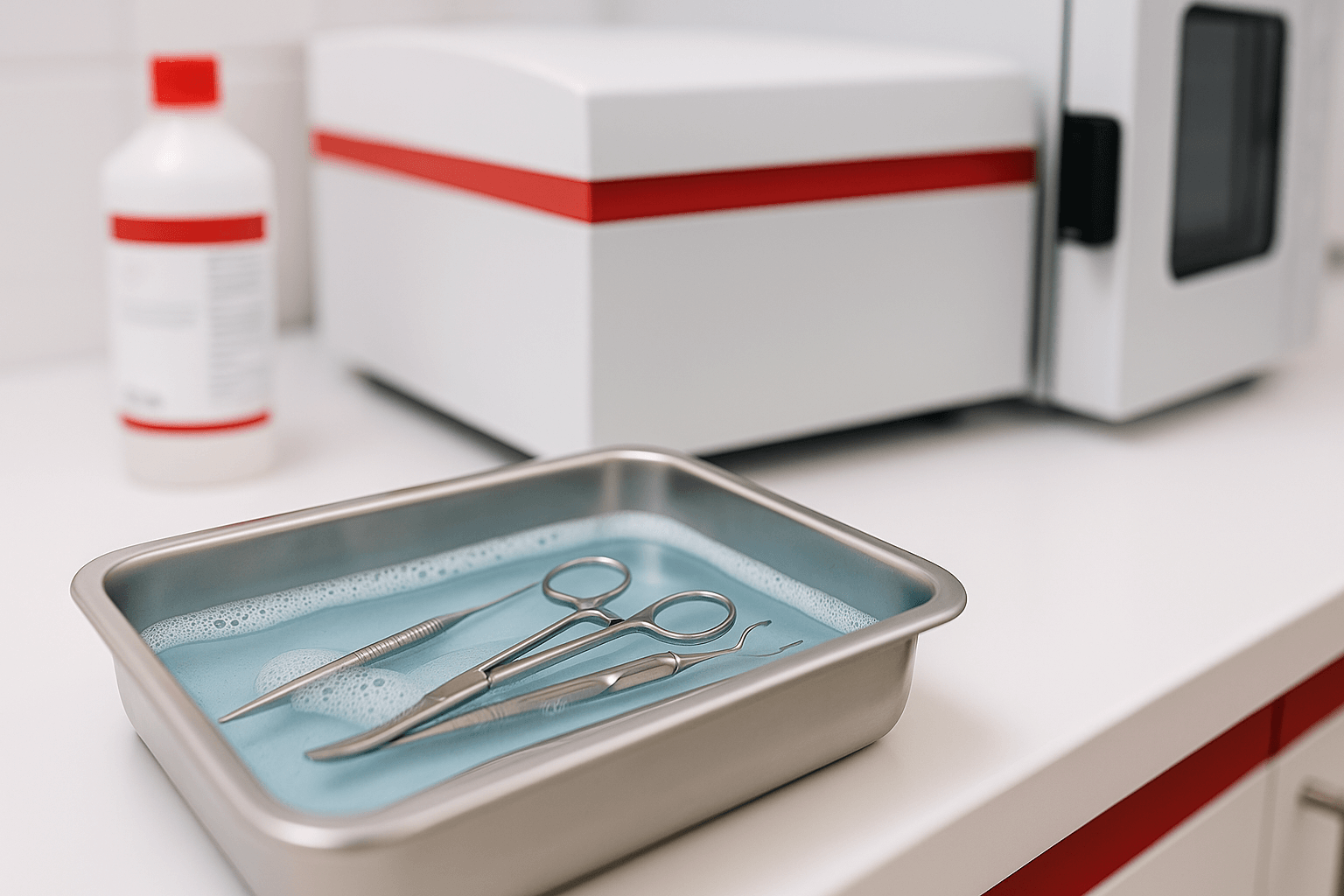
1. Instruments must be completely cleaned, dry and residue-free.
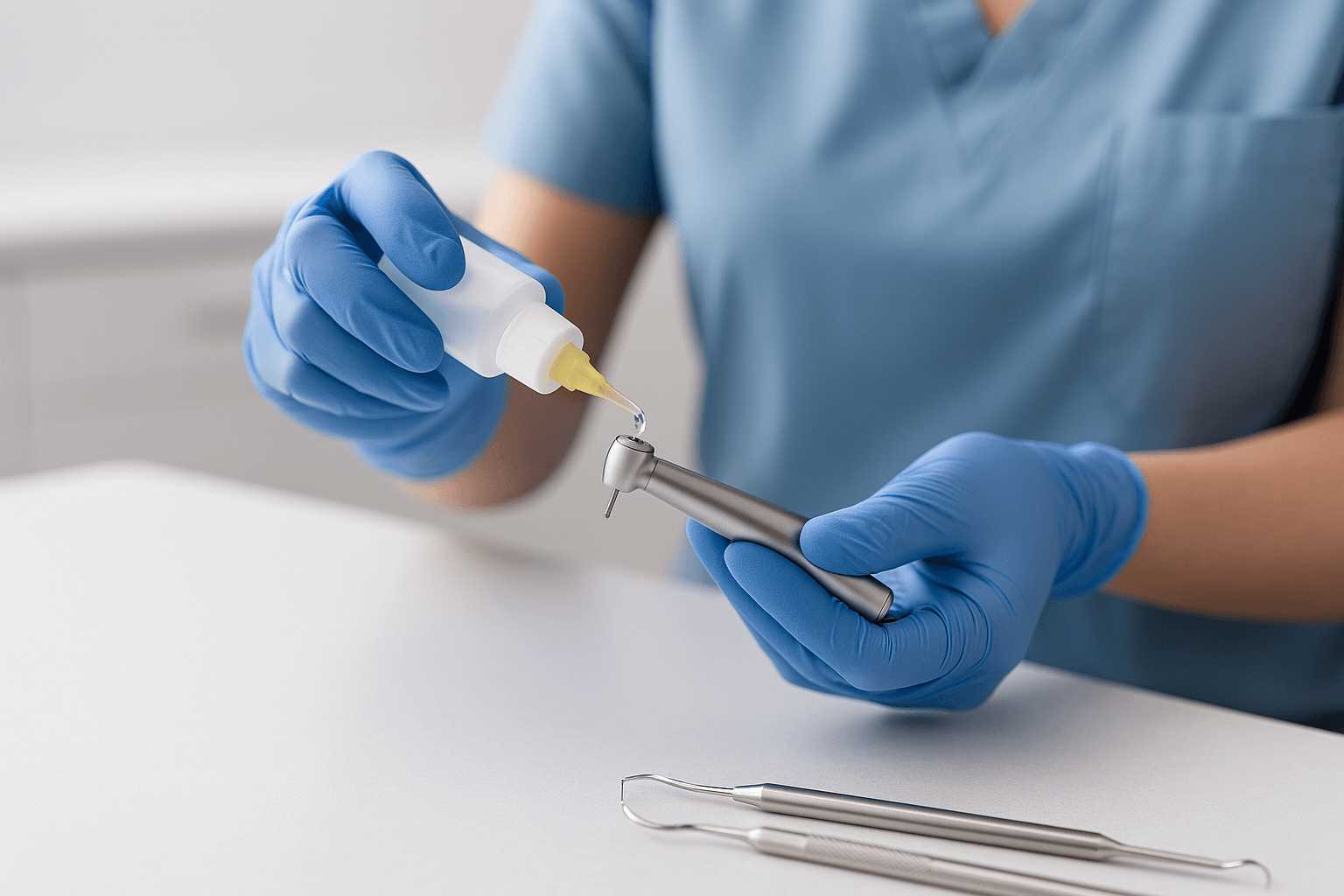
2. Apply medically approved maintenance oil evenly into all openings and joints (spray system or automatic maintenance device).
3. Remove excess oil with a lint-free cloth.
4. Briefly run the instrument to distribute the oil evenly.
5. Reassemble the instrument and check for correct function as well as cleanliness and integrity (technical-functional inspection per KRINKO 2.2.3). Only release instruments in perfect condition; document defects and rectify them or discard the instrument.
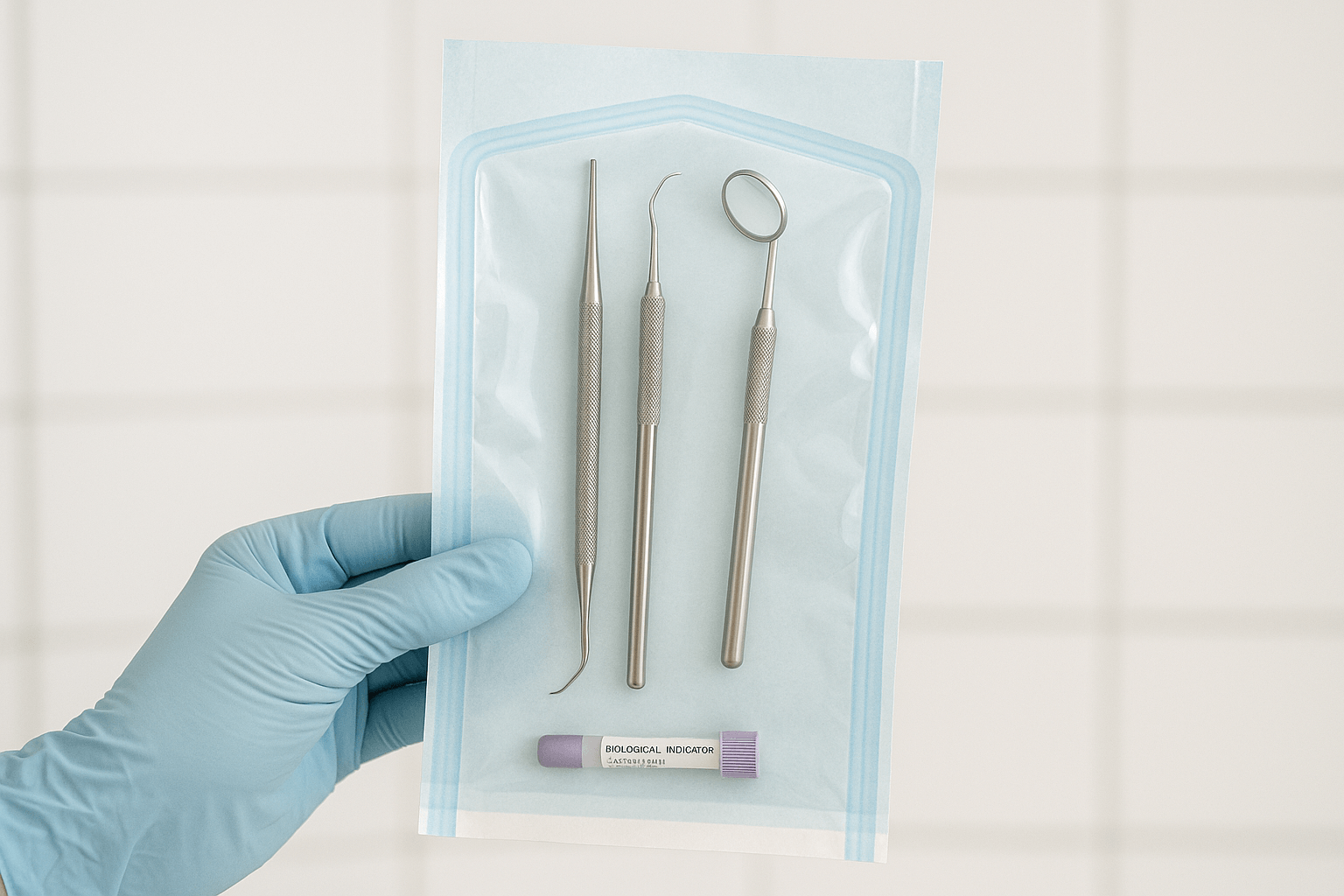
6. Only then package and sterilise – this ensures the maintained instrument becomes flawless sterile goods.

Equipment & aids

· Automatic maintenance devices for turbines, handpieces and contra-angle handpieces
· Maintenance spray with suitable adaptors
· Compressed-air connection for blow-drying
· Lint-free cloths

Important: Always carry out maintenance after cleaning and before packaging. Use only lubricants approved by the instrument manufacturer and suitable for steam sterilisation (e.g. paraffins per Ph. Eur.) and only in the required quantity – unsuitable or excessively applied oils can impair steam penetration and thus the success of sterilisation.
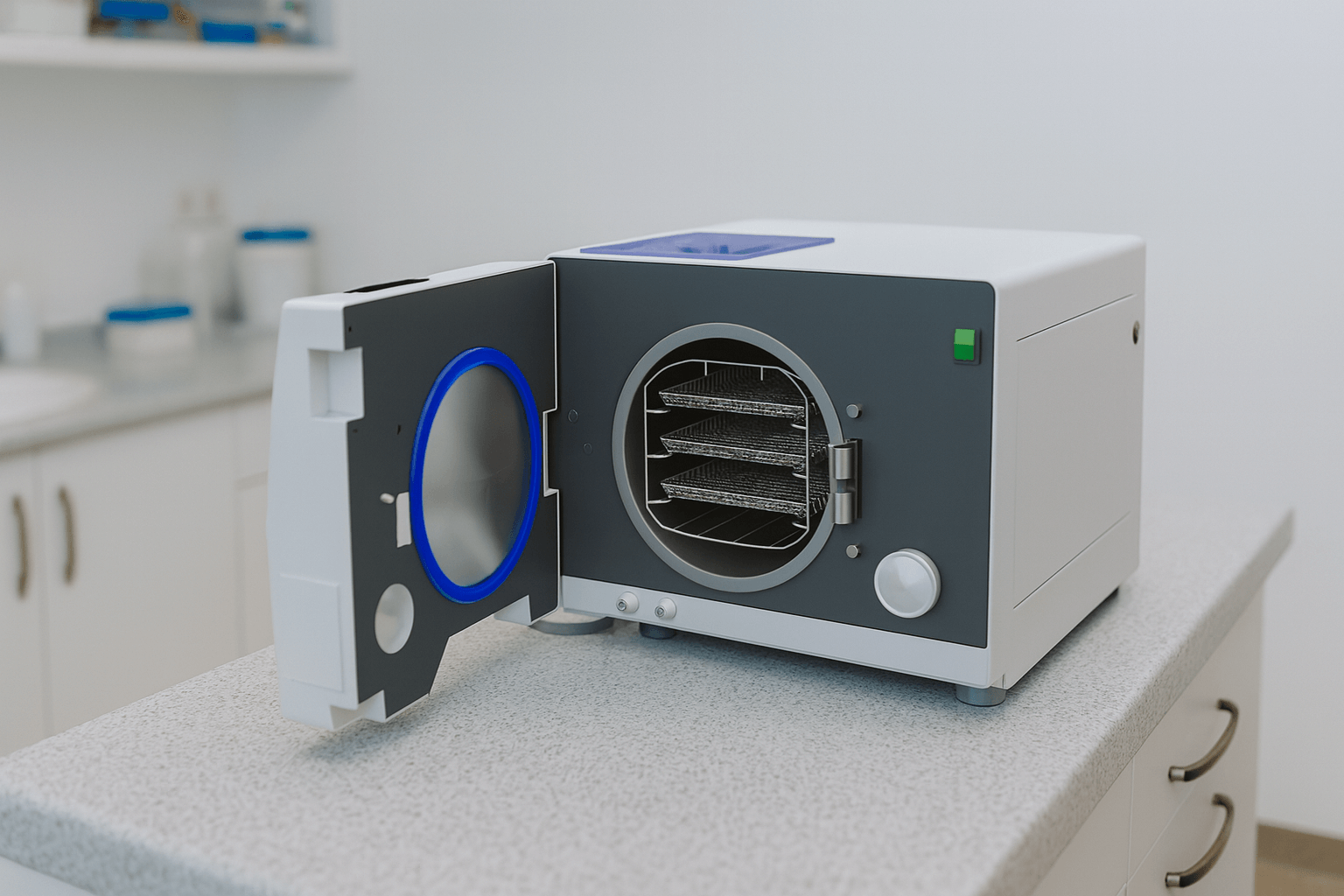
Properly maintained instruments need a sterilisation process that matches them. Make sure your autoclave is suited to your range of instruments.
Find the right Klasse B autoclave

Important additional points per RKI & standards

These points are frequently overlooked in practice but are important for correct and legally compliant implementation:

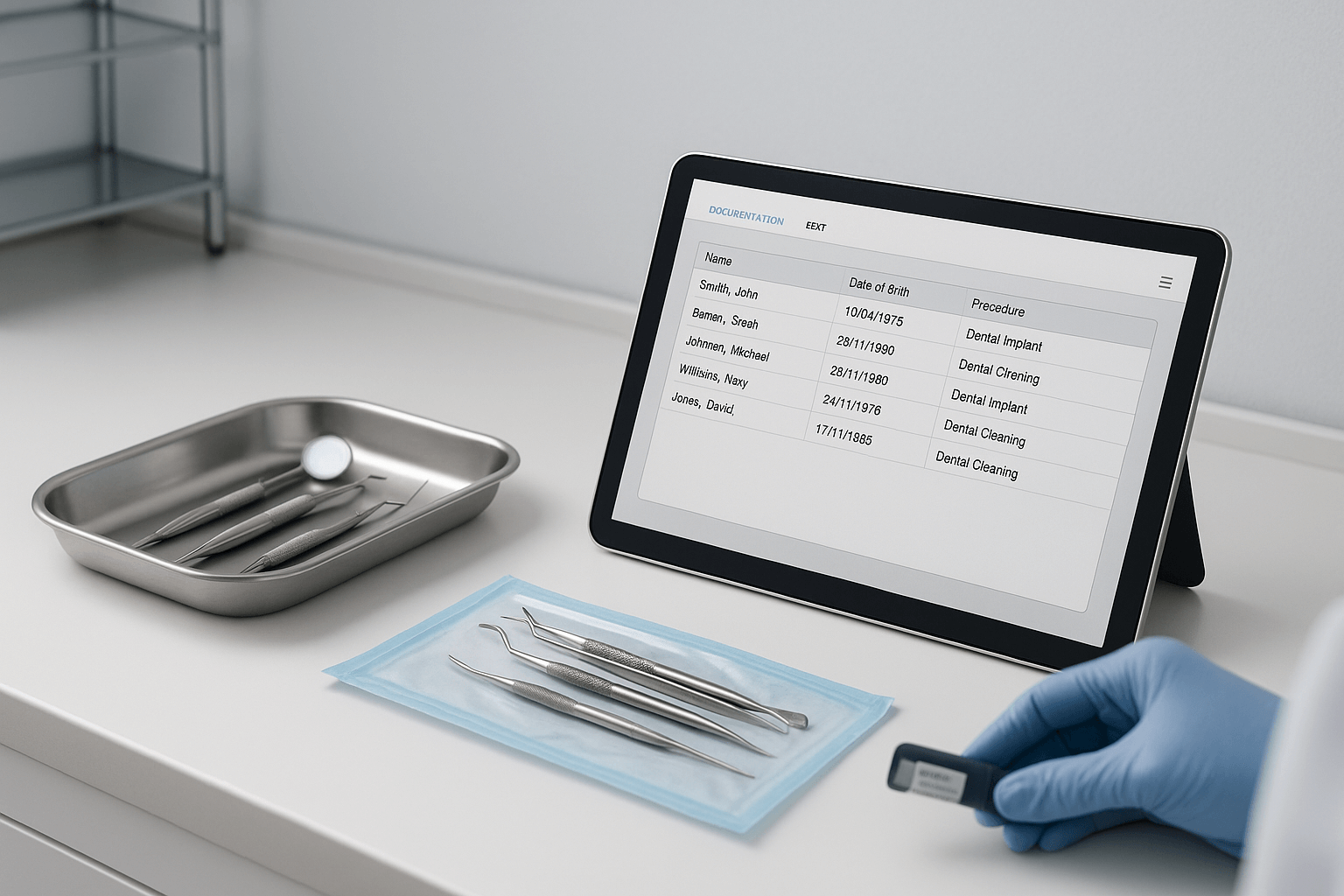
  • Functional inspection / functional check before packaging: Before packaging, instruments must be reassembled and checked for correct function as well as cleanliness and integrity (e.g. joints, locks, running of transmission instruments). This technical-functional inspection must be carried out per KRINKO 2.2.3 after cleaning/drying but before sterilisation; identified defects must be documented, their cause investigated and rectified, otherwise the instrument must be discarded. You can record such defect reports and the associated batch documentation quickly and traceably using the free ClavioSoft.Source: KRINKO/BfArM 2012, Section 2.2.3 and Section 6; MPBetreibV
  • Standard operating procedure (SOP) and documentation: The type and scope of maintenance and technical-functional inspection must be defined product-specifically in a written standard operating procedure; identified defects must be documented, their cause investigated and rectified. This is part of the QM-supported reprocessing workflow and requires appropriate expertise on the part of the reprocessing personnel. You can create and manage SOPs and the associated documentation easily with the free ClavioSoft.Source: KRINKO/BfArM 2012, Section 2.2.3 ('Umfang und Art der Prüfungen ... sollen in der Standardarbeitsanweisung definiert sein (QM)'); MPBetreibV
  • Internal lubrication of transmission instruments via suitable adaptors: For transmission instruments (handpieces and contra-angle handpieces, turbines), the maintenance sequence specified by the manufacturer must be followed: introduce lubricant into the channels via the appropriate adaptor, briefly run the instrument, and remove excess oil with a lint-free cloth. Without an adaptor matching the connection standard, manufacturer-compliant internal maintenance is not possible.Source: DIN EN ISO 17664 (manufacturer's instructions for reprocessing); KRINKO/BfArM 2012, Section 2.2.3 (maintenance per manufacturer's instructions)
  • Complete drying as a prerequisite before lubrication: Before applying maintenance oil, the instruments and especially the internal channels must be completely dry and residue-free (blow out with compressed air if necessary). Residual moisture can reduce the effectiveness of the lubricant.Source: KRINKO/BfArM 2012, Section 2.2.2 (rinsing and drying) and Appendix 2 (blow-dry tubing and channels with compressed air); DIN EN ISO 17664
  • Machine-based vs. manual maintenance (reproducibility): Where possible, machine-based, metered maintenance in a maintenance device is preferable to manual spray lubrication, as it applies reproducible oil quantities and is more easily standardised and validated. With manual spray lubrication, ensure metered quantities and remove any excess.Source: KRINKO/BfArM 2012, Section 2.2.2 (preference for standardisable, reproducible machine-based procedures); DIN EN ISO 17664
  • Occupational safety during maintenance: When applying maintenance oils/sprays, avoid aerosol formation and skin contact; wear suitable personal protective equipment (gloves, safety goggles if applicable) and ensure adequate ventilation. There must be no contamination with substances harmful to health that persist through subsequent reprocessing steps.Source: KRINKO/BfArM 2012, Section 2.2.3 (no contamination with substances harmful to health) and Section 2.2.2 (protective clothing, safety goggles, gloves; TRBA 250)

Required equipment, consumables & accessories

Checklist for this process step – items you should have ready (shopping list):

Equipment

  • Automatic maintenance/lubrication device for handpieces and contra-angle handpieces as well as turbines (reproducible, metered oil quantity) Order here in our shop
  • Compressed-air connection or integrated compressor for blow-drying and drying the channels
  • Illuminated work surface or magnifying lamp for the subsequent visual and functional inspection

Consumables

  • Maintenance oil or spray approved by the instrument manufacturer and suitable for steam sterilisation (e.g. paraffin per Ph.Eur.) Order here in our shop
  • Lint-free cloths for removing excess oil
  • Disposable gloves and safety goggles if applicable (occupational safety/aerosol protection)

Accessories

  • Suitable maintenance adaptors/spray nozzles for each connection standard of the transmission instruments (e.g. for contra-angle handpiece, turbine, motor) Order here in our shop
  • Adaptors/nozzles for internal channel and chuck maintenance Order here in our shop
  • Collection container/absorbent material for excess oil
  • Standard operating procedure (SOP) and documentation template for maintenance and functional inspection Create digitally with ClavioSoft

Sources

  1. KRINKO/BfArM 2012, Bundesgesundheitsbl. 55:1244–1310 – Section 2.2.2/2.2.3.
  2. DIN EN ISO 17664 (manufacturer's instructions for reprocessing); MPBetreibV § 8.

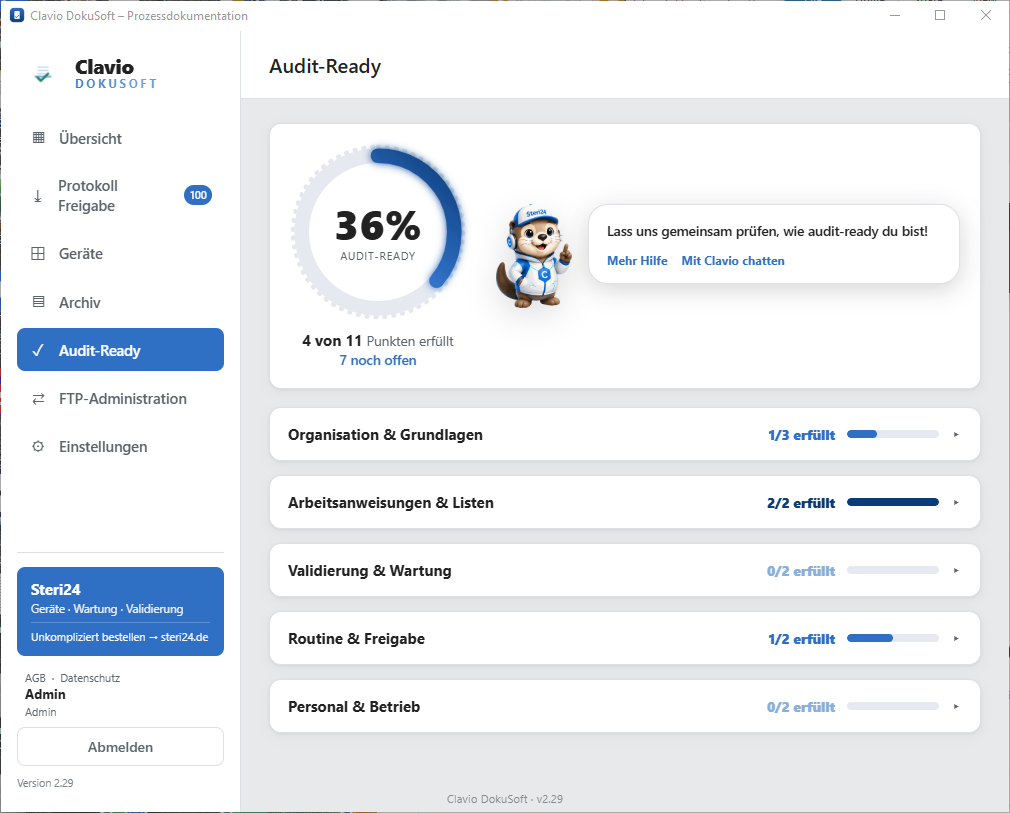
How audit-ready is your practice?

Find out in just a few minutes how well prepared you are for the next inspection — category by category, with clear progress tracking and specific open items. Completely free with ClavioSoft.

ClavioSoft Audit-Ready Check: progress display and categories
Download ClavioSoft for free
Free forever For autoclaves from all manufacturers RKI-compliant

1 to 1 (from a total of 1)

Frequently Asked Questions

RKI Instrument Maintenance – key questions answered clearly.

Why must dental instruments be maintained after cleaning?
Maintenance keeps moving parts functional, protects against corrosion and wear, and extends the service life. Transmission instruments with moving parts must be maintained or lubricated as required in accordance with the manufacturer's instructions (KRINKO/BfArM 2012, Section 2.2.3).
When does maintenance take place in the reprocessing workflow?
Maintenance follows directly after cleaning, disinfection and drying and is carried out before packaging and sterilisation. The instruments must be completely cleaned, dry and residue-free at this point.
Which instruments need to be oiled or lubricated?
Primarily transmission instruments with moving parts such as turbines, handpieces and contra-angle handpieces, as well as jointed instruments. They must be maintained or lubricated as required in accordance with the instrument manufacturer's instructions (KRINKO/BfArM 2012, Section 2.2.3).
Which oil may I use for instrument maintenance?
Only lubricants approved by the instrument manufacturer and suitable for steam sterilisation, e.g. paraffins per Ph. Eur. Unsuitable oils can impair steam penetration and thus the success of sterilisation (KRINKO/BfArM 2012, Section 2.2.3).
May I use household or sewing-machine oil for instrument maintenance?
No. Only lubricants approved by the instrument manufacturer and suitable for steam sterilisation (e.g. paraffins per Ph. Eur.) may be used. Unsuitable oils can damage instruments and impair the success of sterilisation.
How much maintenance oil may I apply?
Use lubricants only in the required quantity. Excessively applied oil can impede steam penetration and impair the success of sterilisation. Remove excess oil with a lint-free cloth.
Must excess oil be removed before sterilisation?
Yes. Excess oil must be removed with a lint-free cloth. Remaining oil can reduce steam penetration and impair the success of sterilisation (KRINKO/BfArM 2012, Section 2.2.3).
How do I correctly maintain a handpiece or contra-angle handpiece?
Introduce lubricant into the channels via the appropriate adaptor, briefly run the instrument to distribute the oil, and remove excess oil with a lint-free cloth. The sequence specified by the manufacturer must be followed.
Why should I briefly run the instrument after lubrication?
The brief run distributes the maintenance oil evenly across all moving parts and channels. The excess oil that emerges is then removed with a lint-free cloth.
Do I need an adaptor for maintaining transmission instruments?
Yes. Without an adaptor matching the connection standard, manufacturer-compliant internal maintenance of the channels is not possible, as the lubricant must be introduced precisely into the internal channels (DIN EN ISO 17664).
May I maintain different transmission instruments with the same adaptor?
Only if the adaptor matches the respective connection standard of the instrument. Without the correct adaptor, manufacturer-compliant internal maintenance of the channels is not possible (DIN EN ISO 17664).
Must instruments be completely dry before lubrication?
Yes. Before applying maintenance oil, instruments and especially the internal channels must be completely dry and residue-free, blown out with compressed air if necessary. Residual moisture can reduce the effectiveness of the lubricant (KRINKO/BfArM 2012, Section 2.2.2).
How do I blow out the internal channels with compressed air before lubrication?
Tubing and channels are blown dry with compressed air before applying maintenance oil to ensure no residual moisture remains. Residual moisture can reduce the effectiveness of the lubricant (KRINKO/BfArM 2012, Appendix 2).
Is machine-based maintenance in a maintenance device better than manual spray lubrication?
Where possible, machine-based, metered maintenance in a maintenance device is preferable to manual spray lubrication, as it applies reproducible oil quantities and is more easily standardised and validated (KRINKO/BfArM 2012, Section 2.2.2).
Is an automatic maintenance device for transmission instruments mandatory?
It is not strictly required but recommended, as machine-based, metered maintenance applies reproducible oil quantities and is more easily standardised and validated than manual spray lubrication (KRINKO/BfArM 2012, Section 2.2.2).
What equipment and aids do I need for instrument maintenance?
Commonly used are automatic maintenance devices for turbines, handpieces and contra-angle handpieces, maintenance spray with suitable adaptors, a compressed-air connection for blow-drying, and lint-free cloths.
How often must an automatic maintenance device be serviced or refilled?
Follow the manufacturer's service and maintenance instructions for the maintenance device, regularly check the oil level and replace adaptors when worn. Only a device in perfect condition applies reproducible oil quantities.
What is the technical-functional inspection before sterilisation?
The instruments are reassembled and checked for correct function as well as cleanliness and integrity, for example joints, locks and running of transmission instruments. It is carried out after cleaning/drying but before sterilisation (KRINKO/BfArM 2012, Section 2.2.3).
When must the functional inspection of instruments be carried out?
After completion of cleaning, disinfection, rinsing and drying, but before sterilisation. This ensures that only instruments in perfect condition enter packaging and the autoclave (KRINKO/BfArM 2012, Section 2.2.3; MPBetreibV).
Can I skip the functional inspection if an instrument looks new?
No. The technical-functional inspection must be carried out after every reprocessing cycle before sterilisation in order to detect defects in joints, locks or running in good time (KRINKO/BfArM 2012, Section 2.2.3; MPBetreibV).
What must I do if an instrument has a defect?
Identified defects must be documented, the cause investigated and rectified. If the defect cannot be remedied or residues cannot be removed, the instrument must be discarded (KRINKO/BfArM 2012, Section 2.2.3).
How do I recognise that an instrument must be discarded?
When residues remain even after repeated cleaning or when technical-functional defects such as corrosion, defective joints or impaired running cannot be rectified. Such instruments must be documented and discarded (KRINKO/BfArM 2012, Section 2.2.3).
Must instrument maintenance be regulated in a standard operating procedure?
Yes. The type and scope of maintenance and technical-functional inspection must be defined product-specifically in a written standard operating procedure (SOP). This is part of the QM-supported reprocessing workflow (KRINKO/BfArM 2012, Section 2.2.3; MPBetreibV).
Must I document instrument maintenance and functional inspection?
Identified defects must be documented and their cause rectified. Maintenance and technical-functional inspection are part of the QM-supported process and must be regulated in the standard operating procedure (KRINKO/BfArM 2012, Section 2.2.3; MPBetreibV).
Can I document maintenance and functional inspection with software?
Yes. Defect reports, SOPs and the associated documentation can be recorded digitally, for example with the free ClavioSoft, which simplifies the QM-supported reprocessing workflow and ensures traceability.
Can too much maintenance oil prevent sterilisation?
Yes. Excessively applied or unsuitable oil can impede steam penetration and impair the success of sterilisation. Therefore, apply lubricant only in metered quantities and remove any excess before packaging (KRINKO/BfArM 2012, Section 2.2.3).
Can instruments rust in the autoclave?
Yes, this is possible, for example due to residual moisture, chloride- or foreign-metal-containing residues, or unsuitable water quality (flash rust). Complete drying, thorough reprocessing and manufacturer-compliant maintenance of moving parts prevent corrosion.
How do I prevent corrosion and flash rust on reprocessing instruments?
Key measures are thorough cleaning, residue-free rinsing with suitable water, complete drying and manufacturer-compliant maintenance. In the washer-disinfector, rinse aids and neutralisers can further reduce the tendency to corrode.
What water quality is important to avoid corrosion during reprocessing?
Low-salt or demineralised water should be used for the final rinse and steam generation. High salt or chloride levels promote staining and corrosion. Suitable water treatment protects both instruments and autoclave.
Why does maintenance protect instruments from corrosion?
Maintenance oil protects moving parts and surfaces against friction and moisture damage, thereby preventing corrosion and wear. In addition, instruments must be completely dry and residue-free before lubrication.
Must instruments be completely dried before autoclaving?
Yes. Instruments should be completely dry or blown dry with compressed air and should not be placed in wet. Dry, residue-free instruments are also a prerequisite for the subsequent maintenance step.
Must I clean and disinfect instruments before sterilisation?
Yes, instruments must be cleaned and, depending on their classification, disinfected before sterilisation. Only after the instruments are completely cleaned, dry and residue-free do maintenance, functional inspection and packaging follow (KRINKO/BfArM 2012).
Are jointed instruments opened or closed during maintenance?
Jointed instruments are cleaned and maintained in the open position so that cleaning agents and lubricants can reach the joints. During autoclaving, the closed position is acceptable unless the manufacturer specifies otherwise.
Why must lubricants not impair the success of sterilisation?
Lubricants such as paraffins per Ph. Eur. must not impede the success of sterilisation. If necessary, information from the lubricant manufacturer should be obtained (KRINKO/BfArM 2012, Section 2.2.3).
How often must turbines, handpieces and contra-angle handpieces be maintained?
As a rule, after every reprocessing cycle or according to the instrument manufacturer's specifications. The frequency and sequence of maintenance must be defined product-specifically in the standard operating procedure.
What happens if I do not maintain a transmission instrument?
Without regular maintenance, increased wear, corrosion and malfunctions are likely, shortening the service life. Damaged or instruments no longer in perfect condition must be discarded.
Why is maintenance particularly important for turbines?
Turbines as well as handpieces and contra-angle handpieces have delicate moving parts and channels that wear out quickly without manufacturer-compliant lubrication. Correct maintenance preserves function and significantly extends the service life.
What does a lint-free cloth mean in instrument maintenance?
It refers to a cloth that does not shed fibres, used to remove excess oil without leaving particles or lint behind. Such residues must not persist through subsequent reprocessing steps.
May maintenance oil leave residues on the instruments?
There must be no contamination with substances harmful to health or particles that persist through subsequent reprocessing steps. Excess oil must therefore be removed with a lint-free cloth (KRINKO/BfArM 2012, Section 2.2.3).
Which standard governs instrument maintenance per manufacturer's instructions?
The manufacturer's reprocessing and maintenance instructions are governed by DIN EN ISO 17664. In addition, KRINKO/BfArM 2012 (Section 2.2.3) requires maintenance of moving parts per manufacturer's instructions.
What should I do if an instrument still shows residues after cleaning?
If residues cannot be removed even after repeated cleaning, the instrument must be discarded. Before maintenance, instruments must be completely clean, dry and residue-free (KRINKO/BfArM 2012, Section 2.2.3).
How do I distribute maintenance oil evenly in the moving parts?
Apply maintenance oil evenly into all openings and joints, briefly run the instrument to distribute it, and then remove any excess with a lint-free cloth.
How do I maintain instruments in a podiatry practice?
The same principles apply in podiatry: after cleaning and drying, maintain moving parts in accordance with the manufacturer's instructions, check function and only package instruments in perfect condition. Use only approved, steam-sterilisable lubricants in metered quantities.
Must I observe occupational safety when spraying lubricants?
Yes. Spraying generates aerosols; work in a ventilated area and observe the safety data sheet of the lubricant. Protective gloves and safety goggles if applicable are recommended.
Where can I find binding information about a lubricant?
Binding information is found in the instructions for use or manufacturer's specifications of the instrument and the lubricant, as well as its safety data sheet. For questions about suitability for sterilisation, information from the lubricant manufacturer should be obtained (KRINKO/BfArM 2012, Section 2.2.3).
What is the difference between cleaning and maintenance of instruments?
Cleaning removes soiling; maintenance subsequently protects moving parts through lubrication and prevents corrosion. Maintenance is carried out only after complete cleaning and drying, before packaging.
Why must the maintenance sequence specified by the manufacturer be followed?
Sequence, adaptor, oil quantity and running time are product-specifically coordinated. Only with manufacturer-compliant maintenance is function preserved and the success of sterilisation not impaired (DIN EN ISO 17664).
Does excess maintenance oil damage the packaging or steam penetration?
Excessive oil can impair packaging and steam penetration. Therefore, always remove excess with a lint-free cloth and apply lubricant only in metered, manufacturer-compliant quantities before packaging (KRINKO/BfArM 2012, Section 2.2.3).
Must instruments without moving parts also be maintained?
Lubrication is only required for moving parts such as joints or transmission instruments. However, all instruments must be inspected for cleanliness, integrity and corrosion before packaging (KRINKO/BfArM 2012, Section 2.2.3).
Is maintenance of moving parts part of product-specific risk management?
Yes. The effects of reprocessing on material properties and technical-functional safety must be considered product-specifically; maintenance of moving parts preserves function and material integrity (KRINKO/BfArM 2012, Section 2.2.3).