Frequently Asked Questions
Autoclaves – key questions answered clearly.
What does „Class B“ mean for an autoclave?
Class B is the highest sterilization class under EN 13060. Thanks to a fractionated pre-vacuum, hollow, porous and wrapped instruments are also reliably sterilized – the standard for medicine, surgery and demanding applications.
Which autoclave size do I need for my practice?
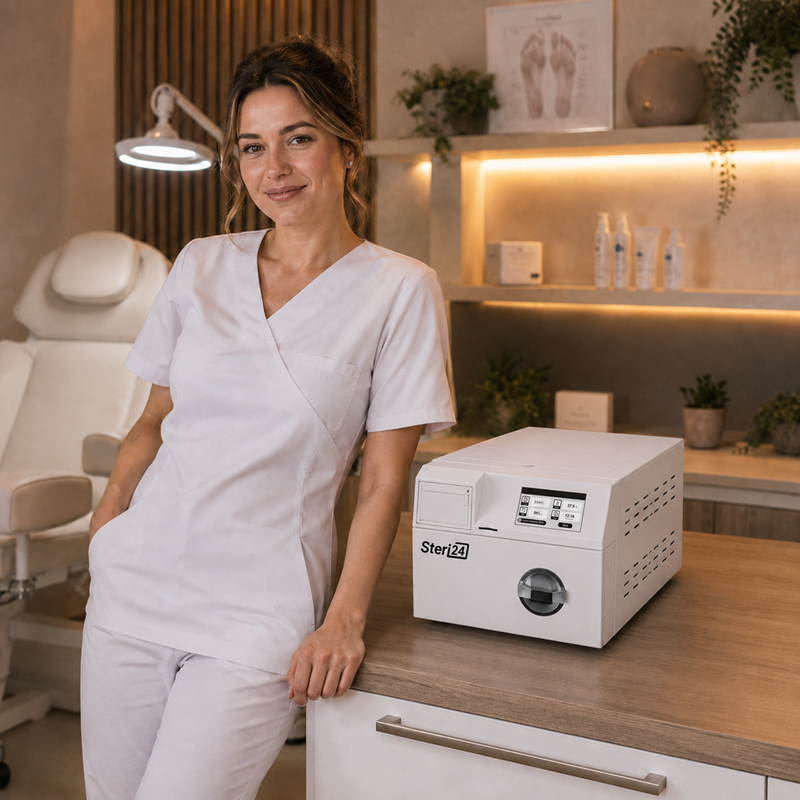
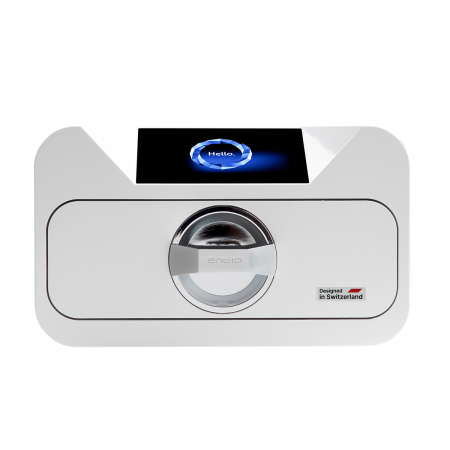
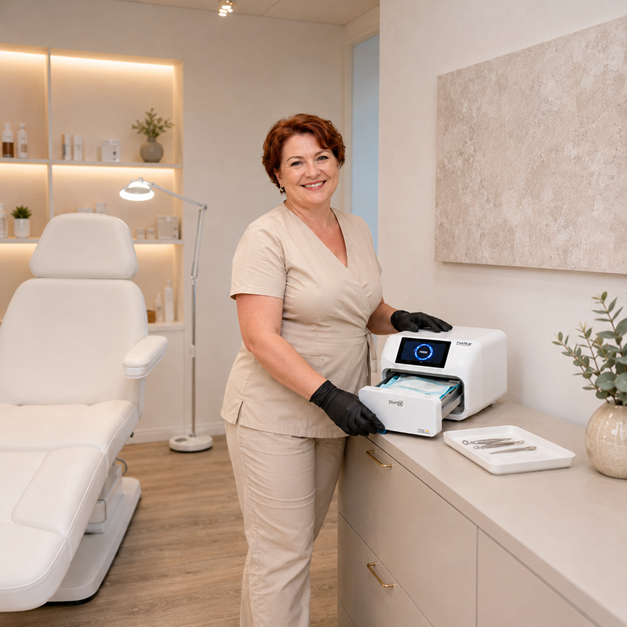
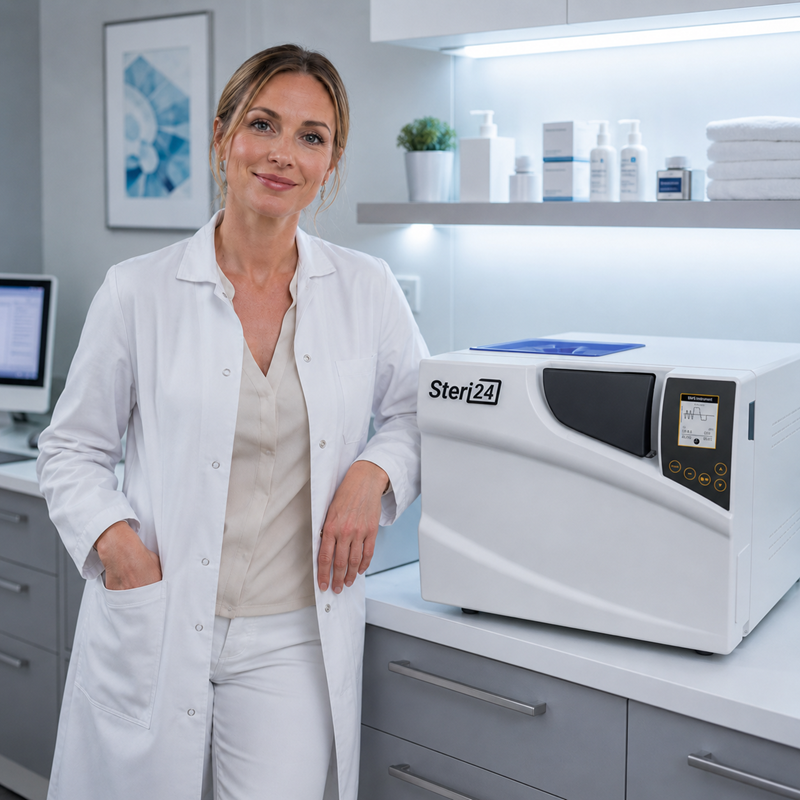
As a guide: 3 L for beauty/podiatry and mobile use, 12–18 L for the typical practice, 23 L for larger practices or multiple practitioners, and 45 L for clinics. Our configurator recommends the right size in around 2 minutes.
What is the difference between the Pro and Premium autoclaves?
Both sterilize in Class B to EN 13060. The Pro series documents via USB and thermal printer and offers especially strong value. Premium additionally provides paperless batch release on the touchscreen, LAN/WLAN and integration with your practice software via SteriTrace®.
How does an autoclave actually work?
An autoclave sterilizes instruments with saturated steam under pressure at high temperature. In the Class B process, the air is first removed by a fractionated pre-vacuum so that the steam fully reaches even narrow cavities and wrapped instruments.
Why do I even need a Class B autoclave?
As soon as instruments come into contact with blood or mucous membranes (critical instruments), steam sterilization with a Class B autoclave is the prescribed method. Ultrasonic, UV or hot-air devices are not sufficient for this.
Do I have to have my autoclave validated?
For legally compliant operation, an initial validation is customary; regular routine checks follow afterwards. We carry out validation and maintenance on site. Whether validation is mandatory in your case depends on the area of use.
Is validation a legal requirement?
In Germany, validation is mandatory for everyone who reprocesses medical instruments used on people – for example podiatry, beauty, tattoo/piercing studios, doctors and clinics. Those who do not reprocess critical instruments that come into contact with blood are usually not required to.
What does the validation of an autoclave mean?
Validation is a formal assessment that proves your autoclave and the entire reprocessing process meet the applicable standards and sterilize reliably. It is usually carried out on site every 2 years using your instruments as the load.
How does the validation process work?
During validation, the autoclave and reprocessing process are assessed on site: using measurement sensors, a vacuum test, an empty-chamber profile and several sterilization runs with your instruments are performed, among other things. You then receive a validation report.
How often does the autoclave have to be validated?
Revalidation is generally due every 2 years (24 months) or after about 1,000 cycles. Larger devices or a high cycle count may require earlier revalidation.
What is the difference between validation and maintenance?
Maintenance is the technical upkeep of the device with replacement of wear parts. Validation is the formal verification that the entire sterilization process meets the standards. Both are separate, regularly recurring services.
Can I carry out the validation myself?
No, validation must be performed by an approved validator with special measurement equipment and is practically impossible to do yourself. Steri24 handles the complete process on site.
Does the initial validation always have to be done on site?
Yes, validation must be carried out on site with your instruments as the load, because it tests the actual conditions at the place of use. Shipping the device to the factory is not possible for this.
Is the device usable before the initial validation?
Yes. The initial validation is a process validation and can also be done after commissioning; the autoclave is ready to use immediately upon delivery. We arrange the validation appointment individually with you.
Can I order the initial validation directly with the autoclave?
Yes, you can order the initial validation directly with the autoclave or commission it separately at any time afterwards. We arrange the appointment individually with you.
Why does a new device have to be validated when it has already been factory-tested?
Even a factory-tested new device must be validated at the place of use, because validation checks the actual on-site conditions (installation, load, process) – which is not possible at the factory.
At what interval must the autoclave be maintained?
Maintenance is generally required every 24 months, but earlier as soon as around 1,000 sterilization cycles are reached – whichever comes first. This applies in Germany, Austria and Switzerland.
What is done during maintenance?
Maintenance includes the callout, the work performed, the scheduled replacement of all critical wear parts and a report. This keeps the autoclave safe and durable.
How long does a Steri24 autoclave last?
With regular maintenance, our autoclaves last around 20–25 years. The compact 3 L device lasts about 10–15 years due to its smaller vacuum pump.
How long does a sterilization cycle take?
The duration depends on the model, programme and load. Guide values with a full load of wrapped instruments: 3 L approx. 11–22 minutes, 12 L approx. 30–35 minutes, 23 L approx. 45–50 minutes, 45 L approx. 90 minutes.
Which water must I use for the autoclave?
Use distilled or demineralized/fully deionized water (conductivity ideally below 15–20 µS/cm). Standard distilled water is suitable; tap water is not suitable and can damage the device.
Does the autoclave need a fixed water connection?
No. All our autoclaves are stand-alone devices with an integrated fresh-water and waste-water tank and can be filled manually. From 12 L upwards, a fixed water connection can optionally be added and can also be retrofitted later.
Where does the autoclave's waste water go?
You route the supplied hose at the back of the device into a container, a drain or the sink. A fixed waste-water connection is not necessary.
What happens if I use tap water?
Tap water contains lime and minerals that can scale up the chamber, valves and sensors and damage the device. Use only distilled or demineralized water; we offer a suitable water treatment device (AQUAdem).
Do Class B autoclaves have a bacterial filter?
Yes, Class B autoclaves have a bacterial filter that must be replaced depending on use or when the device prompts you to. After the change you reset the message with the supplied code.
What is the digital batch release on the Premium devices?
On the Premium series you complete the legally required batch release in a few seconds directly on the touchscreen: visual inspection, load release, indicator, date, protocol, staff and cycle number are released by signing on screen – instead of spending minutes with pen and paper.
What is SteriTrace®?
SteriTrace® is the paperless RKI documentation of the Premium autoclaves. The reprocessing is recorded automatically, digitally signed and can be connected to your practice software – saving considerably on documentation effort compared with manual recording.
Can the autoclaves be connected to practice software?
The Premium series offers LAN/WLAN connectivity and can be linked to your practice software via SteriTrace®, including label printing for sterile goods. The Pro series documents via integrated printer and USB.
Which autoclave is suitable for a dental practice?
For dental practices we usually recommend the 18 L or 23 L Class B autoclave depending on the number of practitioners and instrument volume; for multiple practitioners a device with documentation and practice software integration (Premium). The configurator helps with the exact choice.
Which autoclave is suitable for podiatry, cosmetics or a nail studio?
Here the compact 3 L Class B Pro is usually the most popular choice; from about 8 treatments per day or with several staff we recommend the 12 L Pro with considerably more capacity. The configurator finds the right device.
Which autoclave is suitable for a tattoo or piercing studio?
Tattoo and piercing studios need a Class B autoclave. The most popular are the 3 L or 12 L Pro; for solo work the 3 L is often enough, and for higher volume we recommend the 12 L – along with matching sterilization pouches.
Which autoclave is suitable for a veterinary practice?
Our Class B autoclaves are suitable for veterinary medicine; most veterinary practices choose the 12 L or 23 L Pro, or the 3 L for very low demand. In purely veterinary settings, validation is usually not required.
Which autoclave is suitable for a GP or dermatology practice?
For general, internal medicine and dermatology practices, the 12 L or 23 L is usually the right choice depending on instrument volume, or the 3 L for low demand. The choice depends on the largest instrument and the quantity per cycle.
How many instruments fit in an autoclave?
That depends on chamber size, trays and packaging. The decisive factors are the largest instrument and the quantity per cycle. Our configurator takes your instrument volume into account and recommends the right size.
Do you offer very large autoclaves over 45 litres?
Our largest device is the Class B Pro with 45 L. We do not offer larger volumes; for higher demand many customers install several 23 L devices. We are happy to advise you on the right solution.
Are the autoclaves suitable for laboratory use or for sterilizing liquids?
Our Class B autoclaves are intended for medical instruments and are not suitable for sterilizing liquids or for S2 laboratories. For laboratory applications there are dedicated laboratory autoclaves.
Is an ultrasonic cleaner or hot-air device enough instead of an autoclave?
No. As soon as instruments come into contact with blood or mucous membranes, a Class B autoclave is required. The ultrasonic cleaner complements the autoclave in pre-cleaning but does not replace it. Hot-air sterilizers are not approved for critical instruments.
Can I set up and commission the autoclave myself?
Yes, you may set up and commission it yourself according to the manual; it is not complicated. On request, our technicians will also do this on site. Only the validation must be carried out by an approved validator.
Which power connection is required?
The compact devices run on a normal socket; larger models may need a separate circuit depending on their power. You can find the exact connection values in the technical data of the respective model – we are happy to advise you.
How quickly is delivery and installation?
Devices are usually available at short notice. Delivery alone is by freight forwarder; setup, commissioning and initial validation on site can be booked separately on request, for which we arrange a dedicated appointment.
Is delivery free of charge?
In Germany, Austria and Switzerland we deliver free of shipping costs from 1,200 € net. You can see the exact conditions during the ordering process.
What warranty is there on the autoclaves?
As standard you receive a 2-year warranty, extendable to up to 3 years with a maintenance contract. Within the warranty, callout and repair are free of charge.
Can I pay in installments or lease?
Yes. Installment payment is possible via Klarna or PayPal; for business customers we additionally offer leasing. This lets you spread the purchase conveniently over the period of use.
Do you offer used devices or display models?
As a rule we offer only new devices with warranty; we do not generally carry used devices. Occasionally there are compact demo devices with a small discount. When you buy, you benefit from on-site installation, maintenance and repair.
I don't know Steri24 – why should I buy here?
Steri24 is a brand of CertoClav Sterilizer GmbH from Austria, on the market since 1957. We sell direct – without the detour via depots or middlemen – and handle the service ourselves. This gives you a dense on-site service network like that of established expensive suppliers, but at fairer prices.
How reliably do the autoclaves run and how quickly is help available in case of a fault?
Our autoclaves are very reliable and durable. In the event of a fault, thanks to the dense service network throughout DACH, a technician or, if needed, a replacement device is available promptly. A 24h emergency line is available.
I want to replace my old device – can you find a suitable model?
Yes. Many practices switch to us when their ageing autoclave fails. We offer the same Class B performance at a fair price, fast on-site service, take-back and proper disposal of the old device, plus installation and initial validation. The configurator finds the right replacement device.
What should I do if the vacuum test fails?
A failed vacuum test usually indicates that air is entering the chamber and that the contact pressure of the door seal needs to be increased or the seal replaced. A quick guide can be found on the inside of the door; if that does not help, our service team will assist you.
What does the message „Poor water quality“ mean?
This message appears when the water has stood in the tank too long or the water treatment filters are exhausted. Empty and clean the tank, fill with fresh distilled water from a new canister; with an external system, replace the filters.
The instruments are wet after sterilization – what should I do?
Residual moisture can have several causes, such as the load, the drying programme or the door seal. Make sure the load is correct and the drying phase is complete; if the problem persists, our service team will assist you via the form at steri24.de/help.

 3 L
Popular with beauty, tattoo & podiatry
3 L
Popular with beauty, tattoo & podiatry
 Enbio 3–5 L
Popular with beauty & tattoo
Enbio 3–5 L
Popular with beauty & tattoo
 12 L
Popular with small practices
12 L
Popular with small practices
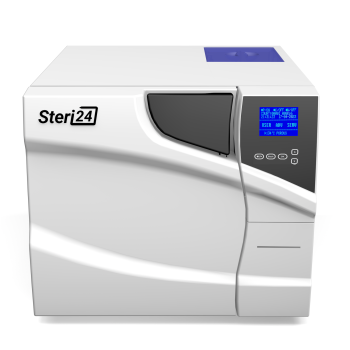 18 L
Popular with practices
18 L
Popular with practices
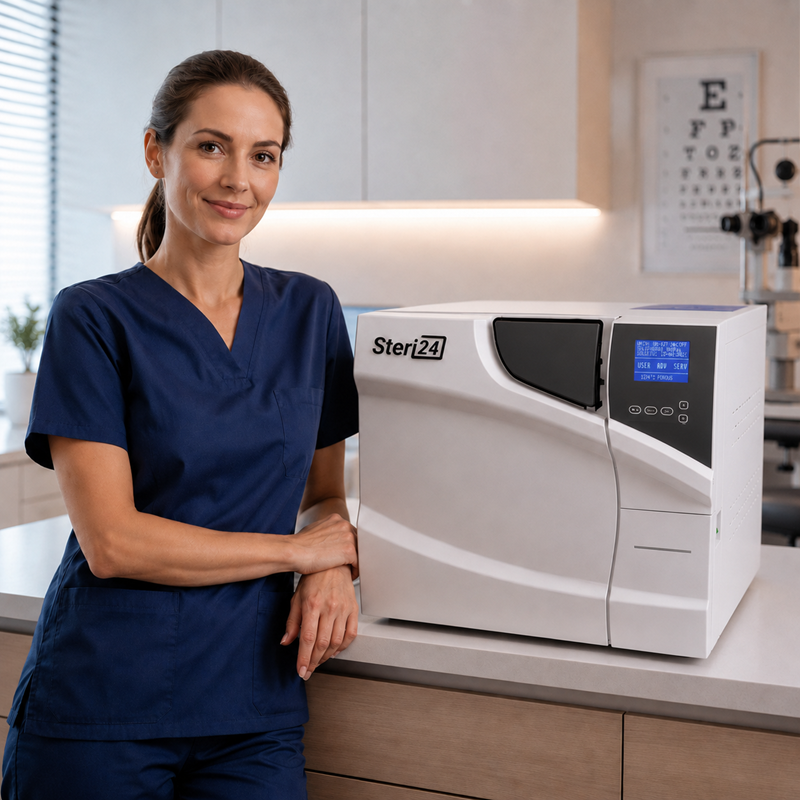
 23 L
Popular with larger practices
23 L
Popular with larger practices
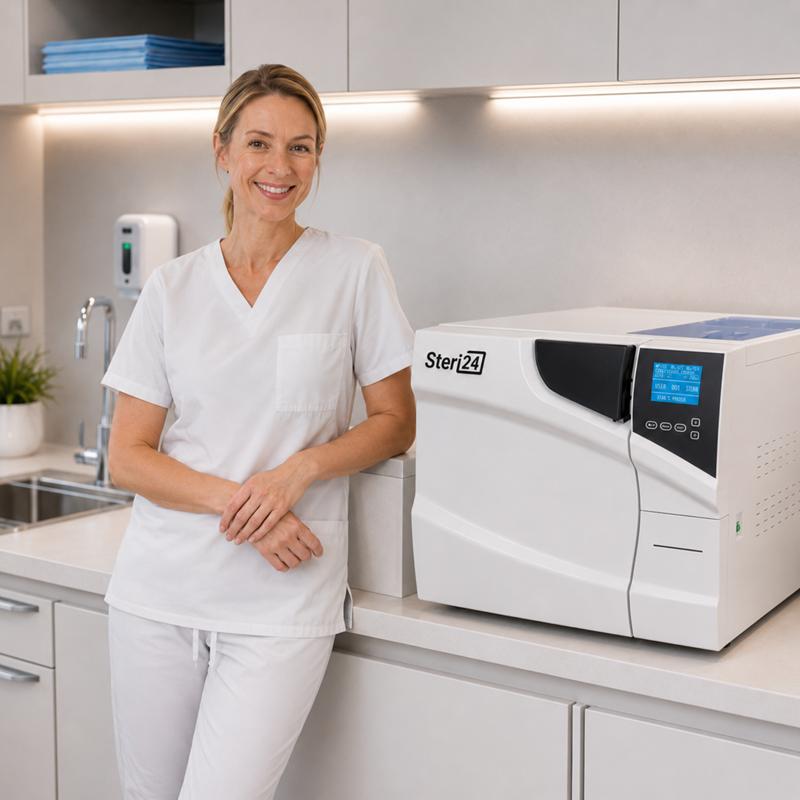
 45 L
Popular with clinics
45 L
Popular with clinics
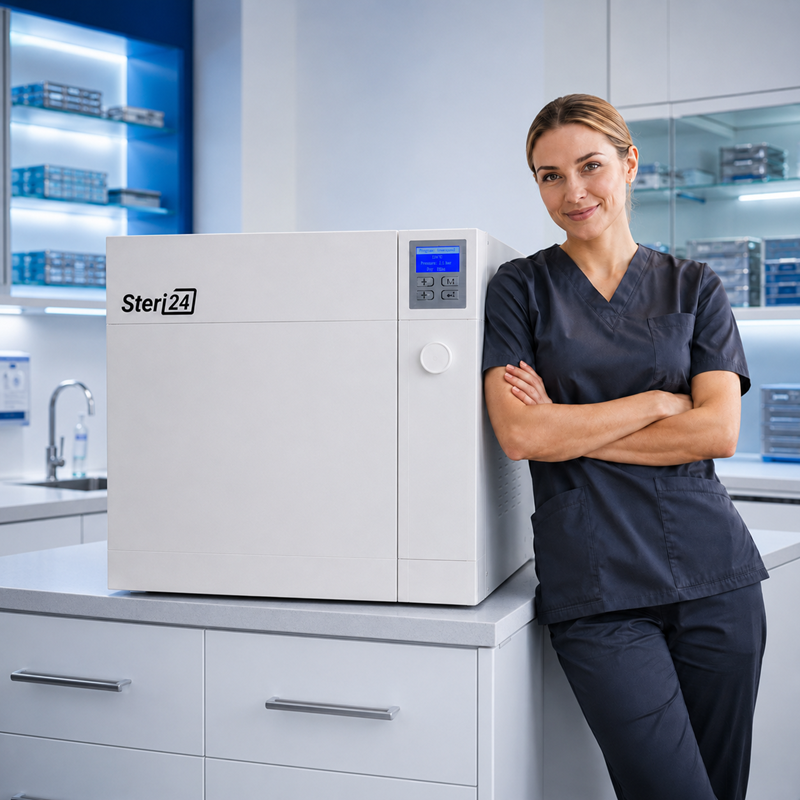
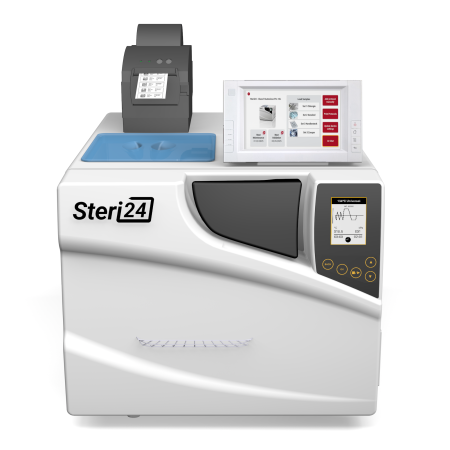 12 L Premium
Popular with small practices
12 L Premium
Popular with small practices
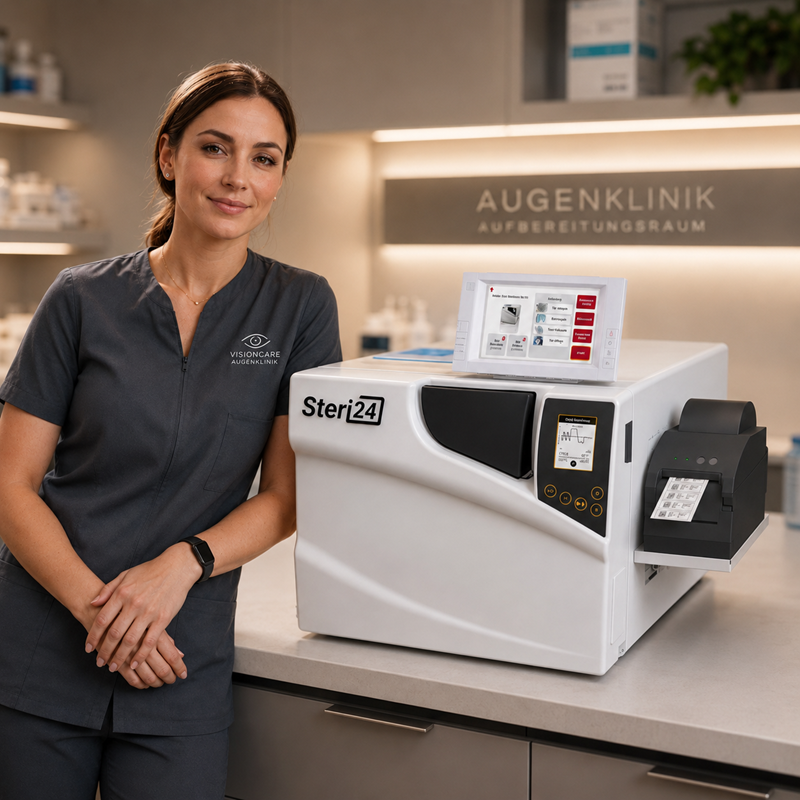
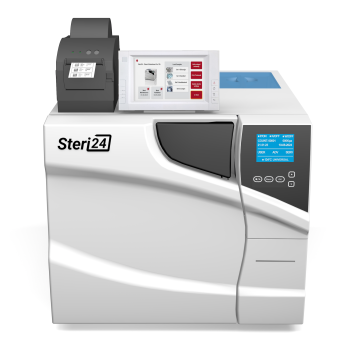 18 L Premium
Popular with practices
18 L Premium
Popular with practices
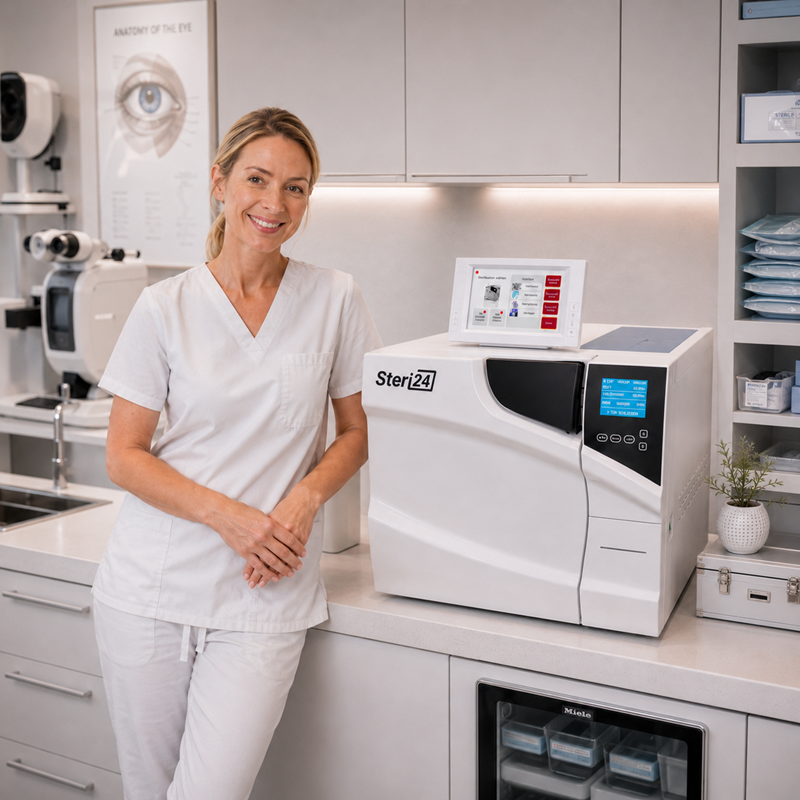
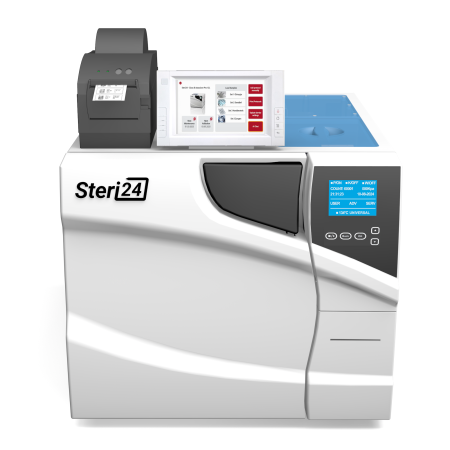 23 L Premium
Popular with larger practices
23 L Premium
Popular with larger practices
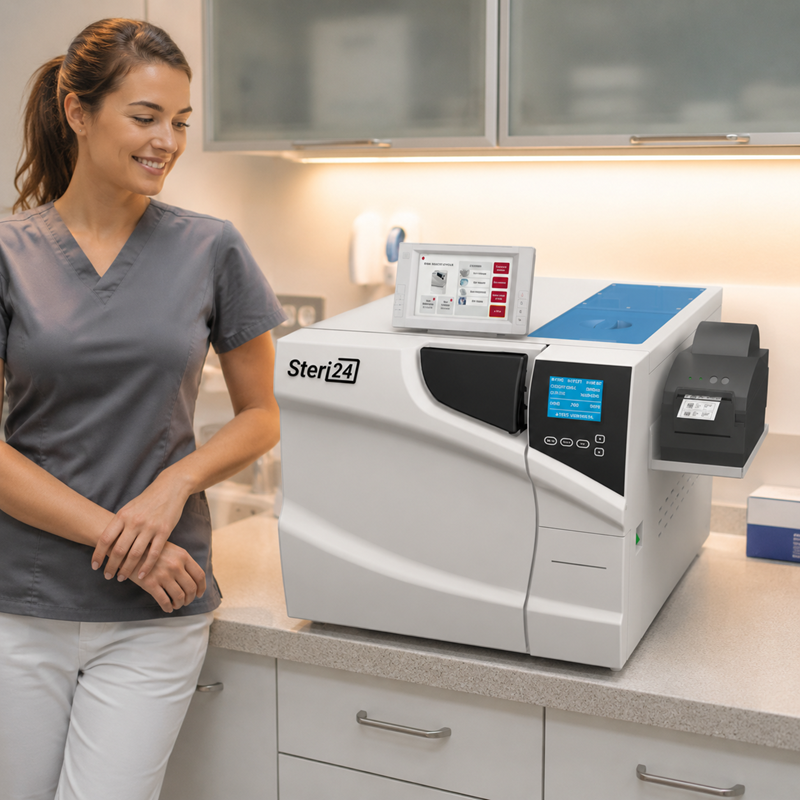
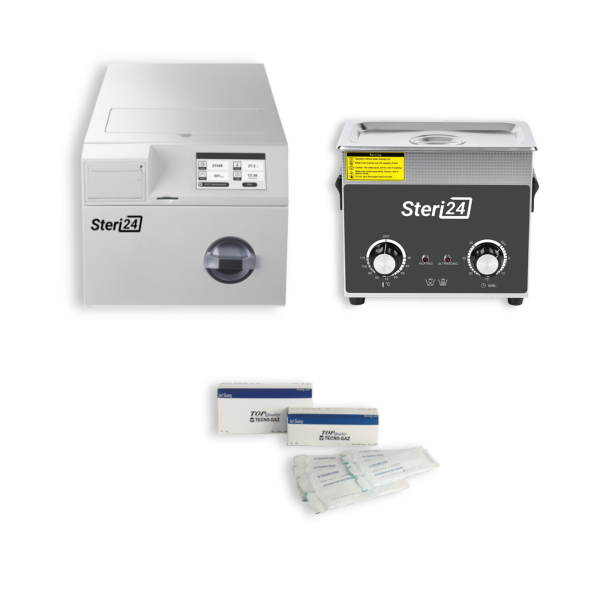 Complete setup for a new practice? Our value bundles combine perfectly matched complete sets for instrument reprocessing – suited to every sector, cheaper than buying separately.
View value bundles
Complete setup for a new practice? Our value bundles combine perfectly matched complete sets for instrument reprocessing – suited to every sector, cheaper than buying separately.
View value bundles


